Table of Contents
Introduction
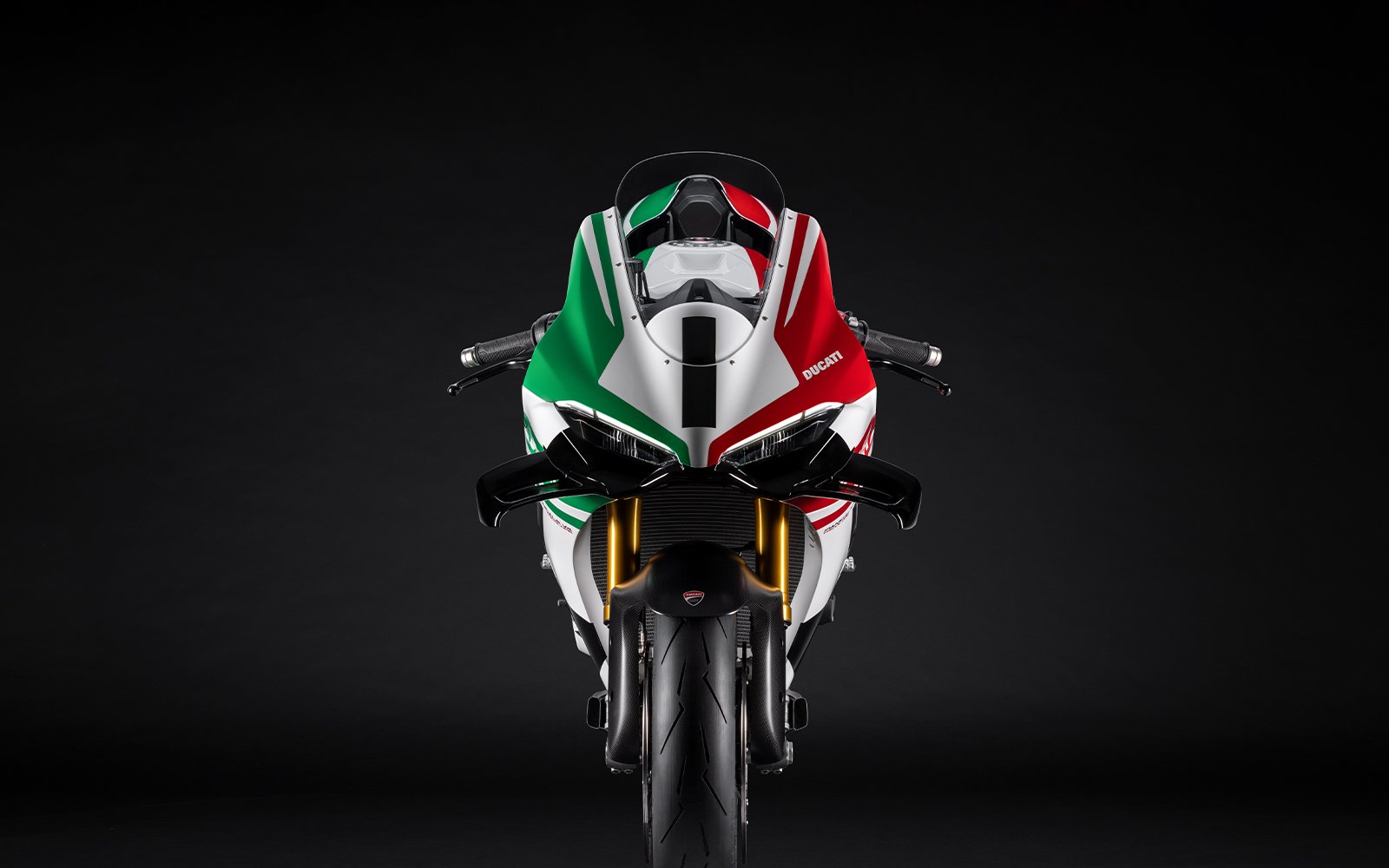
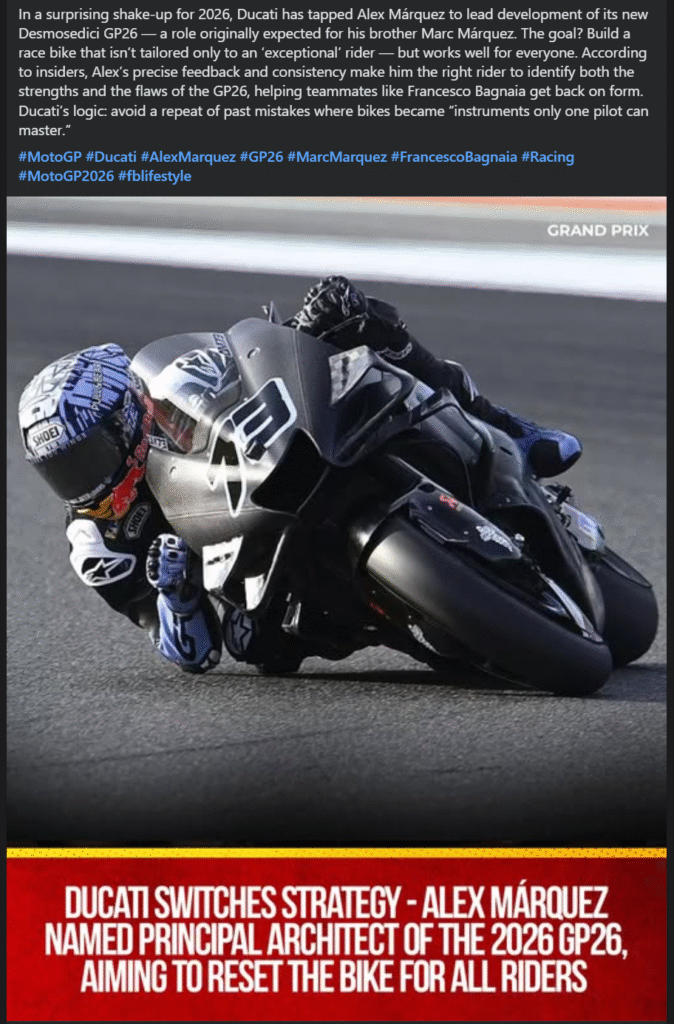
In a strategic pivot for 2026, Ducati has appointed Alex Márquez to spearhead the development of its new Desmosedici GP26. This role was originally anticipated for his brother, Marc Márquez. Ducati’s goal is to construct a race bike that is not only tailored to an exceptional rider but one that performs well for a broader range of riders. Insiders suggest that Alex’s precise feedback and consistency make him the ideal candidate to identify both the strengths and weaknesses of the GP26, assisting teammates like Francesco Bagnaia to regain peak performance.
The Strategic Shift
Ducati’s decision marks a significant shift in strategy. Previously, the focus was on engineering bikes that only a few could master, often leading to inconsistency in team performance. The new goal is inclusivity, creating a bike that can be effectively piloted by various riders without the necessity of an exceptional skill set. This approach aims to avoid past pitfalls where bikes became instruments that only one pilot could master.
Alex Márquez’s Role
Alex Márquez is known for his meticulous feedback and ability to improve bike performance through detailed analysis. His role will involve continuous testing and development to ensure the GP26 meets its universal adaptability goals. By leveraging his skills, Ducati anticipates a bike that balances speed, agility, and control, enhancing overall team performance.
Development and Testing
Development will involve rigorous testing under varied conditions to ensure versatility. Alex’s role will be crucial in identifying and rectifying potential flaws, ensuring the bike’s readiness for diverse racing scenarios. His feedback will drive iterative improvements, focusing on aspects like aerodynamics, weight distribution, and engine performance.
Impact on the Team
This development strategy aims to uplift the entire Ducati team by providing a competitive edge in races. By involving riders in the development process, Ducati ensures the GP26 aligns with the needs of all team members, potentially improving results across the board. Francesco Bagnaia, among others, is expected to benefit from a more adaptable machine.
Avoiding Past Mistakes
The move is also an attempt to avoid past mistakes where the focus was on developing bikes suited only for top-tier riders. This often led to a disparity in team performance, as not all could exploit the bike’s potential fully. Ducati’s current approach is to ensure the GP26 is accessible to all riders, promoting team cohesion and success.
Why did Ducati choose Alex Márquez for the GP26?
Alex Márquez was chosen for his precise feedback and consistency, which are vital for developing a universally adaptable race bike.
What is Ducati’s goal with the GP26?
Ducati aims to build a race bike that is adaptable for all riders, not just exceptional ones, to enhance overall team performance.
How does this strategy differ from Ducati’s past approaches?
Previously, Ducati focused on bikes tailored for top-tier riders. Now, they aim for a universally adaptable bike to avoid past pitfalls.
Conclusion
Ducati’s decision to appoint Alex Márquez reflects a profound shift in strategy towards creating a more adaptable and universally effective race bike. By focusing on inclusivity and team-wide performance, Ducati hopes to set new standards in MotoGP racing, ensuring the GP26 is not just a machine for the elite but a tool for all riders to achieve excellence.
Related Resources
- MotoGP Official Website – Further insights on racing strategies.
- Ducati Official Page – More about Ducati’s innovations.