
2021
Acabion GTBO 600 Daytona-VI - Specifications & Review
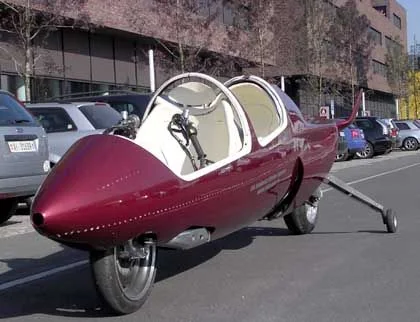
Article Complete Info
| Articleid | 98379 |
|---|---|
| Category | Prototype-concept model |
| Make | Acabion |
| Model | GTBO 600 Daytona-VI |
| Price | Euro 700000. MSRP depends on country, taxes, accessories, etc. |
| Year | 2021 |
Chassis, Suspension, Brakes & Wheels
| Frametype | Carbon fibre and titanium monocoque. |
|---|---|
| Frontbrakes | Single disc |
| Rearbrakes | Single disc |
Engine & Transmission
| Coolingsystem | Liquid |
|---|---|
| Enginedetails | Electric |
| Enginetype | Twin Acabion GTBO-V 600 Mechatronic Drive |
| Maxrpm | 24000 |
| Power | 536.4 HP (391.5 kW)) |
| Topspeed | 600.0 km/h (372.8 mph) |
Other Specifications
| Comments | Water temperature-conditioned li-ion batteries. Range: ) 500 miles (800 km) per charge. 110 V as well as 220 V charging. Electronically limited Acceleration 0...525 km/h (326 mph) in less than 30 seconds. Projected Area: 0.66 m2 Aerodynamic Drag Coefficient cd=0.09. Rolling Resistance Index cr=0.006. Total Effectiveness = + 1350% compared to fully electric cars. Various engine options, including a 1300 ccm inline 4, 4 stroke and a 1400 ccm hybrid. German project. |
|---|---|
| Starter | Electric |
Physical Measures & Capacities
| Dryweight | 420.0 kg (925.9 pounds) |
|---|---|
| Overallheight | 1250 mm (49.2 inches) |
| Overalllength | 5250 mm (206.7 inches) |
| Overallwidth | 900 mm (35.4 inches) |
| Powerweightratio | 1.2772 HP/kg |
About Acabion
Country of Origin:
Switzerland
Founder:
Peter Maskus
Best Known For:
Enclosed, ultra-aerodynamic high-speed motorcycle-car hybrids (e.g., GTBO concepts)
Company History
Acabion is a Swiss design venture that treats the motorcycle as a starting point for extreme aerodynamics rather than an end in itself. Founded by engineer Peter Maskus, Acabion’s long-tail, bullet-like concepts—often referenced by GTBO prototype names—aim to minimize drag to a fraction of that of conventional motorcycles or cars. The cabin layout is more aircraft-like than bike-like, with tandem seating, stabilization systems, and a philosophy that speed with low energy consumption is possible when frontal area and drag coefficients are aggressively attacked. Unlike mainstream OEMs, Acabion positions its ideas somewhere between research and haute engineering—hand-built prototypes, wind-tunnel thinking, and the insistence that future mobility could combine motorcycle intimacy with closed-cockpit comfort. The projects also speculate about multi-energy drivetrains and electric assistance, but the core message is constant: reduce aerodynamic losses and everything else—range, top speed, stability—improves. While series production has not materialized, the brand occupies an influential niche: it provokes engineers and enthusiasts to imagine what happens when you stop accepting the bluff shapes of cars and the exposure of motorcycles. Historically, Acabion’s importance is conceptual. It extends the lineage of streamliners and land-speed specials into a road-mobility narrative, reminding the industry that a radical decrease in drag is the single most powerful lever for efficiency at speed. Whether or not you ever see one on your street, Acabion’s drawings and prototypes keep the aerodynamic conversation alive.