
2011
Dam Tech Twin American 13c Delaware - Specifications & Review
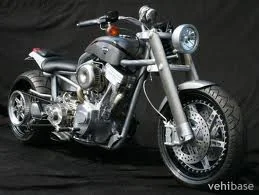
Article Complete Info
| Articleid | 301369 |
|---|---|
| Category | Custom-cruiser |
| Make | Dam |
| Model | Tech Twin American 13c Delaware |
| Year | 2011 |
Chassis, Suspension, Brakes & Wheels
| Frametype | DAM Motorcycles/Apex |
|---|---|
| Frontbrakes | Double disc. Radial mount 4 piston Brembo Calipers |
| Fronttyre | 130/60-VR18 |
| Rake | 35.0° |
| Rearbrakes | Single disc. Radial mount 4 piston Brembo Caliper |
| Reartyre | 280/35-R18 |
| Wheels | 3pcs DAM Design 3.50 x 18 front, 3pcs DAM Design 10.50 x 18 rear |
Engine & Transmission
| Displacement | 2081.28 ccm (127.00 cubic inches) |
|---|---|
| Driveline | RSD 6 speed with outside bearing support |
| Enginedetails | V2, four-stroke |
| Enginetype | R and R 2-cam billet engine |
| Gearbox | 6-speed |
| Transmissiontypefinaldrive | Belt |
Other Specifications
| Coloroptions | Silver |
|---|---|
| Comments | Limited edition bike. |
| Starter | Electric |
About Dam
Country of Origin:
Europe
Founder:
Not conclusively documented
Best Known For:
Small-series light motorcycles and scooters sold through regional distributors
Company History
The “Dam” badge appears in European dealer rosters and enthusiast registries as one of several small-series or importer-driven labels that surfaced during the late 20th century and into the 2000s. While definitive corporate lineage is sparse—which is common for private-label brands—the pattern is recognizable. Dam-branded machines typically occupy the practical end of the market: 50–125cc scooters and basic commuters that emphasize value over prestige. The underlying hardware often comes from established Asian factories, with importers handling EU homologation, spares catalogs, and localized trim. For owners, the attraction is the price-to-utility ratio: easy starts, CVT simplicity, modest insurance classes, and parts cross-compatibility with widespread engine families. As emissions rules tightened, Dam-type offerings either migrated to EFI or were phased out in favor of updated suppliers, illustrating how regulatory pressure shapes the survival of micro-brands. Historically, Dam represents the “long tail” of European urban mobility—quiet, functional vehicles that slip between buses and cars, making tight parking viable and commutes predictable. While they may never headline a show stand, these bikes support students, tradespeople, and delivery workforces who calculate mobility in euros per day. In the restoration community, the appeal is anthropological as much as mechanical: machines that tell stories about import networks, local dealer ingenuity, and the ways in which Europe’s cities adapted to two-wheeled traffic long before today’s micromobility boom. In that tapestry, Dam is a thread—humble, persistent, and serviceable.