
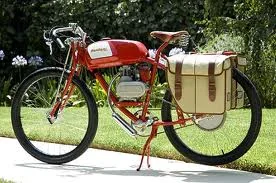
Derringer Derringer 2010
Years: 2010 – 2010
Derringer Cycles emerged from Los Angeles with a romantic proposition: revive the look and feel of 1910s board-track racers in a package suited to modern urban life. Founder Adrian Van Anz styled slender tanks, loop frames, and bicycle-like ergonomics around compact petrol or later electric drivetrains, creating machines that looked like museum pieces but functioned as neighborhood transport. Low seat heights, upright bars, and gentle power outputs made Derringers approachable for riders who prized aesthetics and vibe over outright performance. The brand’s appeal extended to design-conscious customers—artists, architects, and collectors—who appreciated hand finishes, leather accents, and the quiet drama of a machine that starts conversations at coffee shops. Boutique volumes allowed customization and careful QC, though they also meant higher prices and limited dealer footprints. As urban mobility shifted toward e-bikes and scooters, Derringer’s electric interpretations kept the board-track silhouette alive while aligning with noise and emissions expectations in dense neighborhoods. Historically, Derringer underscores how motorcycling culture can be as much about narrative and craft as about speed. By mining early racing’s visual language, the company created objects that functioned as rolling nostalgia, introducing non-traditional riders to two-wheeled ownership. In doing so, it broadened the definition of what a “motorcycle” can be in city spaces: not just a vehicle, but a style choice and a conversation with history.