
DKW Block 500 1933 - Specifications & Review
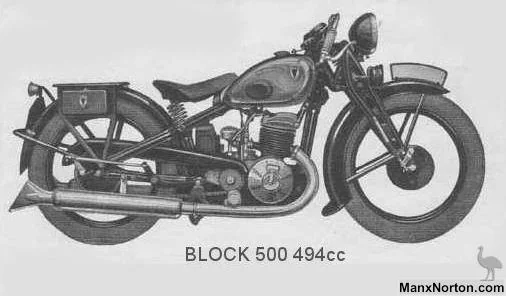
Article Complete Info
| Articleid | 412650 |
|---|---|
| Category | Allround |
| Make | DKW |
| Model | Block 500 |
| Year | 1933 |
Chassis, Suspension, Brakes & Wheels
| Frametype | Pressed steel |
|---|---|
| Frontbrakes | Expanding brake (drum brake) |
| Fronttyre | 3.5-26 |
| Rearbrakes | Expanding brake (drum brake) |
| Rearsuspension | None |
| Reartyre | 3.5-26 |
| Seat | Solo seat with springs |
| Wheels | Spoked |
Engine & Transmission
| Borexstroke | 68.0 x 68.0 mm (2.7 x 2.7 inches) |
|---|---|
| Coolingsystem | Air |
| Displacement | 493.90 ccm (30.14 cubic inches) |
| Enginedetails | Twin, two-stroke |
| Fuelconsumption | 5.00 litres/100 km (20.0 km/l or 47.04 mpg) |
| Fuelsystem | Carburettor. Zweihebel-Framo B |
| Gearbox | 4-speed |
| Greenhousegases | 116.0 CO2 g/km. (CO2 - Carbon dioxide emission) |
| Ignition | Battery-Dynastar |
| Power | 15.00 HP (10.9 kW)) |
| Topspeed | 115.0 km/h (71.5 mph) |
| Transmissiontypefinaldrive | Chain |
Physical Measures & Capacities
| Fuelcapacity | 12.50 litres (3.30 gallons) |
|---|---|
| Weightincloilgasetc | 180.0 kg (396.8 pounds) |
About DKW Block 500 1933
Introducing the 1933 DKW Block 500: A Classic Allrounder
The 1933 DKW Block 500 stands as a testament to the innovative spirit of early 20th-century motorcycle engineering. This allround motorcycle, produced by the renowned German manufacturer DKW, was designed to cater to the diverse needs of everyday riders. In an era where versatility was paramount, the Block 500 masterfully combined practicality with a touch of nostalgia, making it an appealing choice for both commuting and leisure riding. As one of the prominent offerings of its time, it continues to capture the hearts of vintage motorcycle enthusiasts.
Engine Performance and Riding Dynamics
At the heart of the DKW Block 500 is its robust 493.90 ccm twin-cylinder, two-stroke engine, which delivers a respectable 15 HP at your command. This power may seem modest by today’s standards, but it propels the motorcycle to a top speed of 115 km/h (71.5 mph), offering an exhilarating experience on the open road. The bike features a 4-speed gearbox, allowing riders to enjoy smooth transitions through gears and making it suitable for various riding conditions. With a fuel consumption of just 5.00 litres per 100 km, this classic not only performs well but is also economical, making it an ideal companion for long rides or daily commutes.
Key Features and Innovative Technology
The DKW Block 500 showcases a pressed steel frame, providing both strength and lightweight agility. Its suspension system is straightforward, with a minimalist approach that reflects the engineering philosophies of the time. The motorcycle is equipped with expanding drum brakes at both the front and rear, offering reliable stopping power essential for safety. The air-cooled engine, paired with a Zweihebel-Framo B carburettor and a battery-dynastar ignition system, highlights the technological advancements of the era while ensuring a hassle-free riding experience. With a fuel capacity of 12.50 litres, riders can venture far without the constant worry of refueling, making it ideal for road trips through picturesque landscapes.
Pros and Cons of the DKW Block 500
Pros:
- Economical Performance: With a fuel consumption of 5.00 litres/100 km, it’s a cost-effective choice for long-distance riding.
- Classic Design and Build Quality: The pressed steel frame and vintage aesthetics make it a captivating piece for collectors and enthusiasts alike.
- Smooth Gear Transitions: The 4-speed gearbox allows for seamless riding experiences, enhancing overall comfort and control.
Cons:
- Limited Power Output: With only 15 HP, it may struggle to keep pace with modern highway speeds.
- Basic Suspension: The absence of advanced suspension systems may result in a rougher ride over uneven terrain.
- Drum Brakes: While functional for its era, the drum brakes may lack the stopping power and responsiveness of modern disc brakes, requiring careful handling.
In conclusion, the 1933 DKW Block 500 embodies the spirit of its time, offering a unique blend of practicality and nostalgia. For motorcycle enthusiasts, it’s not just a mode of transportation; it’s a piece of history that continues to resonate with riders who appreciate the simpler, yet sophisticated engineering of the past.