
DKW RT 250 1 1952 - Specifications & Review
Article Complete Info
| Articleid | 395772 |
|---|---|
| Category | Sport |
| Make | DKW |
| Model | RT 250 1 |
| Year | 1952 |
Chassis, Suspension, Brakes & Wheels
| Frontbrakes | Expanding brake (drum brake) |
|---|---|
| Frontsuspension | Telescopic |
| Fronttyre | 3.25-19 |
| Rearbrakes | Expanding brake (drum brake) |
| Rearsuspension | None |
| Reartyre | 3.50-19 |
| Seat | Single |
| Wheels | Spoked |
Engine & Transmission
| Borexstroke | 70.0 x 64.0 mm (2.8 x 2.5 inches) |
|---|---|
| Coolingsystem | Air |
| Displacement | 244.00 ccm (14.89 cubic inches) |
| Enginedetails | Single cylinder, two-stroke |
| Fuelconsumption | 2.80 litres/100 km (35.7 km/l or 84.01 mpg) |
| Fuelsystem | Carburettor. Bing |
| Greenhousegases | 65.0 CO2 g/km. (CO2 - Carbon dioxide emission) |
| Power | 12.50 HP (9.1 kW)) @ 4650 RPM |
| Topspeed | 110.0 km/h (68.4 mph) |
| Transmissiontypefinaldrive | Chain |
Physical Measures & Capacities
| Dryweight | 126.0 kg (277.8 pounds) |
|---|---|
| Powerweightratio | 0.0992 HP/kg |
About DKW RT 250 1 1952
Introducing the 1952 DKW RT 250 1
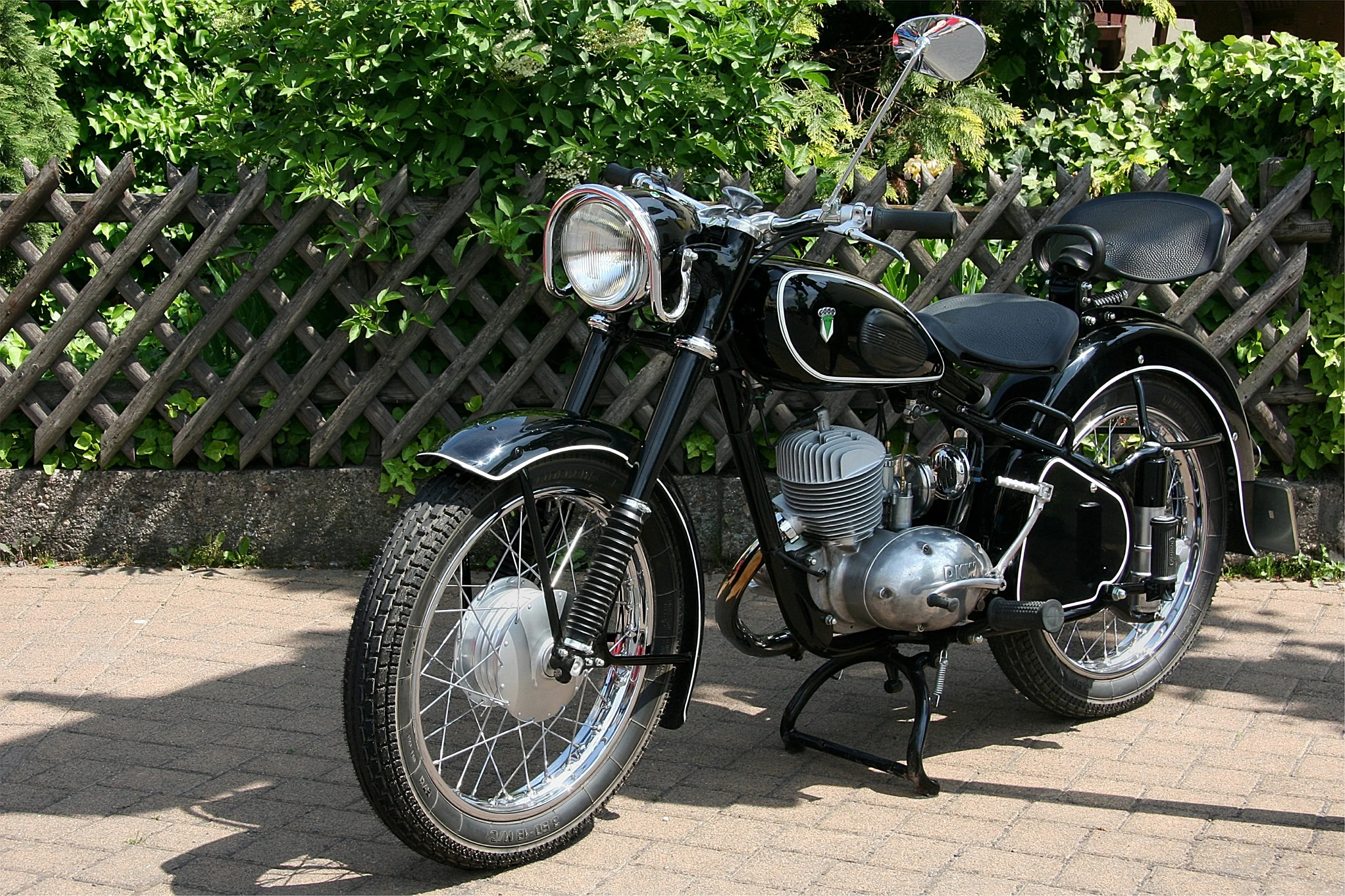
The 1952 DKW RT 250 1 stands as a remarkable gem from the post-war motorcycle renaissance. Positioned in the sport category, this lightweight machine captures the essence of 1950s motorcycling, combining agility with spirited performance. DKW's engineering prowess shines through in this model, which was designed to cater to the rising appetite for speed and style in a rapidly evolving market. With its classic design and spirited performance, the RT 250 1 has become a beloved choice among vintage motorcycle enthusiasts and collectors alike.
Engine Performance and Riding Characteristics
At the heart of the RT 250 1 lies a robust 244cc single-cylinder, two-stroke engine that delivers a spirited 12.5 horsepower at 4650 RPM. This power translates into a thrilling top speed of 110 km/h (68.4 mph), making it a standout in its class and an exhilarating ride for its time. The engine's air-cooling system keeps things efficient, while the Bing carburettor ensures smooth fuel delivery, maximizing performance. Riders will appreciate the bike's lightweight construction at just 126 kg (277.8 pounds), which enhances its nimbleness and maneuverability. The power-to-weight ratio of 0.0992 HP/kg means that the RT 250 1 feels lively, whether you're navigating tight city streets or cruising along open roads.
Key Features and Technology
The DKW RT 250 1 impresses with its straightforward yet effective engineering. The telescopic front suspension improves handling and ride comfort, while the expanding drum brakes at both the front and rear deliver reliable stopping power. Although the rear suspension is minimal, the overall design emphasizes the RT 250 1's sporty nature. Fuel efficiency is another highlight, with a remarkable consumption rate of only 2.80 liters per 100 km, making it an economical choice for long rides. This not only appeals to the budget-conscious rider but also allows for extended journeys without frequent stops at the gas station.
Pros and Cons of the 1952 DKW RT 250 1
Pros:
- Lightweight and Agile: Weighing in at just 126 kg, the RT 250 1 offers excellent maneuverability, perfect for both city riding and spirited country excursions.
- Fuel Efficiency: With a consumption rate of 2.80 liters per 100 km, this motorcycle is economical, allowing for longer rides without frequent refueling.
- Classic Appeal: Its distinctive design and historical significance make it a sought-after model for vintage enthusiasts and collectors.
Cons:
- Limited Suspension: The lack of rear suspension may affect comfort on rougher surfaces, particularly on longer journeys.
- Modest Power Output: While the engine delivers acceptable performance for its time, modern riders may find the 12.5 HP less exhilarating compared to contemporary motorcycles.
- Drum Brakes: The expanding drum brakes, while reliable for the era, may not provide the same stopping power or responsiveness as modern disc brakes, requiring riders to be more cautious.
In summary, the 1952 DKW RT 250 1 is a delightful blend of vintage charm and spirited performance, ideal for those who appreciate the art of motorcycling's golden age.