
DKW RT 250 2 1953 - Specifications & Review
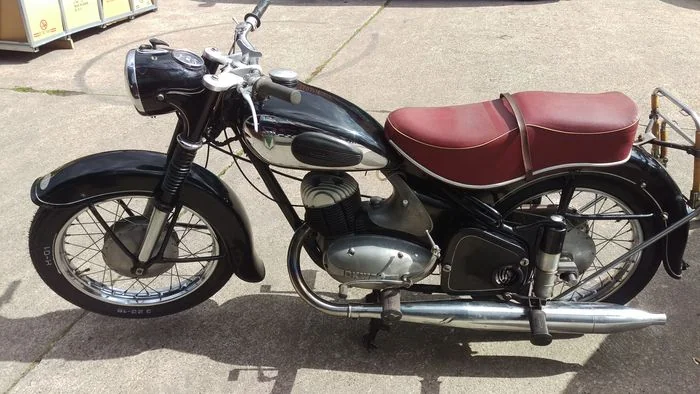
Article Complete Info
| Articleid | 782239 |
|---|---|
| Category | Sport |
| Make | DKW |
| Model | RT 250 2 |
| Year | 1953 |
Chassis, Suspension, Brakes & Wheels
| Frontbrakes | Expanding brake (drum brake) |
|---|---|
| Frontbrakesdiameter | 180 mm (7.1 inches) |
| Frontsuspension | Telescopic |
| Fronttyre | 3.25-19 |
| Rearbrakes | Expanding brake (drum brake) |
| Rearbrakesdiameter | 160 mm (6.3 inches) |
| Rearsuspension | None |
| Reartyre | 3.25-19 |
| Seat | Single |
| Wheels | Spoked |
Engine & Transmission
| Borexstroke | 70.0 x 64.0 mm (2.8 x 2.5 inches) |
|---|---|
| Coolingsystem | Air |
| Displacement | 244.00 ccm (14.89 cubic inches) |
| Enginedetails | Single cylinder, two-stroke |
| Fuelsystem | Carburettor. Bing |
| Power | 14.10 HP (10.3 kW)) |
| Topspeed | 108.0 km/h (67.1 mph) |
| Transmissiontypefinaldrive | Chain |
Physical Measures & Capacities
| Dryweight | 143.0 kg (315.3 pounds) |
|---|---|
| Powerweightratio | 0.0986 HP/kg |
About DKW RT 250 2 1953
Introducing the 1953 DKW RT 250 2: A Classic Sport Bike
The 1953 DKW RT 250 2 stands out as a remarkable piece of motorcycle history, embodying the essence of post-war German engineering and the rising sport motorcycle culture of the early 1950s. As part of DKW's iconic lineup, this lightweight sportbike was designed to cater to enthusiasts looking for a blend of performance, agility, and classic styling. With a category focused on sport, the RT 250 2 appealed not just to casual riders, but also to those eager to embrace the thrill of the open road. Its sleek design and nimble handling make it a favorite among collectors and vintage motorcycle enthusiasts alike.
At the heart of the RT 250 2 is a spirited single-cylinder, two-stroke engine with a displacement of 244cc, producing a respectable 14.1 HP. This powerplant, coupled with a lightweight frame weighing just 143 kg (315 lbs), delivers an exhilarating riding experience, allowing the bike to reach a top speed of 108 km/h (67.1 mph) with ease. The air-cooled engine, featuring a Bing carburettor, provides a responsive throttle and lively acceleration, perfect for carving through twisty roads or sprinting down straightaways. Its well-balanced power-to-weight ratio gives riders confidence, making the RT 250 2 not just a machine, but a companion for their adventures.
The DKW RT 250 2 is equipped with several key features that enhance both performance and rider comfort. Its telescopic front suspension ensures stability and control, while the drum brakes—180 mm in the front and 160 mm in the rear—provide adequate stopping power for spirited riding. The classic design, characterized by its clean lines and vintage aesthetics, is complemented by practical elements such as the chain final drive, which offers durability and ease of maintenance. Riding this motorcycle evokes a sense of nostalgia, as it combines elements of traditional craftsmanship with the thrill of the sport category.
Pros and Cons of the DKW RT 250 2:
Pros:
- Lightweight and Agile: At just 143 kg, the RT 250 2 is easy to maneuver, making it an excellent choice for both beginners and experienced riders looking for a nimble bike.
- Classic Aesthetic: The vintage design appeals to motorcycle enthusiasts who appreciate the charm of classic bikes, enhancing its collectibility and aesthetic value.
- Responsive Performance: The two-stroke engine provides lively acceleration and a spirited ride, perfect for those who crave excitement on two wheels.
Cons:
- Limited Power Output: With only 14.1 HP, the bike may feel underpowered for riders accustomed to modern motorcycles with higher performance levels.
- Basic Suspension Setup: The lack of rear suspension can make for a bumpier ride on uneven surfaces, which may detract from comfort on longer journeys.
- Drum Brakes: While sufficient for the time, the expanding drum brakes may not offer the same stopping power or feel as modern disc brake systems, potentially leading to less confidence for newer riders.
The DKW RT 250 2 remains a cherished model for its unique blend of history, performance, and charm, cementing its place in the hearts of motorcycle enthusiasts and collectors alike.