
DKW SB 500 1936 - Specifications & Review
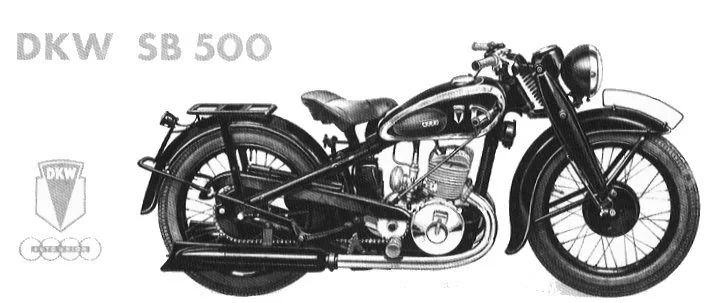
Article Complete Info
| Articleid | 875427 |
|---|---|
| Category | Allround |
| Make | DKW |
| Model | SB 500 |
| Year | 1936 |
Chassis, Suspension, Brakes & Wheels
| Frontbrakes | Expanding brake (drum brake) |
|---|---|
| Fronttyre | 3.5-19 |
| Rearbrakes | Expanding brake (drum brake) |
| Rearsuspension | Rigid |
| Reartyre | 3.5-19 |
Engine & Transmission
| Borexstroke | 68.0 x 68.0 mm (2.7 x 2.7 inches) |
|---|---|
| Clutch | Oil bath multidisc |
| Compression | 5.7:1 |
| Coolingsystem | Air |
| Displacement | 493.90 ccm (30.14 cubic inches) |
| Enginedetails | Twin, two-stroke |
| Fuelconsumption | 3.50 litres/100 km (28.6 km/l or 67.21 mpg) |
| Fuelsystem | Carburettor. Amal |
| Greenhousegases | 81.2 CO2 g/km. (CO2 - Carbon dioxide emission) |
| Power | 15.00 HP (10.9 kW)) @ 4000 RPM |
| Topspeed | 115.0 km/h (71.5 mph) |
| Transmissiontypefinaldrive | Chain |
Physical Measures & Capacities
| Dryweight | 165.0 kg (363.8 pounds) |
|---|---|
| Fuelcapacity | 13.00 litres (3.43 gallons) |
| Powerweightratio | 0.0909 HP/kg |
About DKW SB 500 1936
The 1936 DKW SB 500 stands as a notable testament to the early evolution of motorcycle engineering, carving a niche in the allround category with its clever design and practical performance. Known for its robust build and versatility, this motorcycle was aimed at riders looking for a dependable companion for both city commutes and longer journeys. As the motorcycle industry was on the cusp of technological breakthroughs in the mid-1930s, the DKW SB 500 embodied the spirit of innovation, with a design that appealed to both leisure riders and practical users alike.
At the heart of the DKW SB 500 lies a powerful and compact 493.90 ccm twin-cylinder, two-stroke engine. Delivering a commendable 15.00 HP at 4000 RPM, this motorcycle can reach a top speed of 115 km/h (71.5 mph), offering a thrilling experience on the open road. The engine's 5.7:1 compression ratio and efficient air cooling system contribute to its reliable performance, while the Amal carburettor ensures smooth fuel delivery. Riders will appreciate the SB 500's fuel efficiency, boasting an impressive consumption rate of just 3.50 litres per 100 km (67.21 mpg). The oil bath multidisc clutch combined with a chain final drive adds to the seamless power transfer, making it a joy to ride whether navigating through urban landscapes or open highways.
The DKW SB 500 is adorned with practical features that highlight the engineering prowess of its time. The expanding drum brakes at both the front and rear provide reliable stopping power, ensuring confidence on the road, while the rigid rear suspension offers durability and stability. Weighing in at 165 kg (363.8 pounds) and with a fuel capacity of 13 litres (3.43 gallons), the bike strikes a balance between manageable weight and sufficient range for longer rides. Its symmetrical bore and stroke of 68 mm each underscores the design philosophy of uniformity, contributing to the overall balance and handling of the motorcycle.
Pros:
- Fuel Efficiency: With a remarkable fuel consumption of 67.21 mpg, the SB 500 is economical for long rides.
- Reliability: The robust two-stroke engine design ensures dependable performance in various conditions.
- Versatile Design: Suitable for both city commuting and longer trips, the SB 500 is a practical choice for diverse riding needs.
Cons:
- Limited Power: While adequate for its time, the 15 HP may feel underwhelming for riders seeking high-performance motorcycles.
- Rigid Rear Suspension: The lack of rear suspension travel can lead to a less comfortable ride over rough terrain.
- Old Technology: As a vintage motorcycle, it lacks modern features such as advanced braking systems and suspension technologies that enhance safety and comfort.
In summary, the 1936 DKW SB 500 is not just a motorcycle; it’s a piece of history that showcases the ingenuity of its era. With its practical design, commendable efficiency, and charming character, it continues to capture the hearts of motorcycle enthusiasts and collectors alike.