
Ducati 250 Scrambler 1973 - Specifications & Review
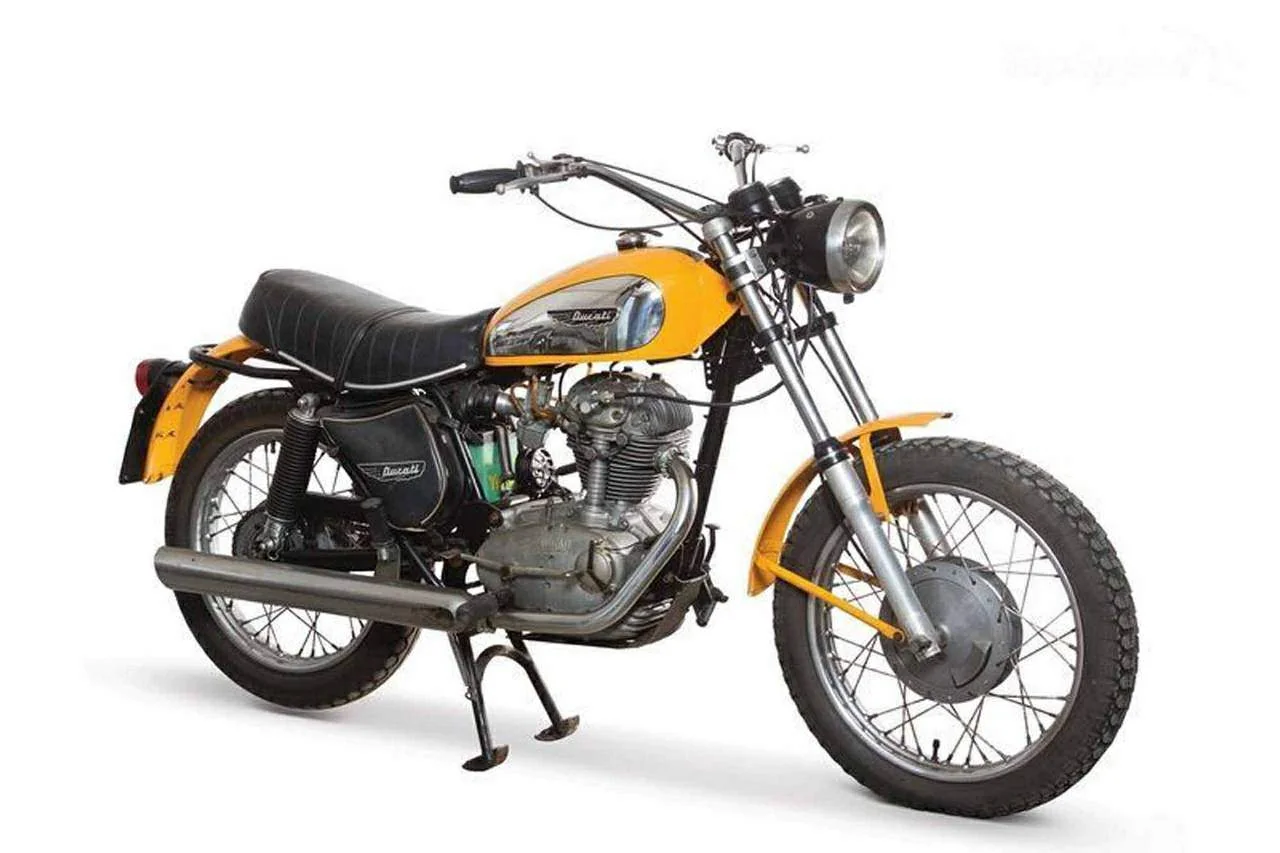
Article Complete Info
| Articleid | 88870 |
|---|---|
| Category | Classic |
| Make | Ducati |
| Model | 250 Scrambler |
| Year | 1973 |
Chassis, Suspension, Brakes & Wheels
| Frontbrakes | Expanding brake |
|---|---|
| Fronttyre | 3.50-19 |
| Rearbrakes | Expanding brake |
| Reartyre | 4.00-18 |
Engine & Transmission
| Borexstroke | 74.0 x 57.8 mm (2.9 x 2.3 inches) |
|---|---|
| Compression | 9.7:1 |
| Coolingsystem | Air |
| Displacement | 248.00 ccm (15.13 cubic inches) |
| Enginedetails | Single cylinder, four-stroke |
| Gearbox | 5-speed |
| Power | 18.00 HP (13.1 kW)) @ 7500 RPM |
| Topspeed | 125.0 km/h (77.7 mph) |
| Transmissiontypefinaldrive | Chain |
| Valvespercylinder | 2 |
Physical Measures & Capacities
| Fuelcapacity | 11.00 litres (2.91 gallons) |
|---|---|
| Weightincloilgasetc | 138.0 kg (304.2 pounds) |
About Ducati 250 Scrambler 1973
Introducing the 1973 Ducati 250 Scrambler, an iconic representation of the classic motorcycle era that perfectly balances style, performance, and versatility. As part of Ducati's celebrated Scrambler lineup, the 250 Scrambler captures the spirit of adventure with its rugged charm and distinctive design. This motorcycle was positioned in the market as an accessible yet spirited ride for enthusiasts looking to navigate both urban landscapes and off-road trails with equal finesse. Its blend of Italian flair and practical engineering has made it a beloved choice among collectors and riding aficionados alike.
At the heart of this classic beauty lies a spirited 248cc single-cylinder, four-stroke engine, delivering a respectable 18 horsepower at 7,500 RPM. This powerplant is paired with a 5-speed gearbox that optimizes the bike's performance, allowing riders to achieve a top speed of 125 km/h (77.7 mph). The 9.7:1 compression ratio, combined with a bore and stroke of 74.0 x 57.8 mm, ensures a smooth and responsive throttle, making every twist of the wrist a thrilling experience. With air cooling, the engine maintains optimal operating temperatures, contributing to the bike's reliability during long rides. Whether you're carving through winding roads or tackling gravel paths, the 250 Scrambler offers an engaging ride that will leave you craving more.
Equipped with expanding brakes at both the front and rear, the Ducati 250 Scrambler provides ample stopping power, instilling confidence in riders as they navigate different terrains. The motorcycle's lightweight construction—tipping the scales at just 138 kg (304.2 pounds)—enhances its agility, making it an easy bike to maneuver in tight spaces. With a fuel capacity of 11 liters (2.91 gallons), riders can enjoy extended journeys without constant refueling stops. The Scrambler's classic styling, highlighted by its characteristic high-mounted exhaust and minimalist design, pays homage to the motorcycle culture of the 1970s while still appealing to modern sensibilities.
PROs:
- Classic Aesthetic: The 250 Scrambler boasts timeless styling that turns heads and evokes nostalgia among classic bike enthusiasts.
- Lightweight and Agile: Weighing just 138 kg (304.2 pounds), the bike offers outstanding maneuverability, making it perfect for both urban commuting and off-road adventures.
- Accessibly Spirited Performance: With a capable engine and a 5-speed gearbox, the motorcycle offers an engaging ride that's suitable for both novice and experienced riders.
CONs:
- Limited Power for Highway Riding: While the bike performs well in urban and off-road settings, its 18 horsepower may feel underpowered for prolonged highway speeds.
- Basic Braking System: The expanding brake setup, while adequate for its time, may lack the responsiveness and stopping power of modern disc brakes.
- Minimalist Features: The classic design comes with fewer modern conveniences, which may not appeal to riders seeking advanced technology or comfort features.
The 1973 Ducati 250 Scrambler remains a testament to the joy of riding, embodying a spirit of freedom that continues to inspire motorcycle enthusiasts to this day.