
2011
EKO ET-120 Hybrid - Specifications & Review
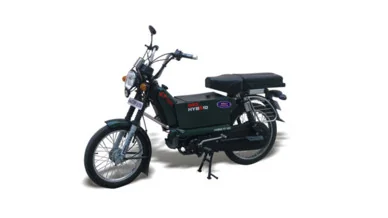
Article Complete Info
| Articleid | 899045 |
|---|---|
| Category | Allround |
| Make | EKO |
| Model | ET-120 Hybrid |
| Year | 2011 |
Chassis, Suspension, Brakes & Wheels
| Frontbrakes | Expanding brake (drum brake) |
|---|---|
| Frontsuspension | Telescopic |
| Fronttyre | 3.00-16 |
| Rearbrakes | Expanding brake (drum brake) |
| Rearsuspension | Twin shocks |
| Reartyre | 3.00-16 |
Engine & Transmission
| Displacement | 70.00 ccm (4.27 cubic inches) |
|---|---|
| Enginedetails | Single cylinder, four-stroke |
| Enginetype | Additionat electric motor. Combines to the power from a 120 cc engine. |
| Topspeed | 65.0 km/h (40.4 mph) |
Other Specifications
| Carryingcapacity | Max 30 kg. |
|---|---|
| Coloroptions | Black |
| Comments | Sold in India. |
| Electrical | Lead-Acid battery |
Physical Measures & Capacities
| Groundclearance | 128 mm (5.0 inches) |
|---|
About EKO
Country of Origin:
India
Founder:
Indian e-mobility entrepreneurs (public attribution varies)
Best Known For:
Affordable electric scooters and light commuters for dense Indian cities
Company History
EKO is representative of India’s early e-scooter movement—small companies that recognized the appetite for thrifty, low-maintenance urban transport and moved quickly to assemble credible products from domestic and global suppliers. Instead of chasing high speed or long-haul range, EKO focused on daily reality: 25–50 km commutes, night-time charging from household sockets, and hardware resilient to summer heat and monsoon rains. Hub motors simplified drivetrains and freed under-seat space, while modest battery packs kept prices within reach of students and delivery workers. The value proposition hinged on running costs and convenience; owners discovered that silent, clutch-free acceleration and pennies-per-kilometer electricity turned chaotic traffic into calmer routine. Challenges—battery longevity, counterfeit cells in the broader market, and educating riders about charging best practices—were met with warranties, clearer dashboards, and partnerships with neighborhood service centers. Historically, EKO-type brands played a pivotal role in normalizing e-two-wheelers in India. They expanded the conversation beyond premium technology to everyday logistics and made it socially acceptable to prioritize practicality over displacement bravado. Some early firms consolidated or rebranded as the market matured, but their impact persists in a new rider expectation set: honest range claims, weatherproof connectors, and local parts shelves. In a country where two-wheelers are lifelines, that cultural shift matters as much as any spec sheet.