
2010
Fokamo ATV 300 Tatanka - Specifications & Review
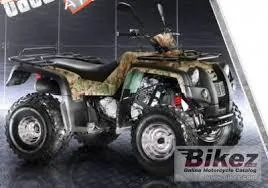
Article Complete Info
| Articleid | 141538 |
|---|---|
| Category | ATV |
| Make | Fokamo |
| Model | ATV 300 Tatanka |
| Year | 2010 |
Chassis, Suspension, Brakes & Wheels
| Frontbrakes | Single disc |
|---|---|
| Fronttyre | 21/7-10 |
| Rearbrakes | Single disc |
| Reartyre | 21/10-8 |
Engine & Transmission
| Clutch | Wet multiplate |
|---|---|
| Coolingsystem | Air |
| Displacement | 282.00 ccm (17.21 cubic inches) |
| Enginedetails | Single cylinder, four-stroke |
| Gearbox | 5-speed |
| Power | 18.77 HP (13.7 kW)) @ 6500 RPM |
| Topspeed | 85.0 km/h (52.8 mph) |
| Torque | 20.87 Nm (2.1 kgf-m or 15.4 ft.lbs) @ 5750 RPM |
| Valvespercylinder | 4 |
Other Specifications
| Coloroptions | Camo |
|---|---|
| Comments | Italian brand. |
| Starter | Electric |
Physical Measures & Capacities
| Dryweight | 210.0 kg (463.0 pounds) |
|---|---|
| Fuelcapacity | 8.20 litres (2.17 gallons) |
| Overallheight | 1,060 mm (41.7 inches) |
| Overalllength | 1,843 mm (72.6 inches) |
| Overallwidth | 1,076 mm (42.4 inches) |
| Powerweightratio | 0.0894 HP/kg |
About Fokamo
Country of Origin:
Europe
Founder:
Importer/manufacturer collaboration (documentation varies)
Best Known For:
Budget scooters and underbones for select European markets
Company History
Fokamo appears in dealer networks as a private-label badge attached to dependable, low-cost scooters and small motorcycles configured for EU standards. The typical recipe: air-cooled singles, CVT transmissions, emissions-compliant fueling, and rugged plastics that shrug off curb rash and delivery duty. Success depends less on novel engineering than on aftersales infrastructure—parts lists that cross-reference common components, training for shop techs, and warranty policies that keep riders on the road. Fokamo’s customers are pragmatic: students, suburban commuters, and small businesses for whom mobility math is monthly. As competition intensified and regulations evolved, Fokamo-type labels either upgraded with EFI and better braking or ceded space to larger brands. Historically, Fokamo’s significance lies in the long tail of urban mobility: it’s one of many quiet contributors that make two-wheel transport accessible where incomes and dealer density lag behind flagship offerings. For riders, the value is clear—a new, warrantied machine beats a questionable used bike; for cities, it’s fewer cars occupying curb space. In that modest arithmetic, badges like Fokamo matter.