
2014
GreenTrans EM100 - Specifications & Review
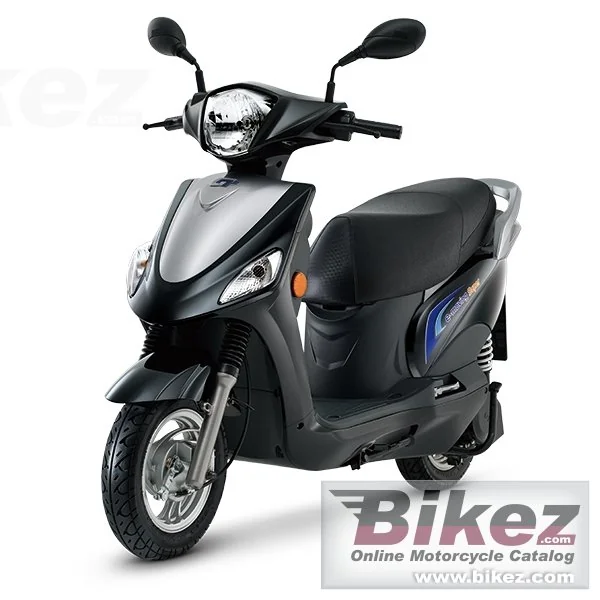
Article Complete Info
| Articleid | 430822 |
|---|---|
| Category | Scooter |
| Make | GreenTrans |
| Model | EM100 |
| Year | 2014 |
Chassis, Suspension, Brakes & Wheels
| Frametype | Steel tube |
|---|---|
| Frontbrakes | Single disc |
| Frontsuspension | Dual Hydraulic Shock Absorber |
| Fronttyre | 80/100-12 |
| Rearbrakes | Expanding brake (drum brake) |
| Rearsuspension | Single Hydraulic Shock Absorber |
| Reartyre | 80/100-12 |
Engine & Transmission
| Coolingsystem | Air |
|---|---|
| Emissiondetails | Zero emission |
| Enginedetails | Electric |
| Enginetype | DC Brushless Side Motor |
| Gearbox | 1-speed |
| Power | 2.68 HP (2.0 kW)) |
| Topspeed | 45.0 km/h (28.0 mph) |
| Transmissiontypefinaldrive | Belt |
Other Specifications
| Coloroptions | Pink, light blue, silver, black |
|---|---|
| Comments | 48V/20Ah LiNiCoMn battery, 16.8 kg. Range 35-50 km. Recharging time: 4 hours. A cargo version with a big top box is available. Made in Taiwan. |
| Starter | Electric |
Physical Measures & Capacities
| Dryweight | 86.0 kg (189.6 pounds) |
|---|---|
| Overallheight | 1,104 mm (43.5 inches) |
| Overalllength | 1,804 mm (71.0 inches) |
| Overallwidth | 666 mm (26.2 inches) |
| Powerweightratio | 0.0312 HP/kg |
About GreenTrans
Country of Origin:
Taiwan
Founder:
Taiwanese e-mobility engineering group (public leadership varies by period)
Best Known For:
Early-generation electric scooters for dense Asian cities
Company History
GreenTrans emerged during Taiwan’s first serious push toward electric two-wheelers, focusing on practical city scooters designed to replace 50–125 cc petrol models. The goal wasn’t headline speed; it was livability—hub motors that shrug off rain, battery packs sized for daily commutes, and charging that works from household sockets. As incentives and municipal pilot programs appeared, GreenTrans supplied fleets for campuses and light-duty delivery, iterating quickly on waterproofing, connectors, and BMS accuracy after real-world feedback. While later entrants popularized battery swapping and app ecosystems, GreenTrans helped prove the base case: if an e-scooter starts every morning, reports range honestly, and is cheap to run, riders will adopt it. The company’s manufacturing partners in Taiwan’s mature supplier network improved consistency in plastics and looms, raising reliability over early prototypes. Historically, GreenTrans represents the groundwork phase of electrification—smaller brands taking risks before infrastructure and consumer habits caught up. Their scooters trained dealers on EV service, taught riders about charging discipline, and nudged regulators toward clearer homologation rules. Even where the badge is less visible today, the discipline of modular design and apartment-friendly charging that GreenTrans normalized still underpins Taiwan’s thriving e-scooter culture.