
2022
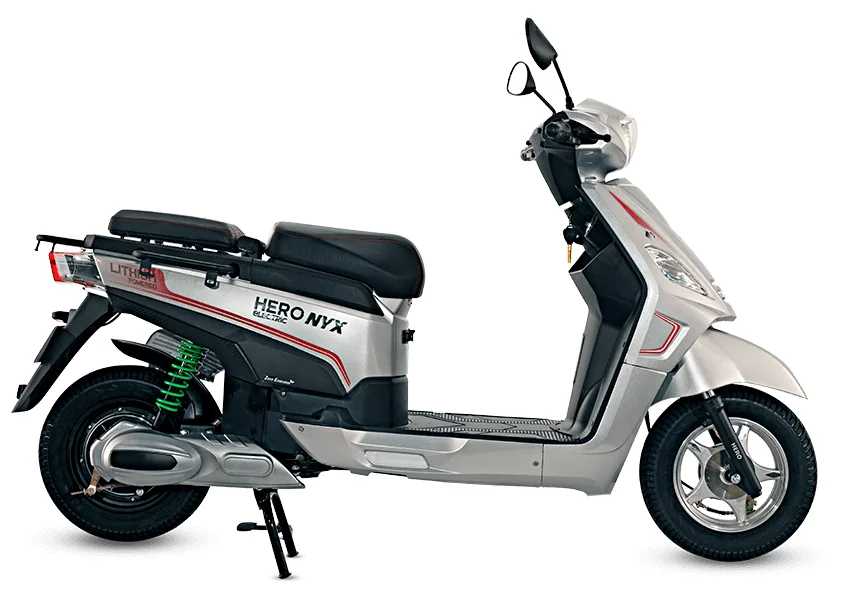
Hero Electric Nyx Hx - Specifications & Review
Article Complete Info
| Articleid | 561924 |
|---|---|
| Category | Scooter |
| Make | Hero Electric |
| Model | Nyx Hx |
| Year | 2022 |
Chassis, Suspension, Brakes & Wheels
| Frametype | Steel |
|---|---|
| Frontbrakes | Expanding brake (drum brake) |
| Frontsuspension | Conventional fork |
| Fronttyre | 3.00-10 |
| Rearbrakes | Expanding brake (drum brake) |
| Rearsuspension | Twin shocks |
| Reartyre | 3.00-10 |
| Seat | 2-person seat |
| Wheels | Steel alloy wheels |
Engine & Transmission
| Coolingsystem | Air |
|---|---|
| Emissiondetails | None |
| Enginetype | Electric |
| Gearbox | Automatic |
| Topspeed | 42.0 km/h (26.1 mph) |
Other Specifications
| Coloroptions | Black, white |
|---|---|
| Comments | Litium-ion 51.2V/30Ah battery. Range up to 65 km. 4 hours charging time. Sold in India. |
| Factorywarranty | 3 years |
| Starter | Electric |
Physical Measures & Capacities
| Dryweight | 77.0 kg (169.8 pounds) |
|---|
About Hero Electric
Country of Origin:
India
Founder:
Naveen Munjal (Hero Eco Group)
Best Known For:
Mass-market electric scooters for Indian cities; widespread dealer presence
Company History
Hero Electric pioneered accessible e-scooters in India by focusing on everyday practicality: removable batteries for apartment charging, approachable prices aided by state subsidies, and dealer networks that echo mass-market ICE coverage. Early models prioritized simplicity—hub motors, modest speeds suited to urban limits, and dashboards that demystify range—helping first-time EV owners build confidence. As policy evolved and competition intensified, Hero Electric expanded capacity, improved waterproofing and BMS robustness for monsoon use, and partnered on charging solutions in key cities. The company’s influence is cultural as much as technical: it normalized electric commuting for delivery workers, students, and families, framing EVs as sensible appliances rather than tech luxuries. Historically, Hero Electric accelerated India’s EV adoption by meeting users where they live—limited parking, variable grid reliability, and the need for low running costs. In doing so, it established expectations for reliability and support that competitors must match, ensuring that the shift from petrol to electrons is not only cleaner but easier on the average rider’s day.