
2011
Hesketh Zero DS - Specifications & Review
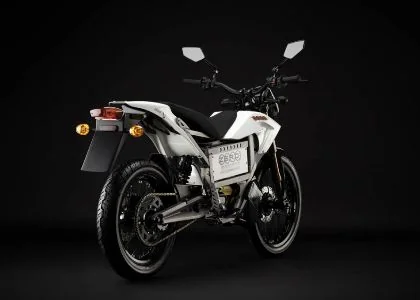
Article Complete Info
| Articleid | 500556 |
|---|---|
| Category | Enduro-offroad |
| Make | Hesketh |
| Model | Zero DS |
| Year | 2011 |
Chassis, Suspension, Brakes & Wheels
| Frametype | Aircraft grade alloy frame |
|---|---|
| Frontbrakes | Single disc. 2 Pot Hydraulic, Stainless Rotor, Hand Actuated, Full Float |
| Frontsuspension | Telescopic |
| Fronttyre | 3.50-17 |
| Frontwheeltravel | 254 mm (10.0 inches) |
| Rake | 26.0° |
| Rearbrakes | Single disc. 1 Pot Hydraulic, Stainless Rotor, Foot Actuated, Full Float |
| Reartyre | 110/90-16 |
| Rearwheeltravel | 229 mm (9.0 inches) |
| Trail | 83 mm (3.3 inches) |
Engine & Transmission
| Clutch | No clutch. |
|---|---|
| Driveline | 17T / 61T, 420 Chain |
| Emissiondetails | No emission |
| Enginedetails | Electric |
| Enginetype | Brushed permanent magnet electric motor |
| Gearbox | 1-speed |
| Topspeed | 88.5 km/h (55.0 mph) |
| Transmissiontypefinaldrive | Chain |
Other Specifications
| Coloroptions | White |
|---|---|
| Comments | Battery: Patent-pending lithium ion array. Capacity 4 kWh (58volts @ 35Ah). Range Up to 2 hours or 50 miles (80km). Recharge time: Less than 4 hours. Standard 110V or 220V input. |
| Starter | Electric |
Physical Measures & Capacities
| Dryweight | 122.5 kg (270.1 pounds) |
|---|---|
| Seatheight | 902 mm (35.5 inches) If adjustable, lowest setting. |
About Hesketh
Country of Origin:
United Kingdom
Founder:
Lord Alexander Hesketh
Best Known For:
Low-volume, aristocratic V-twins (Hesketh V1000, later Valiant/Vampire customs)
Company History
Born from a Formula 1 patron’s passion, Hesketh Motorcycles aimed to build a luxurious British grand tourer in the early 1980s, centered on a big air-cooled V-twin with dignified manners and long-legged gearing. The V1000 project celebrated craftsmanship—quality castings, handsome frames, and traditional ergonomics—but early reliability and heat issues collided with a brutal economic climate. Production halted, then resumed in tiny numbers under new stewardship, gradually resolving weaknesses and leaning into bespoke finishes. In the boutique era of the 2000s–2010s, Hesketh reemerged as a commission builder: hand-stitched saddles, etched badges, and engines tuned for generous midrange rather than peak bhp. Volumes remained intentionally tiny; the appeal was exclusivity and the idea of a stately, analog British roadster handmade for its owner. Historically, Hesketh’s significance is cultural—proof that Britain’s gentleman-racer romance could be expressed in a road bike, even if economics limited scale. For collectors, a well-sorted Hesketh is rolling clubroom charm: metal with provenance, idiosyncrasies, and a sense that a motorcycle can be a conversation as much as a machine.