
Honda CB 250 N 1979 - Specifications & Review
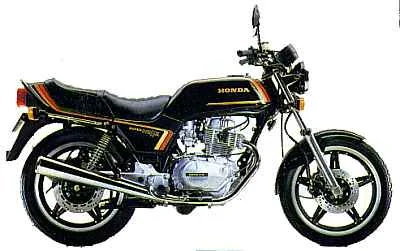
Article Complete Info
| Articleid | 887087 |
|---|---|
| Category | Allround |
| Make | Honda |
| Model | CB 250 N |
| Year | 1979 |
Chassis, Suspension, Brakes & Wheels
| Frontbrakes | Single disc |
|---|---|
| Fronttyre | 3.60-19 |
| Rearbrakes | Expanding brake |
| Reartyre | 4.10-18 |
Engine & Transmission
| Borexstroke | 62.0 x 41.4 mm (2.4 x 1.6 inches) |
|---|---|
| Compression | 9.4:1 |
| Coolingsystem | Air |
| Displacement | 250.00 ccm (15.26 cubic inches) |
| Enginedetails | Twin, four-stroke |
| Gearbox | 6-speed |
| Power | 17.00 HP (12.4 kW)) @ 8500 RPM |
| Topspeed | 125.0 km/h (77.7 mph) |
| Transmissiontypefinaldrive | Chain |
| Valvespercylinder | 3 |
Physical Measures & Capacities
| Fuelcapacity | 14.00 litres (3.70 gallons) |
|---|---|
| Weightincloilgasetc | 186.0 kg (410.1 pounds) |
About Honda CB 250 N 1979
Introducing the 1979 Honda CB 250 N: A Classic Allrounder
The 1979 Honda CB 250 N stands as a testament to Honda's commitment to creating versatile and user-friendly motorcycles. As part of the allround category, this bike was designed to cater to a wide range of riders, from newcomers looking to gain confidence on two wheels to seasoned enthusiasts seeking a reliable companion for urban commuting or weekend escapes. With its lightweight frame and approachable dimensions, the CB 250 N is a perfect entry point into the world of motorcycling, blending a charming retro aesthetic with practicality.
Engine Performance and Riding Characteristics
At the heart of the CB 250 N is a robust 250 cc twin-cylinder, four-stroke engine that delivers a spirited 17 horsepower at 8,500 RPM. This powerplant offers riders an exhilarating experience, reaching a top speed of 125 km/h (77.7 mph). The bike’s 6-speed gearbox allows for smooth gear transitions, making it an ideal companion for both city streets and open roads. Riders will appreciate the nimble handling of the CB 250 N, which weighs in at just 186 kg (410.1 lbs), providing confidence and agility, especially in tight corners and urban traffic. The air-cooled design keeps things simple and reliable, while the 9.4:1 compression ratio ensures a responsive throttle and enjoyable ride.
Key Features and Technology
The CB 250 N is equipped with a single disc brake up front and an expanding brake at the rear, providing adequate stopping power that inspires confidence in various riding conditions. With a fuel capacity of 14 liters (3.70 gallons), this motorcycle is built for the long haul, making it perfect for those who enjoy longer rides without the constant need to refuel. The bike's dimensions make it approachable for riders of all sizes, while the three valves per cylinder contribute to its efficiency and performance. The charming retro styling, combined with Honda’s renowned engineering, makes the CB 250 N not just a motorcycle, but a piece of history.
Pros and Cons of the 1979 Honda CB 250 N
Pros:
- Lightweight and Agile: Weighing just 186 kg, the CB 250 N is easy to handle, making it suitable for both novice and experienced riders.
- Reliable Performance: The four-stroke twin engine provides a dependable power delivery and a top speed of 125 km/h, perfect for everyday commuting.
- Classic Design: With its retro aesthetic, the CB 250 N appeals to riders who appreciate vintage styling and Honda's rich heritage.
Cons:
- Limited Power for Highway Use: While the bike is great for city riding, it may feel underpowered for extended highway cruising, particularly at higher speeds.
- Basic Features: Compared to modern motorcycles, the CB 250 N lacks advanced features such as ABS or sophisticated suspension, which may be a drawback for some riders.
- Small Fuel Tank: Although the 14-liter capacity is adequate for most rides, it may require more frequent stops on longer journeys compared to larger bikes.
In summary, the 1979 Honda CB 250 N is a charming blend of style and practicality, making it an excellent choice for those looking to explore the world of motorcycling, whether you're just starting out or simply enjoying the ride.