
Honda CBR 1000 F 1987 - Specifications & Review
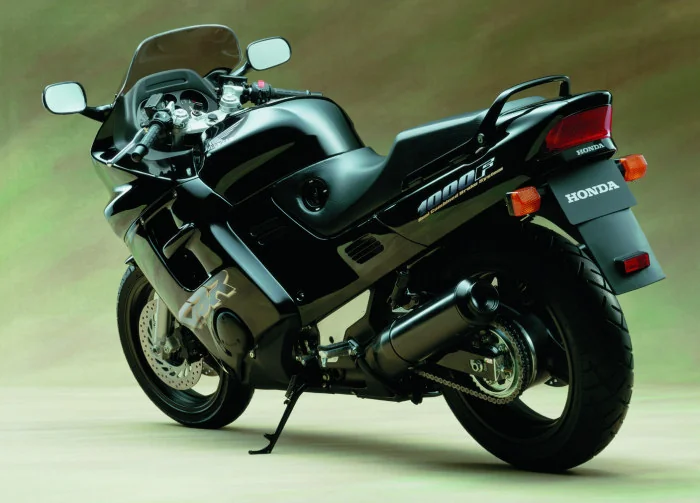
Article Complete Info
| Articleid | 373788 |
|---|---|
| Category | Sport |
| Make | Honda |
| Model | CBR 1000 F |
| Year | 1987 |
Chassis, Suspension, Brakes & Wheels
| Frontbrakes | Dual disc |
|---|---|
| Fronttyre | 110/80-17 |
| Rearbrakes | Single disc |
| Reartyre | 140/80-17 |
Engine & Transmission
| Borexstroke | 77.0 x 53.6 mm (3.0 x 2.1 inches) |
|---|---|
| Compression | 10.5:1 |
| Coolingsystem | Liquid |
| Displacement | 998.00 ccm (60.90 cubic inches) |
| Enginedetails | In-line four, four-stroke |
| Gearbox | 6-speed |
| Power | 100.00 HP (73.0 kW)) @ 9000 RPM |
| Topspeed | 237.0 km/h (147.3 mph) |
| Transmissiontypefinaldrive | Chain |
| Valvespercylinder | 4 |
Physical Measures & Capacities
| Fuelcapacity | 21.00 litres (5.55 gallons) |
|---|---|
| Weightincloilgasetc | 262.0 kg (577.6 pounds) |
About Honda CBR 1000 F 1987
Introducing the 1987 Honda CBR 1000 F: A Sportbike Icon
The 1987 Honda CBR 1000 F is a legendary motorcycle that helped define the sportbike category in the late '80s. As one of Honda's flagship models, the CBR 1000 F struck a perfect balance between performance, comfort, and advanced technology, making it a thrilling choice for riders seeking both speed and versatility. With its sleek lines and aerodynamic design, this superbike was not just an eye-catcher but also a testament to Honda's commitment to engineering excellence, positioning it as a formidable competitor in the rapidly evolving market of high-performance motorcycles.
Engine Performance and Riding Characteristics
At the heart of the CBR 1000 F lies a potent 998cc in-line four engine that produces a robust 100 horsepower at 9,000 RPM. This power translates into exhilarating performance, allowing the bike to reach a top speed of 237 km/h (147.3 mph). The liquid-cooled, four-stroke engine features a compression ratio of 10.5:1 and a bore and stroke of 77.0 x 53.6 mm, ensuring smooth and consistent power delivery across the rev range. Coupled with a 6-speed gearbox and chain final drive, riders will appreciate the seamless gear transitions and responsive acceleration. The CBR 1000 F's suspension and chassis design provide excellent stability, making it equally adept at handling twisty backroads or long-distance rides with comfort.
Key Features and Technology
The 1987 CBR 1000 F boasts several notable features that enhance its riding experience. With dual front disc brakes and a single rear disc brake, the stopping power is impressive, instilling confidence in riders even at high speeds. The motorcycle's weight, at 262 kg (577.6 pounds) with fluids, is well-distributed, allowing for agile handling without compromising stability. Additionally, the generous 21-litre fuel tank provides ample range for those long rides, making it an ideal companion for both daily commutes and weekend adventures. The inclusion of advanced engineering, such as the four-valve-per-cylinder design, ensures that the CBR 1000 F not only performs well but is also reliable and easy to maintain.
Pros and Cons of the 1987 Honda CBR 1000 F
Pros:
- Impressive Performance: The powerful engine delivers thrilling acceleration and top speed, ideal for sport riding enthusiasts.
- Agile Handling: The well-balanced chassis and suspension provide excellent maneuverability, making it fun on twisty roads.
- Comfortable for Long Rides: The design prioritizes rider comfort, allowing for extended rides without excessive fatigue.
Cons:
- Weight: At 262 kg, some riders may find the CBR 1000 F a bit heavier compared to modern sportbikes, affecting low-speed handling.
- Fuel Economy: While the large fuel capacity is beneficial for long rides, the powerful engine may lead to higher fuel consumption.
- Aging Technology: Compared to contemporary models, some features may feel outdated, lacking the advanced electronics found in today’s sportbikes.
In conclusion, the 1987 Honda CBR 1000 F remains a classic for good reason. It combines exhilarating performance with comfort and reliability, making it a cherished model among enthusiasts and a significant part of motorcycle history.