
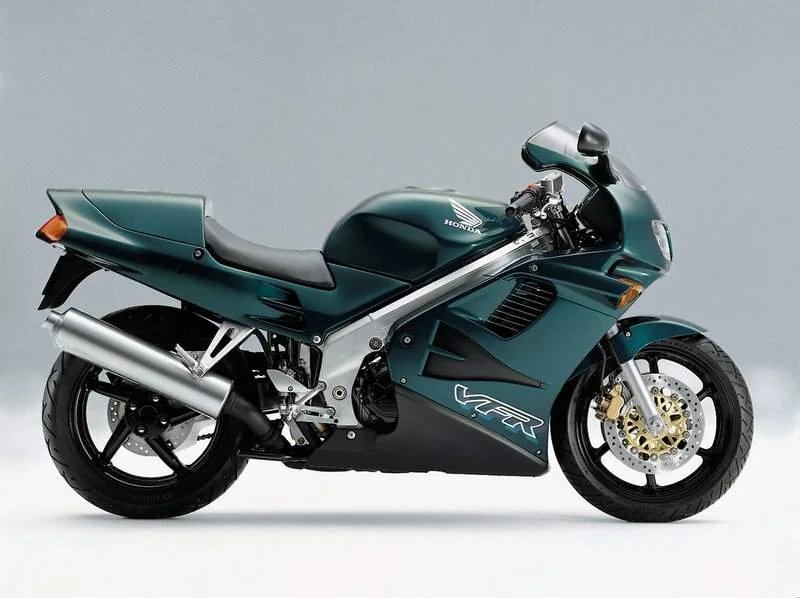
Honda VFR 750 F 1989 - Specifications & Review
Article Complete Info
| Articleid | 717188 |
|---|---|
| Category | Sport |
| Make | Honda |
| Model | VFR 750 F |
| Year | 1989 |
Chassis, Suspension, Brakes & Wheels
| Frontbrakes | Dual disc |
|---|---|
| Fronttyre | 110/80-17 |
| Rearbrakes | Single disc |
| Reartyre | 140/80-17 |
Engine & Transmission
| Borexstroke | 70.0 x 48.6 mm (2.8 x 1.9 inches) |
|---|---|
| Compression | 10.5:1 |
| Coolingsystem | Liquid |
| Displacement | 748.00 ccm (45.64 cubic inches) |
| Enginedetails | V4, four-stroke |
| Gearbox | 6-speed |
| Power | 106.00 HP (77.4 kW)) @ 10500 RPM |
| Transmissiontypefinaldrive | Chain |
| Valvespercylinder | 4 |
Physical Measures & Capacities
| Fuelcapacity | 20.00 litres (5.28 gallons) |
|---|---|
| Weightincloilgasetc | 222.0 kg (489.4 pounds) |
About Honda VFR 750 F 1989
Introducing the iconic 1989 Honda VFR 750 F, a motorcycle that epitomizes the golden era of sportbikes and Honda's engineering prowess. Launched at a time when the sport category was rapidly evolving, the VFR 750 F positioned itself as a versatile machine that appealed to both spirited riders and long-distance enthusiasts. With its sleek lines, aerodynamic fairing, and unmistakable V4 engine, this bike quickly captured the hearts and minds of riders who sought a blend of performance and comfort without compromise.
At the heart of the VFR 750 F lies a robust 748cc V4 engine, delivering an exhilarating 106 horsepower at a thrilling 10,500 RPM. This powerhouse is paired with a 6-speed gearbox that ensures smooth power delivery across the rev range, making it equally adept on winding backroads or open highways. The liquid-cooled engine features a compression ratio of 10.5:1, optimizing performance while maintaining reliability. With a weight of only 222 kg (489.4 pounds) fully fueled, the VFR’s agile handling and balance instill confidence in riders, allowing for nimble cornering and spirited acceleration, making every ride an adventure.
The VFR 750 F is packed with features that were advanced for its time, setting a standard in the sportbike segment. The dual disc front brakes provide ample stopping power, while the single disc rear brake complements the setup for a balanced braking experience. With a generous fuel capacity of 20 liters (5.28 gallons), long-distance rides are made easier, allowing riders to cover more ground without frequent stops. The bike's chassis is designed to enhance stability and comfort, making it suitable for both track days and everyday commuting. Additionally, the VFR's design includes a full fairing that not only adds to its sporty aesthetic but also improves aerodynamics and reduces wind resistance.
PROs:
- Powerful and Smooth Engine: The V4 configuration delivers a unique character and smooth power delivery, ideal for both aggressive riding and long-distance travel.
- Exceptional Handling: Its lightweight construction combined with a well-balanced chassis makes for agile handling and cornering, providing a sporty yet comfortable ride.
- Versatile Design: With its sporty aesthetics and practical features, the VFR 750 F is a great choice for riders who want a bike suitable for both fun and daily use.
CONs:
- Older Technology: Compared to modern sportbikes, the 1989 VFR may lack some of the advanced electronics and features found in contemporary models.
- Maintenance: The complexity of the V4 engine can make maintenance more challenging, particularly for DIY enthusiasts unfamiliar with its layout.
- Weight Distribution: While it’s relatively light, some riders may find that the weight distribution leans more towards the front, which can impact handling in certain conditions.
In summary, the 1989 Honda VFR 750 F is a motorcycle that stands the test of time, offering a thrilling riding experience with a practical edge. Its blend of performance, comfort, and cutting-edge technology for its era makes it a beloved choice for enthusiasts and collectors alike. Whether you’re carving through canyons or cruising down the highway, the VFR 750 F promises to deliver an unforgettable ride.