
Honda XBR 500 1986 - Specifications & Review
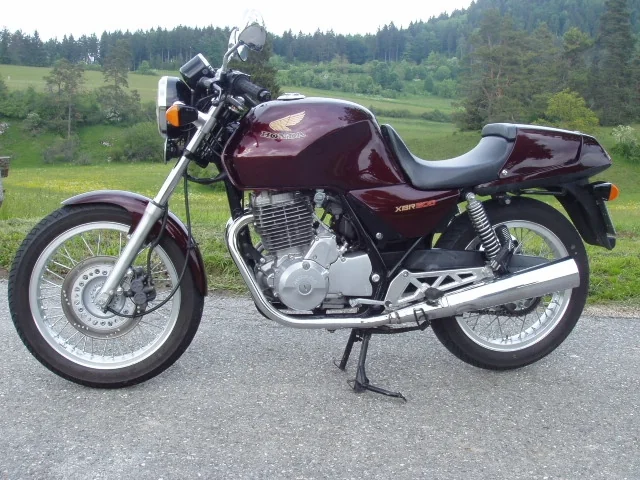
Article Complete Info
| Articleid | 803747 |
|---|---|
| Category | Naked bike |
| Make | Honda |
| Model | XBR 500 |
| Year | 1986 |
Chassis, Suspension, Brakes & Wheels
| Frontbrakes | Single disc |
|---|---|
| Fronttyre | 100/90-18 |
| Rearbrakes | Expanding brake |
| Reartyre | 110/90-18 |
Engine & Transmission
| Borexstroke | 92.0 x 75.0 mm (3.6 x 3.0 inches) |
|---|---|
| Compression | 8.9:1 |
| Coolingsystem | Air |
| Displacement | 498.00 ccm (30.39 cubic inches) |
| Enginedetails | Single cylinder, four-stroke |
| Gearbox | 5-speed |
| Power | 44.00 HP (32.1 kW)) @ 7000 RPM |
| Topspeed | 171.0 km/h (106.3 mph) |
| Transmissiontypefinaldrive | Chain |
| Valvespercylinder | 4 |
Physical Measures & Capacities
| Fuelcapacity | 20.00 litres (5.28 gallons) |
|---|---|
| Weightincloilgasetc | 182.0 kg (401.2 pounds) |
About Honda XBR 500 1986
In the world of motorcycling, few machines evoke nostalgia quite like the 1986 Honda XBR 500. As a standout in the naked bike category, this model was designed for riders who sought a blend of performance and practicality. With its minimalist styling and rugged build, the XBR 500 carved out a niche for itself in the mid-80s, appealing to enthusiasts who appreciated the raw essence of motorcycling. It represented Honda's commitment to crafting reliable and efficient motorcycles, making it a favorite among both urban commuters and weekend adventurers.
At the heart of the XBR 500 lies a robust 498cc single-cylinder, four-stroke engine, delivering an impressive 44 horsepower at 7,000 RPM. This powerplant is characterized by its strong low and mid-range torque, providing a responsive ride that makes city commuting a breeze while still offering the thrill of spirited acceleration on open roads. Riders can expect a top speed of 171 km/h (106.3 mph), which, paired with its lightweight of just 182 kg (401.2 lbs), yields a nimble and agile handling experience. The 5-speed gearbox ensures smooth gear transitions, allowing riders to tap into the engine's power efficiently, enhancing both performance and enjoyment.
The XBR 500's design incorporates several key features that underscore Honda's engineering prowess. Its single disc front brake delivers reliable stopping power, while the rear expanding brake provides solid control, ensuring that riders feel confident in various conditions. The bike's air-cooled engine is coupled with a practical 20-liter fuel tank, providing ample range for long rides without frequent stops. Additionally, with a compression ratio of 8.9:1 and a valve setup of four per cylinder, the XBR 500 strikes a balance between simplicity and efficiency, making it an ideal choice for both novice and experienced riders alike.
Pros:
- Lightweight and Agile: The XBR 500’s 182 kg weight makes it incredibly nimble, perfect for city riding and cornering.
- Strong Performance: With 44 HP and a responsive engine, it delivers an engaging ride that satisfies both novice riders and seasoned enthusiasts.
- Classic Aesthetic: Its naked bike design offers a timeless appeal, attracting riders who appreciate minimalist styling and functional elegance.
Cons:
- Limited Power for Highway Cruising: While it’s sufficient for city riding, the power may feel lacking for extended highway journeys compared to larger displacement bikes.
- Basic Suspension Setup: The suspension may not offer as much comfort or adjustability as more modern bikes, which could affect long-distance comfort.
- Parts Availability: Given its age, sourcing replacement parts can be challenging, which may deter some potential buyers looking for a hassle-free ownership experience.
In summary, the 1986 Honda XBR 500 is a remarkable example of Honda's engineering and design philosophy, resonating with those who seek a classic riding experience. Its blend of performance, style, and practicality ensures that it remains a beloved choice among motorcycle aficionados today.