
Honda XL 250 S 1980 - Specifications & Review
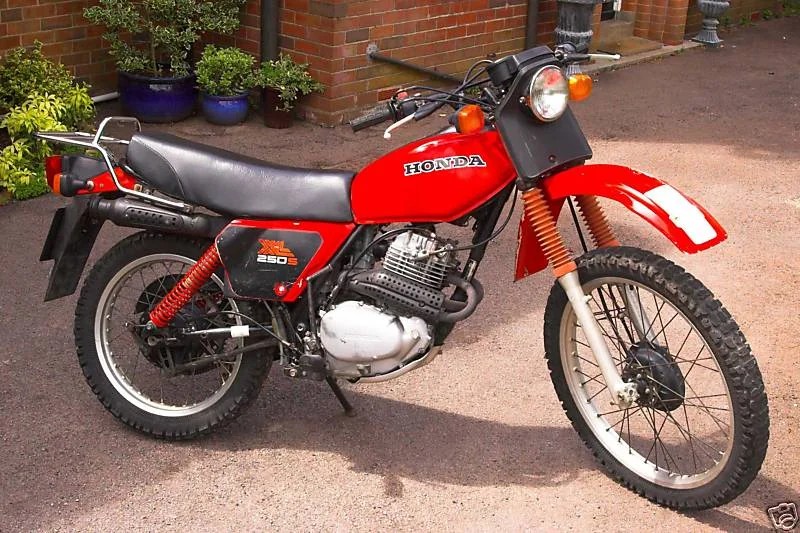
Article Complete Info
| Articleid | 22469 |
|---|---|
| Category | Enduro-offroad |
| Make | Honda |
| Model | XL 250 S |
| Year | 1980 |
Chassis, Suspension, Brakes & Wheels
| Frontbrakes | Expanding brake |
|---|---|
| Fronttyre | 3.00-23 |
| Rearbrakes | Expanding brake |
| Reartyre | 4.60-18 |
Engine & Transmission
| Borexstroke | 74.0 x 57.8 mm (2.9 x 2.3 inches) |
|---|---|
| Compression | 9.1:1 |
| Coolingsystem | Air |
| Displacement | 248.00 ccm (15.13 cubic inches) |
| Enginedetails | Single cylinder, four-stroke |
| Gearbox | 5-speed |
| Power | 17.00 HP (12.4 kW)) @ 7000 RPM |
| Topspeed | 111.0 km/h (69.0 mph) |
| Transmissiontypefinaldrive | Chain |
| Valvespercylinder | 4 |
Physical Measures & Capacities
| Fuelcapacity | 9.50 litres (2.51 gallons) |
|---|---|
| Weightincloilgasetc | 132.0 kg (291.0 pounds) |
About Honda XL 250 S 1980
Introducing the 1980 Honda XL 250 S, a quintessential model that epitomizes the spirit of adventure and versatility in the enduro-offroad category. This motorcycle was designed to cater to both novice riders and seasoned enthusiasts, providing an accessible platform for exploration on and off the beaten path. With its lightweight frame, robust construction, and Honda’s legendary reliability, the XL 250 S carved out a niche for itself in the competitive landscape of dual-purpose bikes during its time, making it a sought-after choice for riders looking to tackle diverse terrains.
At the heart of the Honda XL 250 S is a spirited 248cc single-cylinder, four-stroke engine that delivers a respectable 17 horsepower at 7,000 RPM. The air-cooled engine is paired with a 5-speed gearbox, ensuring smooth transitions and ample power for tackling both steep inclines and winding trails. Riders will appreciate the bike’s nimble handling, enhanced by its low weight of just 132 kg (291 lbs), which contributes to an agile feel, especially when navigating tight corners or rough pathways. With a top speed of 111 km/h (69 mph), the XL 250 S strikes a balance between leisurely rides and exhilarating bursts of speed, making it perfect for both casual weekend outings and spirited off-road adventures.
The Honda XL 250 S is equipped with features that enhance both performance and comfort. Its compact design, coupled with a fuel capacity of 9.5 liters (2.51 gallons), allows for extended rides without frequent stops for refueling. The expanding brake system at both the front and rear provides dependable stopping power, essential for managing the varying demands of off-road riding. The 9.1:1 compression ratio and four-valve setup promote efficient combustion, contributing to the bike’s spirited performance while also ensuring maintenance remains manageable for owners. Honda’s attention to detail is evident in the XL 250 S, with a design that prioritizes rider ergonomics and ease of use.
Pros:
- Lightweight and Agile: Weighing in at just 132 kg, the XL 250 S is easy to maneuver, making it ideal for both beginners and experienced riders.
- Reliable Honda Engineering: Known for its durability, this motorcycle promises longevity with minimal maintenance needs, backed by Honda's reputation.
- Versatile Performance: With a solid power output and flexible riding capabilities, it excels on both paved roads and rugged trails.
Cons:
- Limited Power for High Speeds: While it performs well off-road, the 17 HP may feel underwhelming for riders seeking high-speed thrills.
- Basic Brake System: The expanding brake design, while functional, may lack the stopping power and responsiveness found in more modern disc brake systems.
- Comfort on Long Rides: The riding position and seat may not provide the utmost comfort for extended journeys compared to more touring-oriented motorcycles.
In summary, the 1980 Honda XL 250 S is not just a motorcycle; it’s a passport to adventure, embodying the essence of exploration and the thrill of the ride. Whether you’re navigating city streets or venturing into the wild, this bike offers a reliable companion, ready to take on whatever lies ahead.