
2012
HP Power Facile 50 - Specifications & Review
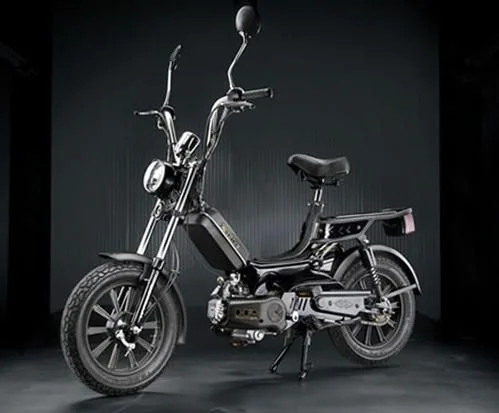
Article Complete Info
| Articleid | 521027 |
|---|---|
| Category | Scooter |
| Make | HP Power |
| Model | Facile 50 |
| Year | 2012 |
Chassis, Suspension, Brakes & Wheels
| Frametype | Steel |
|---|---|
| Frontbrakes | Expanding brake (drum brake) |
| Fronttyre | 3.00-12 |
| Rearbrakes | Expanding brake (drum brake) |
| Reartyre | 3.00-12 |
| Seat | Single seat |
Engine & Transmission
| Coolingsystem | Air |
|---|---|
| Displacement | 49.50 ccm (3.02 cubic inches) |
| Driveline | CVT |
| Emissiondetails | Euro 2 |
| Enginedetails | Single cylinder, four-stroke |
| Fuelsystem | Carburettor |
| Gearbox | Automatic |
| Topspeed | 40.0 km/h (24.9 mph) |
| Transmissiontypefinaldrive | Belt |
| Valvespercylinder | 2 |
Other Specifications
| Carryingcapacity | Rear rack |
|---|---|
| Coloroptions | Black |
| Comments | Italian brand. |
Physical Measures & Capacities
| Dryweight | 55.0 kg (121.3 pounds) |
|---|---|
| Fuelcapacity | 3.00 litres (0.79 gallons) |
| Overallheight | 1,040 mm (40.9 inches) |
| Overalllength | 1,670 mm (65.7 inches) |
| Overallwidth | 675 mm (26.6 inches) |
About HP Power
Country of Origin:
Europe
Founder:
Small engineering consortium (public documentation limited)
Best Known For:
Low-volume performance components and specials for European singles/twins
Company History
Under the HP Power banner, European tuners produced short-run specials and performance parts—exhausts, intake kits, ECU calibrations—that sharpened everyday motorcycles rather than chasing unobtainable peak numbers. The ethos was rider-centric: improve midrange, throttle response, and chassis feedback with carefully chosen springs, bushings, and brake upgrades. Many builds focused on beloved platforms—air-cooled boxers, Italian V-twins, and thumpy singles—where small changes create transformative feel. Documentation and dyno charts helped owners replicate results, while limited, bespoke projects showcased what a coherent package could deliver on mountain roads. Historically, HP Power exemplifies Europe’s workshop culture: expert hands elevating stock machines into personal instruments. Even where the brand name shifted or disappeared, the approach endures in garages across the continent—measured improvements, reversible mods, and respect for the original machine’s character.