
1992
Husqvarna 610 TE (reduced effect) - Specifications & Review
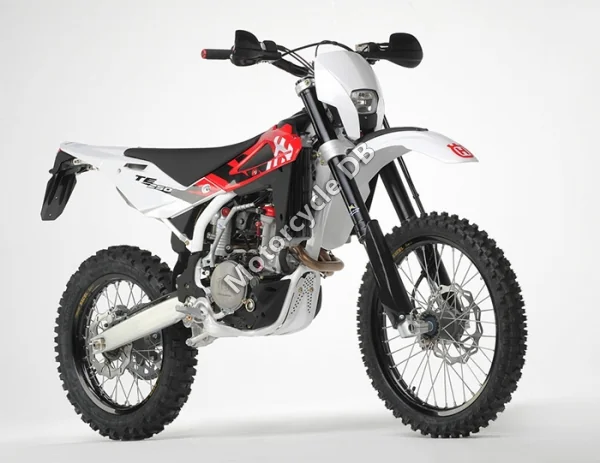
Article Complete Info
| Articleid | 490032 |
|---|---|
| Category | Unspecified category |
| Make | Husqvarna |
| Model | 610 TE (reduced effect) |
| Year | 1992 |
Chassis, Suspension, Brakes & Wheels
| Frontbrakes | Single disc |
|---|---|
| Fronttyre | 90/90-21 |
| Rearbrakes | Single disc |
| Reartyre | 140/90-18 |
Engine & Transmission
| Borexstroke | 98.0 x 76.5 mm (3.9 x 3.0 inches) |
|---|---|
| Compression | 10.2:1 |
| Coolingsystem | Liquid |
| Displacement | 577.00 ccm (35.21 cubic inches) |
| Enginedetails | Single cylinder, four-stroke |
| Gearbox | 6-speed |
| Power | 27.00 HP (19.7 kW)) @ 5000 RPM |
| Topspeed | 125.0 km/h (77.7 mph) |
| Transmissiontypefinaldrive | Chain |
| Valvespercylinder | 4 |
Physical Measures & Capacities
| Fuelcapacity | 9.00 litres (2.38 gallons) |
|---|---|
| Weightincloilgasetc | 132.0 kg (291.0 pounds) |
About Husqvarna
Country of Origin:
Sweden (modern production in Austria/Europe under Pierer Mobility)
Founder:
Husqvarna Vapenfabriks AB (17th-century origins; motorcycles early 1900s)
Best Known For:
MX/enduro dominance (CR/WR/FE), sleek street models (Vitpilen/Svartpilen), and rally success
Company History
Husqvarna’s motorcycle chapter began in the brass era, but its legend was forged in the dirt: light, sharp two-strokes that ruled motocross in the 1960s–70s and taught the world that weight is the enemy. The brand’s minimalist Swedish design language—clean lines, purposeful ergonomics—carried into modern four-strokes and, after ownership changes, into a new life within Pierer Mobility. MX and enduro ranges share platforms with KTM but wear unique ergonomics, suspension settings, and aesthetics—white/blue bodywork, lower seat heights on some models, and a refined feel. On the street, Vitpilen/Svartpilen distilled Scandinavian design into flickable singles and twins that made city riding artful. Rally programs and off-road championships kept Husky’s credentials current. Historically, Husqvarna is a throughline from the sport’s origins to today’s electronics-assisted dirt bikes: a brand that made ‘light and right’ doctrine mainstream. Whether a 1970s silver-tank two-stroke or a modern FE, a Husky feels like a precise tool—ready to turn terrain into flow.