
2008
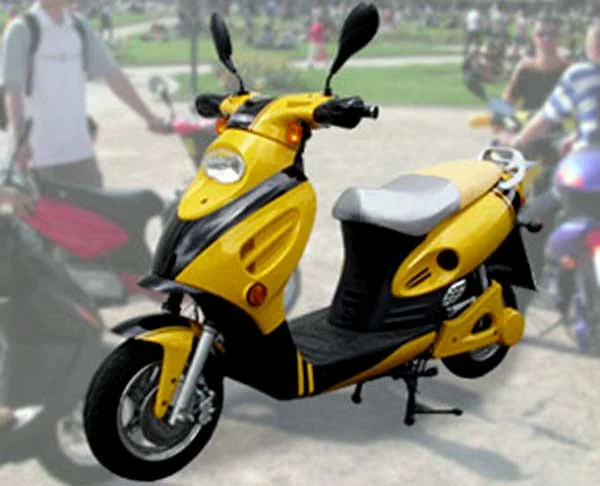
Innoscooter Jagas12z - Specifications & Review
Article Complete Info
| Articleid | 411319 |
|---|---|
| Category | Scooter |
| Make | Innoscooter |
| Model | Jagas12z |
| Price | Euro 1290. Prices depend on country, taxes, accessories, etc. |
| Year | 2008 |
Chassis, Suspension, Brakes & Wheels
| Frontbrakes | Single disc |
|---|---|
| Fronttyre | 3.00-10 |
| Rearbrakes | Expanding brake (drum brake) |
| Reartyre | 3.00-10 |
Engine & Transmission
| Coolingsystem | Air |
|---|---|
| Enginedetails | Electric |
| Gearbox | Automatic |
| Power | 1.07 HP (0.8 kW)) |
| Topspeed | 40.0 km/h (24.9 mph) |
Other Specifications
| Coloroptions | Blue/silver, red/black, yellow/black |
|---|---|
| Comments | Approx. 50 km without charging. Full charge 5 hours. |
| Starter | Electric |
Physical Measures & Capacities
| Dryweight | 115.0 kg (253.5 pounds) |
|---|---|
| Overalllength | 1,850 mm (72.8 inches) |
| Powerweightratio | 0.0093 HP/kg |
About Innoscooter
Country of Origin:
Germany
Founder:
Innoscooter GmbH (Innova/EV specialists)
Best Known For:
Early German-market electric scooters for commuters and delivery
Company History
Innoscooter was among Germany’s first movers to put homologated electric scooters into everyday use, long before battery swapping and app ecosystems were common. The machines favored hub motors, removable packs sized for flats-and-back commutes, weatherproof connectors, and simple dashboards that treated range honestly. Fleet pilots with universities, campuses, and small logistics firms provided the harsh lessons—BMS calibration in winter, charger durability, and parts availability—that later e-moto players took for granted. While the badge never reached mass fame, it helped seed technician training and regulatory familiarity with e-two-wheelers. Owners valued quiet, low-maintenance operation and TCO that beat many 50cc petrol scooters when electricity was cheap and trips were short. Historically, Innoscooter represents the groundwork of Europe’s e-scooter adoption: pragmatic, appliance-like vehicles that proved electrics could be tools, not toys, in temperate urban climates. The legacy lives in the expectations German riders now have for waterproofing, diagnostics, and truthful range claims.