
2010
Intrepid Revelation Canyon Runner - Specifications & Review
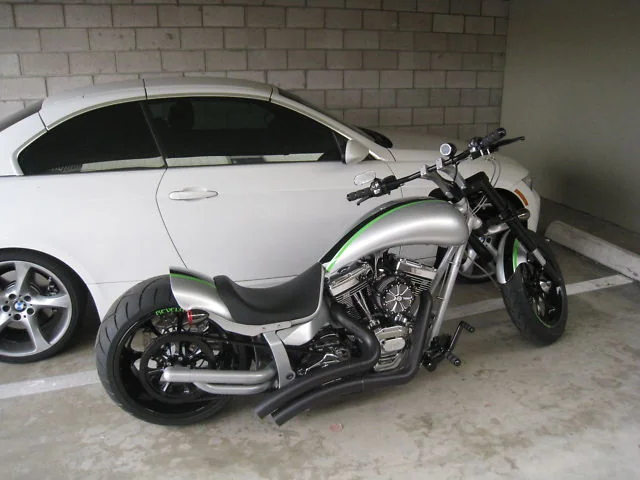
Article Complete Info
| Articleid | 198782 |
|---|---|
| Category | Custom-cruiser |
| Make | Intrepid |
| Model | Revelation Canyon Runner |
| Year | 2010 |
Chassis, Suspension, Brakes & Wheels
| Frontbrakes | Single disc. Performance Machine 4 Piston |
|---|---|
| Frontsuspension | Telescopic or Inverted, Chrome, Black Anodized |
| Fronttyre | 3.50-21 |
| Rearbrakes | Single disc |
| Rearsuspension | Legends Air Ride |
| Reartyre | 300/50-16 |
Engine & Transmission
| Displacement | 1753.52 ccm (107.00 cubic inches) |
|---|---|
| Enginedetails | V2, four-stroke |
| Gearbox | 6-speed |
| Transmissiontypefinaldrive | Belt |
Other Specifications
| Coloroptions | Black. Custom. |
|---|---|
| Comments | Limited Edition and Certified. 12 Total for 2010. Built to order. Various engine options. Wheels: Performance Machine, Forge Tech, Polished, chrome or color Matched. |
| Starter | Electric |
About Intrepid
Country of Origin:
United States
Founder:
Independent custom/boutique builder network (varied proprietors by period)
Best Known For:
Small-batch cruisers and customs tailored for rider ergonomics and stance
Company History
The Intrepid name appears across American custom-building in the 1990s–2000s as a badge for boutique, rider-focused machines. Rather than chase TV-era excess, Intrepid-type shops prioritized geometry and fit: bars where shoulders relax, pegs that don’t punish knees, and trail numbers that keep a long bike composed. Frames and tins were often hand-fabricated or reworked, with wiring looms laid out for serviceability—Deutsch connectors, protected runs, and fused subcircuits—so owners could live with their bikes, not just show them. Powerplants tended to be proven American V-twin architectures with modest tuning for heat management and drivability. Paint and metal finishes were deep without being fragile; the goal was a motorcycle that looked serious after 10,000 miles. Though volumes were tiny and documentation scattered, the Intrepid approach influenced a generation of garage builds: measure first, ride what you drew, then refine. Historically, the badge stands for good manners in the custom world—evidence that stance and sweep can coexist with braking and line-holding. Well-kept examples remain satisfying weekenders because they began as motorcycles for people who ride.