
2014
Jawa-CZ 660 - Specifications & Review
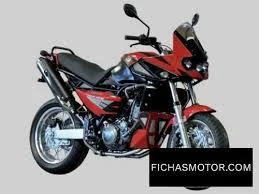
Article Complete Info
| Articleid | 726260 |
|---|---|
| Category | Super motard |
| Make | Jawa-CZ |
| Model | 660 |
| Year | 2014 |
Chassis, Suspension, Brakes & Wheels
| Frametype | Tubular |
|---|---|
| Frontbrakes | Double disc. Floating two piston calipers |
| Frontbrakesdiameter | 320 mm (12.6 inches) |
| Frontsuspension | Paioli telescopic forks |
| Fronttyre | 110/90-19 |
| Frontwheeltravel | 150 mm (5.9 inches) |
| Rearbrakes | Single disc. Radial four piston |
| Rearbrakesdiameter | 220 mm (8.7 inches) |
| Rearsuspension | Bitubo shocks |
| Reartyre | 140/80-17 |
| Rearwheeltravel | 170 mm (6.7 inches) |
Engine & Transmission
| Borexstroke | 100.0 x 83.0 mm (3.9 x 3.3 inches) |
|---|---|
| Compression | 9.7:1 |
| Coolingsystem | Liquid |
| Displacement | 651.90 ccm (39.78 cubic inches) |
| Enginedetails | Single cylinder, four-stroke |
| Enginetype | Minarelli engine |
| Fuelsystem | Carburettor. Bing |
| Gearbox | 5-speed |
| Power | 47.47 HP (34.6 kW)) @ 6500 RPM |
| Topspeed | 165.0 km/h (102.5 mph) |
| Torque | 57.00 Nm (5.8 kgf-m or 42.0 ft.lbs) @ 5000 RPM |
| Transmissiontypefinaldrive | Chain |
| Valvespercylinder | 4 |
Other Specifications
| Carryingcapacity | Top box, saddle bags |
|---|---|
| Coloroptions | Red/black, yellow/black |
| Starter | Electric |
Physical Measures & Capacities
| Dryweight | 195.0 kg (429.9 pounds) |
|---|---|
| Fuelcapacity | 17.00 litres (4.49 gallons) |
| Powerweightratio | 0.2434 HP/kg |
| Reservefuelcapacity | 1.50 litres (0.40 gallons) |
| Seatheight | 860 mm (33.9 inches) If adjustable, lowest setting. |
About Jawa-CZ
Country of Origin:
Czech Republic (historically Czechoslovakia)
Founder:
Export/branding alliance of Jawa and ČZ
Best Known For:
Co-branded exports blending Jawa durability and ČZ off-road pedigree
Company History
Jawa-CZ labels often appeared on exports where the strengths of two Czech pillars overlapped: Jawa’s roadgoing reliability and ČZ’s competition-savvy engineering. The collaboration allowed shared components, broadened dealer networks, and simplified paperwork for distant markets. Riders received bikes that started reliably, carried loads, and could be fettled with a modest toolkit—features that mattered far more than fashion in places where bikes were lifelines. In competition, ČZ’s motocross prowess burnished the shared identity; on the street, Jawa’s commuter composure carried daily riders. After economic transitions in the 1990s, each marque followed its own trajectory, but the joint badging remains a reminder of Czechoslovakia’s rich moto ecosystem. Historically, Jawa-CZ stands for practical internationalism: export what people need at a price they can reach, with parts they can actually get. Surviving examples in Africa, Asia, and Latin America speak to an era when Czech metal stitched the world a bit closer together.