
2004
Kanuni Seyhan 250 C - Specifications & Review
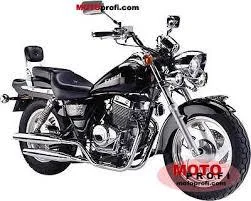
Article Complete Info
| Articleid | 677663 |
|---|---|
| Category | Allround |
| Make | Kanuni |
| Model | Seyhan 250 C |
| Year | 2004 |
Chassis, Suspension, Brakes & Wheels
| Frontsuspension | Telescopic |
|---|---|
| Fronttyre | 110/90-16 |
| Rearsuspension | Hydraulic double dampers |
| Reartyre | 130/90-15 |
Engine & Transmission
| Borexstroke | 53.0 x 53.0 mm (2.1 x 2.1 inches) |
|---|---|
| Compression | 9.2:1 |
| Coolingsystem | Air |
| Displacement | 250.00 ccm (15.26 cubic inches) |
| Enginedetails | Twin, four-stroke |
| Power | 18.00 HP (13.1 kW)) @ 8500 RPM |
| Torque | 15.00 Nm (1.5 kgf-m or 11.1 ft.lbs) @ 7000 RPM |
Physical Measures & Capacities
| Dryweight | 153.0 kg (337.3 pounds) |
|---|---|
| Fuelcapacity | 14.00 litres (3.70 gallons) |
| Overallheight | 1,075 mm (42.3 inches) |
| Overalllength | 2,150 mm (84.6 inches) |
| Overallwidth | 840 mm (33.1 inches) |
| Powerweightratio | 0.1176 HP/kg |
About Kanuni
Country of Origin:
Turkey
Founder:
Kanuni Motorcycle (Karadeniz region industrial group)
Best Known For:
Turkish-market commuters and licensed builds; continuation of select MZ designs
Company History
Kanuni became a familiar badge in Turkey by assembling practical commuters and scooters tailored to local roads and budgets. The brand’s most notable chapter involved acquiring rights and tooling for certain MZ (Motorradwerk Zschopau) models, continuing production of simple, durable two-strokes and later four-strokes under Turkish stewardship. This extended the life of proven platforms that mechanics knew well and owners could afford to maintain. Kanuni’s domestic network prioritized spares and clear manuals, crucial in regions where bikes are daily transport. Over time, as emissions tightened and tastes shifted, the lineup incorporated newer engines and styling while keeping an emphasis on value. Historically, Kanuni symbolizes regional industrial resilience: taking solid, serviceable designs and keeping them relevant through local manufacture. For riders, the payoff was predictable mobility backed by nearby parts—exactly what commuting families need.