
1959
Lambretta TV 175 Series 1 - Specifications & Review
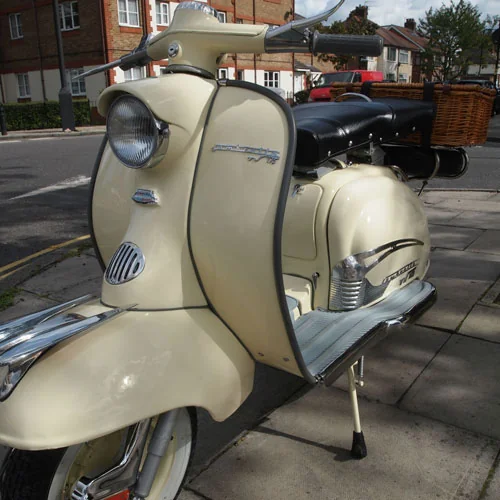
Article Complete Info
| Articleid | 587190 |
|---|---|
| Category | Scooter |
| Make | Lambretta |
| Model | TV 175 Series 1 |
| Year | 1959 |
Chassis, Suspension, Brakes & Wheels
| Frontbrakes | Expanding brake (drum brake) |
|---|---|
| Fronttyre | 3.50-10 |
| Rearbrakes | Expanding brake (drum brake) |
| Reartyre | 3.50-10 |
| Seat | Dual |
| Wheels | Chromed wheel rims |
Engine & Transmission
| Borexstroke | 60.0 x 60.0 mm (2.4 x 2.4 inches) |
|---|---|
| Compression | 8.0:1 |
| Coolingsystem | Air |
| Displacement | 170.00 ccm (10.37 cubic inches) |
| Enginedetails | Single cylinder, two-stroke |
| Fuelsystem | Carburettor. DellÓrto |
| Power | 8.60 HP (6.3 kW)) @ 6000 RPM |
| Topspeed | 103.0 km/h (64.0 mph) |
| Transmissiontypefinaldrive | Chain |
Other Specifications
| Coloroptions | Ivory |
|---|---|
| Starter | Kick |
Physical Measures & Capacities
| Dryweight | 114.8 kg (253.0 pounds) |
|---|---|
| Powerweightratio | 0.0749 HP/kg |
About Lambretta
Country of Origin:
Italy
Founder:
Ferdinando Innocenti (Innocenti S.A.)
Best Known For:
Steel-bodied classic scooters (LI, TV, GP) that defined postwar style
Company History
Lambretta, alongside Vespa, symbolized Italy’s postwar mobility boom. Built in Milan by Innocenti, Lambrettas used steel monocoques or semi-monocoques, robust engines, and clean lines that made practical transport feel glamorous. Clubs formed worldwide; Mods in the UK turned Lambrettas into cultural icons with mirrors and paint. Technically, the scooters were tough—oil-bath chains, honest power, and parts you could source anywhere. As car ownership rose and emissions tightened, production ceased in Italy, but licensed manufacturing and later revivals kept the badge alive. Today, restorations and modern interpretations carry the silhouette forward with EFI and ABS. Historically, Lambretta merges design and democracy: beautiful objects that mobilized nations. To ride one is to join a living culture—meets, patches, and a sense that utility and elegance can coexist on two wheels.