
2024
Lightning Strike R - Specifications & Review
Article Complete Info
| Articleid | 757919 |
|---|---|
| Category | Sport |
| Make | Lightning |
| Model | Strike R |
| Price | US$ 26998. MSRP depends on country, taxes, accessories, etc. |
| Year | 2024 |
Chassis, Suspension, Brakes & Wheels
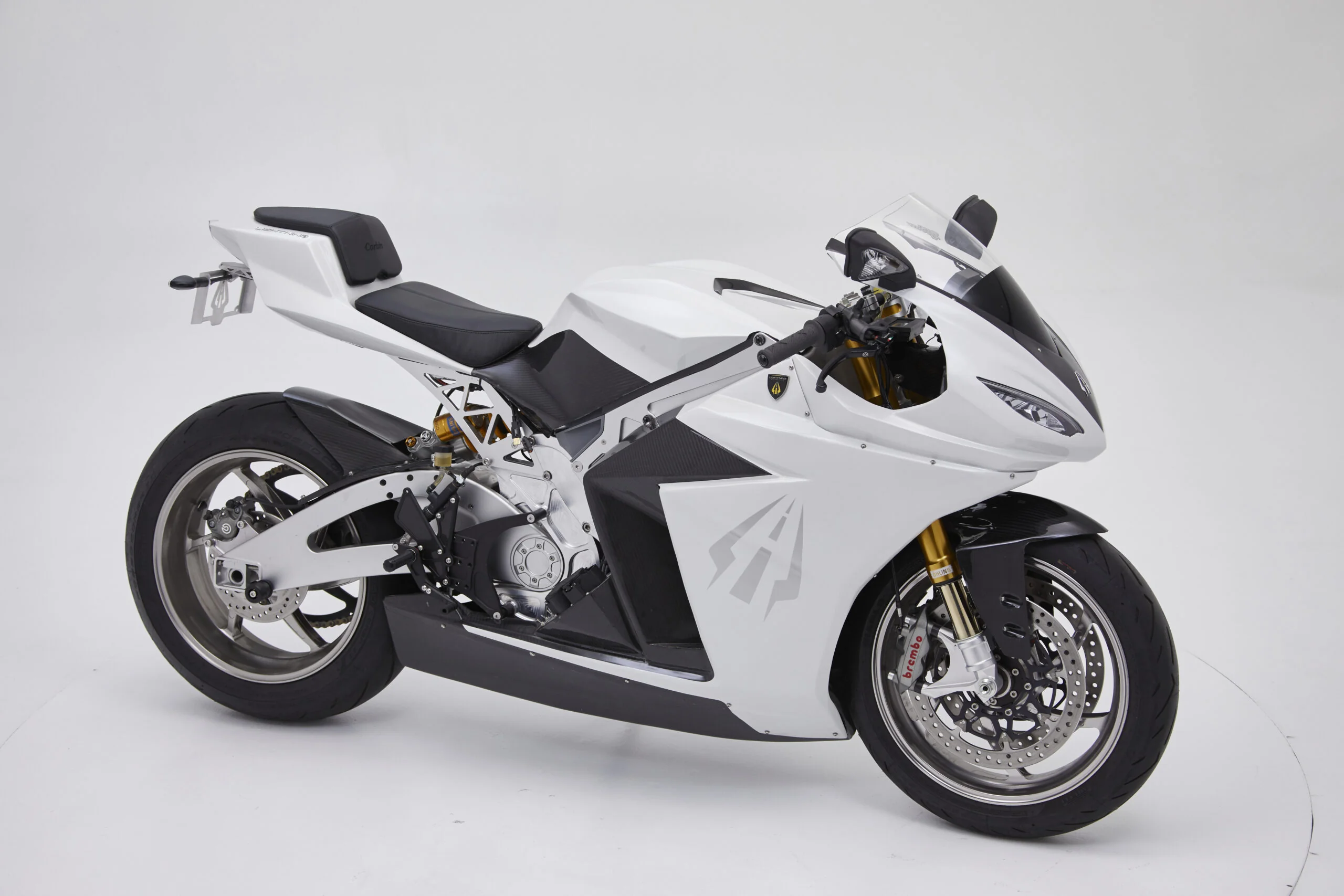
| Frontbrakes | Double disc. Brembo radial-mount forged 4-piston calipers |
|---|---|
| Frontbrakesdiameter | 320 mm (12.6 inches) |
| Frontsuspension | Öhlins FGRT inverted fork. Fully-adjustable, 43mm |
| Fronttyre | 120/70-ZR17 |
| Rearbrakes | Single disc. Brembo radial calipers |
| Rearbrakesdiameter | 245 mm (9.6 inches) |
| Rearsuspension | Fully-adjustable Öhlins TTX GP shock |
| Reartyre | 200/50-ZR17 |
| Wheels | Forged aluminum, optuional BST Carbon Fiber. |
Engine & Transmission
| Coolingsystem | Liquid |
|---|---|
| Driveline | Clutchless direct single-speed drive |
| Enginedetails | Lightning Ultra Power Dense Axial Flux 380VDC liquid-cooled, three-phase AC induction motor |
| Gearbox | 1-speed |
| Topspeed | 241.4 km/h (150.0 mph) |
| Torque | 162.7 Nm (16.6 kgf-m or 120.0 ft.lbs) |
| Transmissiontypefinaldrive | Chain (final drive) |
Other Specifications
| Coloroptions | Blue, yellow, white |
|---|---|
| Comments | Range 293 miles. 20 or 24 kWh lithium battery. Regenerative breaking. Carbon fiber fairings. Small windscreen. |
| Light | LED headlight |
| Starter | Electric |
Physical Measures & Capacities
| Seatheight | 813 mm (32.0 inches) If adjustable, lowest setting. |
|---|
About Lightning
Country of Origin:
United States
Founder:
Richard Hatfield
Best Known For:
LS-218 electric superbike and high-speed EV performance records
Company History
Lightning Motorcycle set out to prove electric could be fastest, not just cleanest. The LS-218—named for its Bonneville mph—showed that well-cooled batteries, efficient drivetrains, and careful aero could deliver eye-widening performance with a simplicity ICE bikes can’t match: no shifting, immediate torque, and low maintenance. Track and record attempts built credibility, while road-going variants explored how to package superbike thrust into reliable, chargeable daily machines. Lightning also experimented with sport-touring configurations and more affordable models, wrestling with the EV industry’s realities: cell sourcing, thermal management, charging standards, and dealer/service footprints. In a field where startups often vanish, Lightning’s persistence kept pressure on incumbents and influenced how riders think about EV motorcycling—less compromise, more grin. Historically, Lightning represents the audacious wing of the EV movement: small teams chasing big numbers to change minds. Whether or not a rider needs two-hundred-plus mph, the downstream benefits—better cooling strategies, sturdier connectors, smarter BMS—filter into practical electrics that start every morning and thrill on a back road.