
2010
Ligier Be Four 350 - Specifications & Review
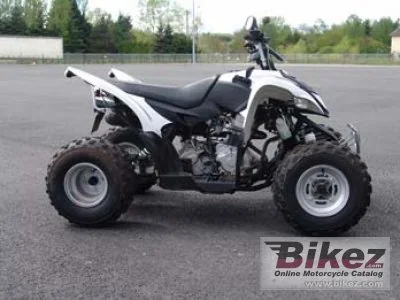
Article Complete Info
| Articleid | 756592 |
|---|---|
| Category | ATV |
| Make | Ligier |
| Model | Be Four 350 |
| Year | 2010 |
Chassis, Suspension, Brakes & Wheels
| Frontbrakes | Double disc. Hydraulic |
|---|---|
| Fronttyre | 21/7-10 |
| Rearbrakes | Single disc. Hydraulic |
| Reartyre | 20/10-9 |
Engine & Transmission
| Coolingsystem | Air |
|---|---|
| Displacement | 313.30 ccm (19.12 cubic inches) |
| Enginedetails | Single cylinder, four-stroke |
| Fuelsystem | Carburettor |
| Gearbox | Automatic |
| Ignition | CDI |
| Power | 20.00 HP (14.6 kW)) @ 6500 RPM |
| Transmissiontypefinaldrive | Chain |
Other Specifications
| Coloroptions | White |
|---|---|
| Comments | 2 seats. Italian brand. |
| Starter | Electric |
Physical Measures & Capacities
| Dryweight | 207.0 kg (456.4 pounds) |
|---|---|
| Fuelcapacity | 8.50 litres (2.25 gallons) |
| Overallheight | 1,290 mm (50.8 inches) |
| Overalllength | 1,820 mm (71.7 inches) |
| Overallwidth | 1,150 mm (45.3 inches) |
| Powerweightratio | 0.0966 HP/kg |
About Ligier
Country of Origin:
France
Founder:
Guy Ligier
Best Known For:
Microcars and, historically, small two-wheelers/scooters for the French market
Company History
Best known for racing and microcars, Ligier has periodically touched two-wheel mobility through branded mopeds/scooters and supplier partnerships aimed at France’s urban riders. The company’s broader engineering culture—lightweight structures, compliance with strict EU regs, and attention to ergonomics—translated well to step-throughs designed for dense towns. Although two-wheelers were never Ligier’s primary business, the brand’s approach emphasized reliability, parts availability, and elegant packaging. In the French mobility ecosystem, Ligier-branded two-wheelers complemented its license-free vehicles, offering teens and commuters options before or instead of car ownership. Historically, Ligier’s significance to two wheels is peripheral but instructive: it demonstrates how competencies in chassis, homologation, and user-centric design can cross categories. The name signals French industrial agility—racing pedigree informing practical transport—and the understanding that short, frequent trips are where design and durability pay off most for daily users.