
2013
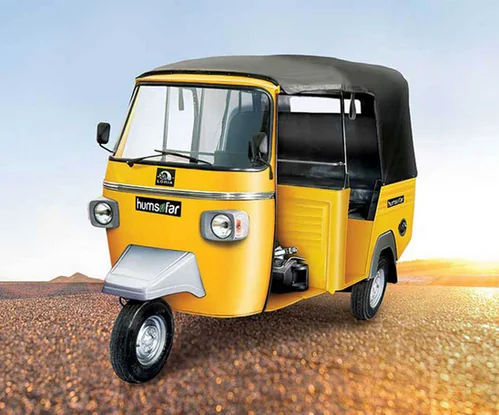
Lohia Humsafar - Specifications & Review
Article Complete Info
| Articleid | 758097 |
|---|---|
| Category | Scooter |
| Make | Lohia |
| Model | Humsafar |
| Year | 2013 |
Chassis, Suspension, Brakes & Wheels
| Frametype | Monocoque chassis design with pressed steel Sheet and Stamped. |
|---|---|
| Frontbrakes | Expanding brake (drum brake) |
| Frontsuspension | Dual Action Hydraulic Telescopic Shock Absorber with Helical Springs |
| Fronttyre | 4.50-10 |
| Rearbrakes | Expanding brake (drum brake) |
| Rearsuspension | Independent suspensions with triangular Arm, rubber compression spring and dual action hydraulic shock absorber |
| Reartyre | 4.50-10 |
| Seat | 2-person rear seat |
| Wheels | Two rear wheels |
Engine & Transmission
| Compression | 19.0:1 |
|---|---|
| Coolingsystem | Oil & air |
| Displacement | 436.00 ccm (26.60 cubic inches) |
| Enginedetails | Single cylinder, four-stroke |
| Enginetype | Diesel engine |
| Fuelsystem | Injection |
| Gearbox | 4-speed |
| Power | 7.50 HP (5.5 kW)) @ 3600 RPM |
| Topspeed | 50.0 km/h (31.1 mph) |
| Torque | 18.00 Nm (1.8 kgf-m or 13.3 ft.lbs) @ 2400 RPM |
Other Specifications
| Comments | Three wheel passenger scooter. Lohia is made in India. |
|---|---|
| Electrical | 12V, 50 A.H battery. |
| Instruments | Analogue |
| Starter | Electric |
Physical Measures & Capacities
| Dryweight | 420.0 kg (925.9 pounds) |
|---|---|
| Fuelcapacity | 10.50 litres (2.77 gallons) |
| Overallheight | 1,800 mm (70.9 inches) |
| Overalllength | 2,930 mm (115.4 inches) |
| Overallwidth | 1,440 mm (56.7 inches) |
| Powerweightratio | 0.0179 HP/kg |
About Lohia
Country of Origin:
India
Founder:
Lohia Auto Industries (Ayush Lohia; part of Lohia Global)
Best Known For:
Affordable e-scooters and three-wheelers for Indian cities and small businesses
Company History
Lohia Auto entered India’s mobility market with a pragmatic portfolio: electric scooters sized for city trips and three-wheelers configured for cargo and passenger service. By focusing on removable batteries, robust controllers, and spares pricing aligned with small-business economics, Lohia made EVs tangible for shopkeepers, delivery workers, and families in tier-2/3 towns. The company’s dealer networks emphasized service access and financing, recognizing that uptime, not peak power, determines value. As policies evolved, Lohia iterated on waterproofing for monsoons, brake upgrades, and telematics for fleet oversight. While competition intensified, the brand’s grounding in utility—vehicles that pay for themselves reliably—kept it relevant. Historically, Lohia represents India’s EV democratization: incremental improvements and local support turning early adopter anxiety into everyday trust. The badge’s impact is measured in quieter neighborhoods, lower fuel bills, and more predictable days for people whose livelihoods depend on simple, sturdy transport.