
2022
Lohia Oma Star - Specifications & Review
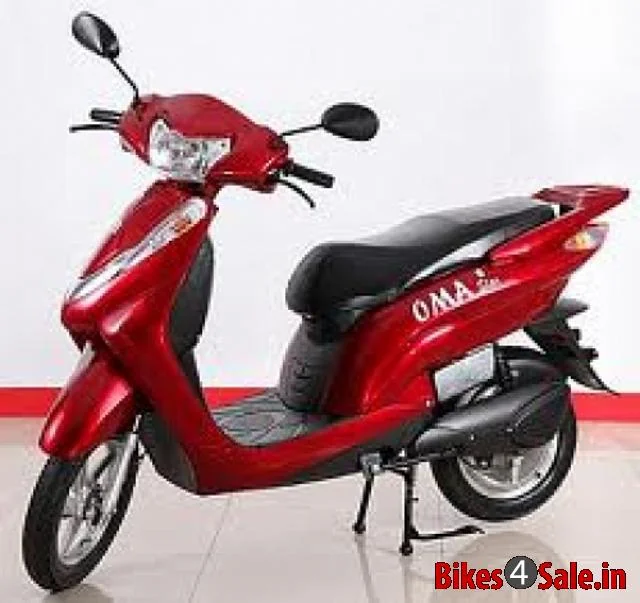
Article Complete Info
| Articleid | 670173 |
|---|---|
| Category | Scooter |
| Make | Lohia |
| Model | Oma Star |
| Year | 2022 |
Chassis, Suspension, Brakes & Wheels
| Frametype | Steel |
|---|---|
| Frontbrakes | Expanding brake (drum brake) |
| Frontbrakesdiameter | 80 mm (3.1 inches) |
| Frontsuspension | Telescopic fork |
| Fronttyre | 3.00-16 |
| Rearbrakes | Expanding brake (drum brake) |
| Rearbrakesdiameter | 110 mm (4.3 inches) |
| Rearsuspension | Twin coil spring |
| Reartyre | 3.00-16 |
| Seat | Dual seat |
Engine & Transmission
| Coolingsystem | Air |
|---|---|
| Enginedetails | BLDC Motor |
| Enginetype | Electric |
| Gearbox | Automatic |
| Power | 0.3 HP (0.2 kW)) |
| Topspeed | 25.0 km/h (15.5 mph) |
| Transmissiontypefinaldrive | Chain (final drive) |
Other Specifications
| Coloroptions | Red |
|---|---|
| Comments | Range 60 km. Charging 6-8 hours. Made in India. |
| Electrical | Maintenance Free, VRLA, 20 Ah, 48V battery |
| Instruments | Digital |
| Starter | Electric |
Physical Measures & Capacities
| Alternateseatheight | 770 mm (30.3 inches) If adjustable, highest setting. |
|---|---|
| Dryweight | 66.0 kg (145.5 pounds) |
| Overallheight | 1030 mm (40.6 inches) |
| Overalllength | 1800 mm (70.9 inches) |
| Overallwidth | 650 mm (25.6 inches) |
| Powerweightratio | 0.0052 HP/kg |
About Lohia
Country of Origin:
India
Founder:
Lohia Auto Industries (Ayush Lohia; part of Lohia Global)
Best Known For:
Affordable e-scooters and three-wheelers for Indian cities and small businesses
Company History
Lohia Auto entered India’s mobility market with a pragmatic portfolio: electric scooters sized for city trips and three-wheelers configured for cargo and passenger service. By focusing on removable batteries, robust controllers, and spares pricing aligned with small-business economics, Lohia made EVs tangible for shopkeepers, delivery workers, and families in tier-2/3 towns. The company’s dealer networks emphasized service access and financing, recognizing that uptime, not peak power, determines value. As policies evolved, Lohia iterated on waterproofing for monsoons, brake upgrades, and telematics for fleet oversight. While competition intensified, the brand’s grounding in utility—vehicles that pay for themselves reliably—kept it relevant. Historically, Lohia represents India’s EV democratization: incremental improvements and local support turning early adopter anxiety into everyday trust. The badge’s impact is measured in quieter neighborhoods, lower fuel bills, and more predictable days for people whose livelihoods depend on simple, sturdy transport.