
2021
Mahindra Centuro NXT - Specifications & Review
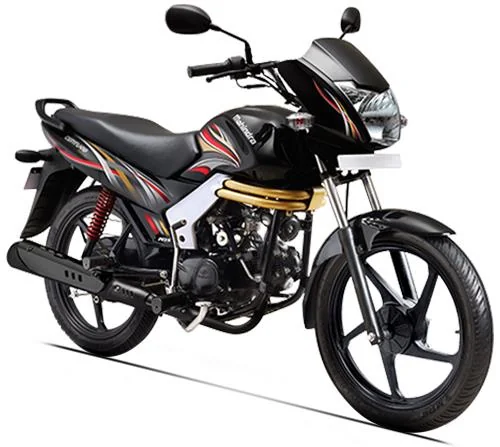
Article Complete Info
| Articleid | 243554 |
|---|---|
| Category | Allround |
| Make | Mahindra |
| Model | Centuro NXT |
| Year | 2021 |
Chassis, Suspension, Brakes & Wheels
| Frametype | Double cradle steel tubular structure |
|---|---|
| Frontbrakes | Expanding brake (drum brake) |
| Frontsuspension | Telescopic fork, coil spring |
| Rearbrakes | Expanding brake (drum brake) |
| Rearsuspension | Dual shocks, coiled 5-step adjustable |
Engine & Transmission
| Borexstroke | 52.4 x 49.5 mm (2.1 x 1.9 inches) |
|---|---|
| Compression | 9.5:1 |
| Coolingsystem | Air |
| Displacement | 106.7 ccm (6.51 cubic inches) |
| Enginedetails | Single cylinder, four-stroke |
| Gearbox | 4-speed |
| Power | 8.5 HP (6.2 kW)) @ 7500 RPM |
| Torque | 8.5 Nm (0.9 kgf-m or 6.3 ft.lbs) @ 5500 RPM |
| Transmissiontypefinaldrive | Chain |
Other Specifications
| Coloroptions | Black, red, grey |
|---|---|
| Comments | Made in India. |
| Electrical | 12V / 6 Ah (maintenance Free) battery. |
| Starter | Electric & kick |
Physical Measures & Capacities
| Fuelcapacity | 12.70 litres (3.36 gallons) |
|---|---|
| Groundclearance | 173 mm (6.8 inches) |
| Overallheight | 1111 mm (43.7 inches) |
| Overalllength | 2031 mm (80.0 inches) |
| Overallwidth | 735 mm (28.9 inches) |
| Seatheight | 800 mm (31.5 inches) If adjustable, lowest setting. |
| Weightincloilgasetc | 126.0 kg (277.8 pounds) |
About Mahindra
Country of Origin:
India
Founder:
Mahindra & Mahindra (J. C. & K. C. Mahindra; Malik Ghulam Muhammad)
Best Known For:
Indian commuter motorcycles/scooters, Moto3 program, and later investment in Peugeot Motocycles/Classic Legends
Company History
Mahindra entered two-wheelers to complement its automotive footprint, focusing first on robust commuters and scooters tuned for Indian roads. Engineering emphasized durability, service access, and dealer coverage in smaller cities—traits that matter when a bike is a family asset. The company also invested in racing via Moto3, gaining R&D experience and credibility, and later pivoted strategy through acquisitions: Peugeot Motocycles in Europe and Classic Legends in India, the latter reviving Jawa, Yezdi, and BSA for retro-minded buyers. While Mahindra-badged motorcycles became less central over time, the group’s influence on India’s two-wheel ecosystem deepened through supply chains, financing, and brand stewardship. Historically, Mahindra shows the conglomerate playbook: build domestic competence, learn via competition, then use capital and partnerships to address multiple market layers—from mass mobility to nostalgia-driven niches. Its legacy on two wheels is as much infrastructural as mechanical: dealer networks, compliance expertise, and the revival of beloved heritage names.