
2015
Aspes Vega Hybrid 50 - Specifications & Review
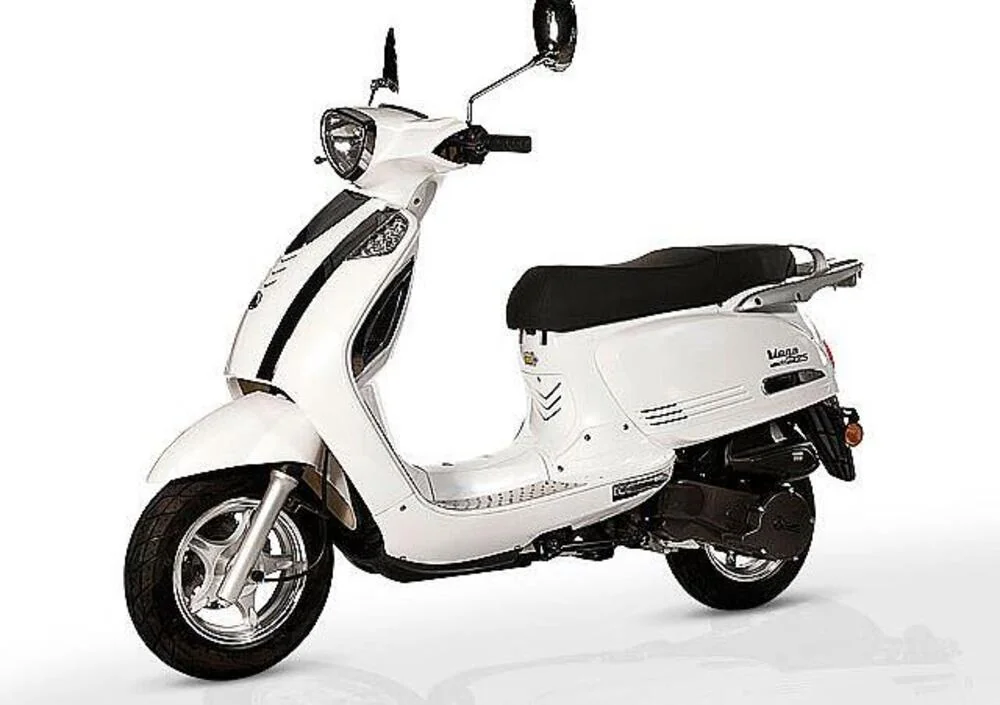
Article Complete Info
| Articleid | 912948 |
|---|---|
| Category | Scooter |
| Make | Aspes |
| Model | Vega Hybrid 50 |
| Price | Euro 2970. Prices depend on country, taxes, accessories, etc. |
| Year | 2015 |
Chassis, Suspension, Brakes & Wheels
| Frontbrakes | Single disc |
|---|---|
| Fronttyre | 3.50-10 |
| Rearbrakes | Expanding brake (drum brake) |
| Reartyre | 3.50-10 |
| Seat | Dual |
| Wheels | Aluminium |
Engine & Transmission
| Borexstroke | 39.0 x 41.5 mm (1.5 x 1.6 inches) |
|---|---|
| Compression | 10.5:1 |
| Coolingsystem | Air |
| Displacement | 49.50 ccm (3.02 cubic inches) |
| Enginedetails | Single cylinder, four-stroke |
| Enginetype | Additional 48V 600W brushless electric motor |
| Fuelsystem | Carburettor |
| Gearbox | Automatic |
| Power | 3.75 HP (2.7 kW)) @ 7500 RPM |
| Topspeed | 45.0 km/h (28.0 mph) |
| Transmissiontypefinaldrive | Belt |
Other Specifications
| Carryingcapacity | Optional top box. |
|---|---|
| Coloroptions | Silver |
| Comments | Hybrid with additional 600 W electric engine. 48V - 15Ah (C-LiFePO4 Lithium phosphate) battery. Automatically switches from electric to gasoline over 20 km/h. Optional windshield. |
| Starter | Electric |
Physical Measures & Capacities
| Dryweight | 99.0 kg (218.3 pounds) |
|---|---|
| Fuelcapacity | 5.50 litres (1.45 gallons) |
| Groundclearance | 140 mm (5.5 inches) |
| Overallheight | 1,105 mm (43.5 inches) |
| Overalllength | 1,775 mm (69.9 inches) |
| Overallwidth | 670 mm (26.4 inches) |
| Powerweightratio | 0.0379 HP/kg |
About Aspes
Country of Origin:
Italy
Founder:
Aspes S.p.A. (Milanese team)
Best Known For:
1970s small-displacement enduro/motocross bikes and later urban models
Company History
Aspes blossomed during Italy’s 1970s off-road wave, producing nimble 50–125cc enduros and MXers that gave young riders a taste of competition without intimidation. Engines sourced from trusted suppliers sat in tidy steel frames with suspension tailored to Mediterranean terrain—rocky climbs, dusty fire roads, and tight woodland single-track. Later, as urban mobility surged, Aspes flirted with light commuters and small roadsters. Like many niche brands, it faced headwinds as Japanese OEMs industrialized quality at scale and as emissions rules raised costs for two-strokes. Yet Aspes machines retained a following for their lively character and approachable maintenance. Historically, Aspes is part of the mosaic that made Italy a small-bike powerhouse: local shops, regional racing scenes, and a feedback loop between paddock and factory. Surviving Aspes enduros encapsulate a riding style—momentum, finesse, and the joy of a light chassis dancing over rough ground.