
2018
Moto Guzzi V85 Concept - Specifications & Review
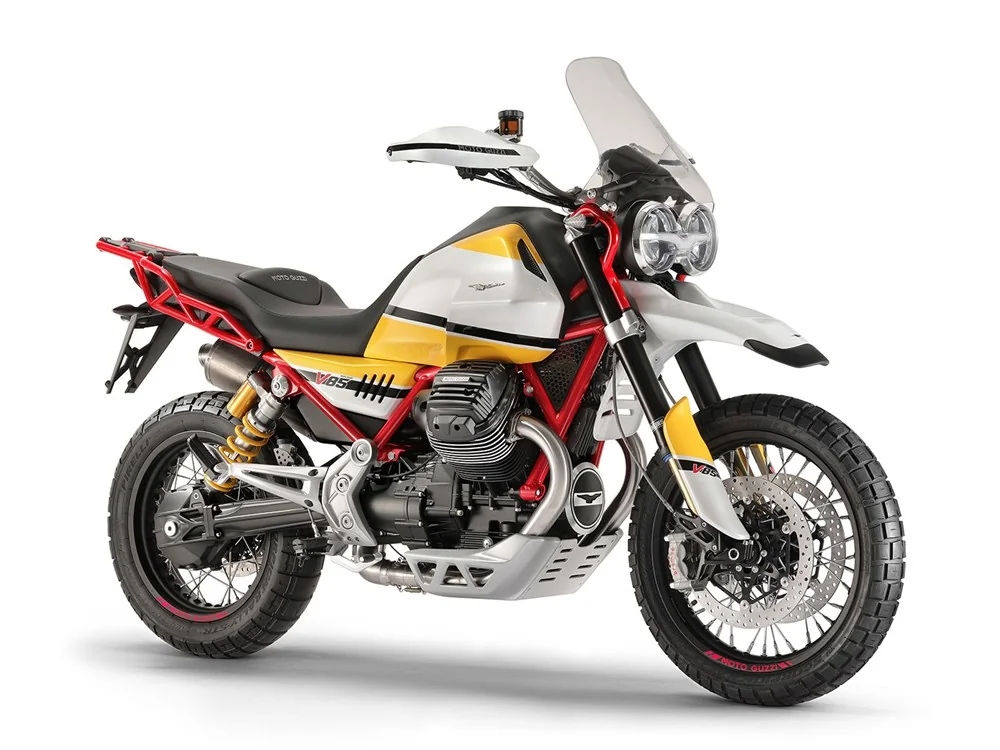
Article Complete Info
| Articleid | 390020 |
|---|---|
| Category | Prototype-concept model |
| Make | Moto Guzzi |
| Model | V85 Concept |
| Year | 2018 |
Chassis, Suspension, Brakes & Wheels
| Frametype | Steel-Tube Frame |
|---|---|
| Frontbrakes | Double disc |
| Frontsuspension | Telescopic fork |
| Rearbrakes | Single disc |
| Rearsuspension | Asymmetric swingarm |
Engine & Transmission
| Displacement | 850.00 ccm (51.87 cubic inches) |
|---|---|
| Emissiondetails | Euro 4 |
| Enginedetails | V2, four-stroke |
| Power | 80.00 HP (58.4 kW)) |
Other Specifications
| Coloroptions | Yellow/white/red/black |
|---|---|
| Comments | Windscreen |
| Instruments | Digital instrumentation |
| Light | LED headlights |
| Starter | Electric |
About Moto Guzzi
Country of Origin:
Italy
Founder:
Carlo Guzzi, Giorgio Parodi, Giovanni Ravelli
Best Known For:
Transverse V-twins, shaft drive, and distinctive Italian character (V7, Le Mans, California)
Company History
Founded on Lake Como in 1921, Moto Guzzi is one of motorcycling’s oldest continuous makers. After pioneering wind-tunnel work and racing success in the 1930s–50s, Guzzi created its enduring signature: the air-cooled transverse V-twin with shaft drive. This architecture gives the bikes their rhythm and silhouette, from classic V7 standards to the Le Mans sportbikes that defined Italian speed for a generation. Touring models like the California added long-haul credibility, while police and military contracts affirmed durability. Through ownership changes, Guzzi’s identity persisted: engines that start every spring, frames that communicate, and a mechanical honesty that feels artisanal. Modern Guzzis pair ABS/traction control with that familiar crankcase thrum, and new platforms have nudged performance and refinement forward without abandoning the brand’s soul. Historically, Moto Guzzi marries engineering quirk and everyday friendliness—the rare brand where a century of history rides along without becoming baggage.