
2008
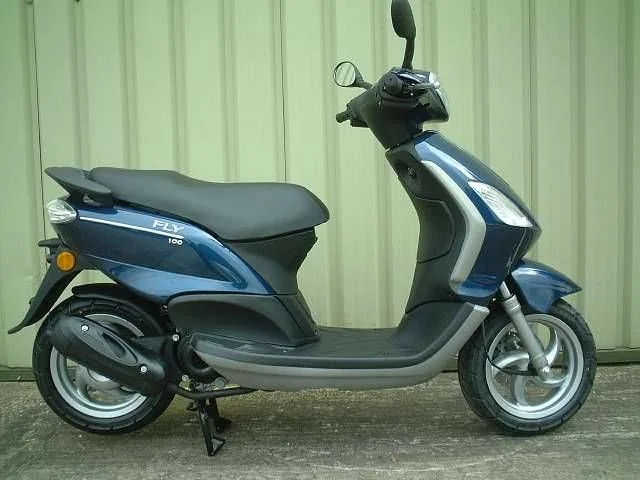
Piaggio Fly 100 - Specifications & Review
Article Complete Info
| Articleid | 10579 |
|---|---|
| Category | Scooter |
| Make | Piaggio |
| Model | Fly 100 |
| Year | 2008 |
Chassis, Suspension, Brakes & Wheels
| Frontbrakes | Single disc |
|---|---|
| Frontbrakesdiameter | 200 mm (7.9 inches) |
| Frontsuspension | Telescopic fork |
| Rearbrakes | Expanding brake (drum brake) |
| Rearbrakesdiameter | 140 mm (5.5 inches) |
| Rearsuspension | Hydraulic shock absorbers with preload adjuster |
Engine & Transmission
| Coolingsystem | Air |
|---|---|
| Displacement | 100.00 ccm (6.10 cubic inches) |
| Enginedetails | Single cylinder, four-stroke |
| Gearbox | Automatic |
Other Specifications
| Coloroptions | Azzurro Siderale, Grigio Excalibur |
|---|---|
| Starter | Electric |
Physical Measures & Capacities
| Weightincloilgasetc | 123.0 kg (271.2 pounds) |
|---|
About Piaggio
Country of Origin:
Italy
Founder:
Rinaldo Piaggio (later Vespa by Corradino D’Ascanio’s design)
Best Known For:
Vespa scooters; later umbrella for Aprilia, Moto Guzzi, and more
Company History
Piaggio pivoted from rail and aeronautics to postwar mobility with the Vespa, a steel-bodied icon that made personal transport elegant and gender-neutral. Protective bodywork, step-through ergonomics, and reliable engines turned the scooter into a social transformer across Europe and beyond. Over decades, Piaggio refined two-strokes into clean four-strokes, added modern electronics and ABS, and expanded body styles from classic Primavera to sporty GTS. As a group, Piaggio also stewarded storied marques like Aprilia and Moto Guzzi, leveraging scale while letting brands keep identity. Historically, Piaggio is both a product and a platform: it defined the scooter as a cultural object, then built an industrial network that sustains diverse two-wheel passions under one roof.