
2009
Precision Cycle Works Bagger - Specifications & Review
Article Complete Info
| Articleid | 374628 |
|---|---|
| Category | Touring |
| Make | Precision Cycle Works |
| Model | Bagger |
| Year | 2009 |
Chassis, Suspension, Brakes & Wheels
| Frametype | PCW softail frame 8´ Backbone stretch. |
|---|---|
| Frontbrakes | Single disc. Wilwood brake calipers with 11-1/2” polished S.S. rotors. |
| Frontsuspension | Tube forks, 2´ under with 3 deg. trees |
| Fronttyre | 90/90-21 |
| Rake | 34.0° |
| Rearbrakes | Single disc. Wilwood brake calipers with 11-1/2” polished S.S. rotors. |
| Reartyre | 250-18 |
Engine & Transmission
| Coolingsystem | Air |
|---|---|
| Displacement | 1573.25 ccm (96.00 cubic inches) |
| Enginedetails | V2, four-stroke |
| Exhaustsystem | PCW custom exhaust pipes |
| Gearbox | 6-speed |
Other Specifications
| Coloroptions | Custom one-color paint. |
|---|---|
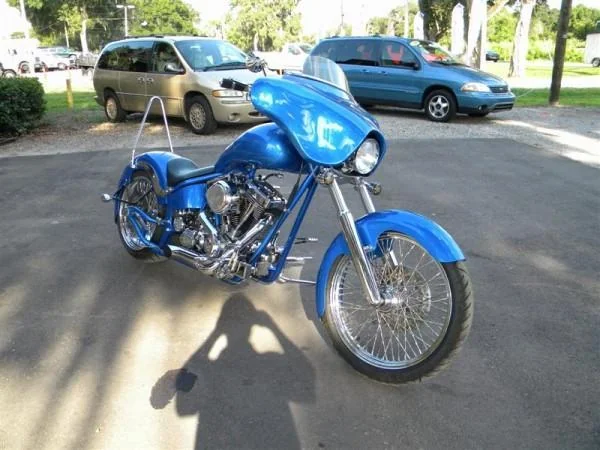
| Comments | Black or polished S and S 96ci motor. 2 place seat. Custom long and low steel rear fender. Custom front fiberglass fairing with room for radio.# Custom rear fiberglass saddle bags. Front floor boards. |
| Starter | Electric |
Physical Measures & Capacities
| Overalllength | 2,591 mm (102.0 inches) |
|---|
About Precision Cycle Works
Country of Origin:
United States
Founder:
Independent custom-shop lineage (leadership not widely publicized)
Best Known For:
Low-volume American customs and chassis parts with clean geometry and billet details
Company History
Under the Precision Cycle Works banner, U.S. fabricators produced small batches of customs that favored rideability over shock value. Frames were jig-built for straight tracking; triple trees, controls, and pegs were machined in-house or to spec for a crisp, tactile feel. The bikes typically used proven American V-twins paired with stout braking and wiring looms routed for serviceability. Customers could spec bar height, peg position, and gear ratios, making the final machine a fit rather than a guess. Documentation and parts interchangeability mattered: clear torque specs and cross-compatibility with common aftermarket components meant owners could keep bikes sorted for years. Historically, the PCW name represents the mature end of the custom boom—craftsmanship grounded in engineering basics. These are customs that stay composed on scarred highways, start reliably after sitting, and still draw a crowd because proportion and finish never go out of style.