
1974
Rockford Tora - Specifications & Review
Article Complete Info
| Articleid | 296992 |
|---|---|
| Category | Enduro-offroad |
| Make | Rockford |
| Model | Tora |
| Year | 1974 |
Chassis, Suspension, Brakes & Wheels
| Frontbrakes | Expanding brake (drum brake) |
|---|---|
| Frontsuspension | Teloscopic forks |
| Rearbrakes | Expanding brake (drum brake) |
| Rearsuspension | dual spring, non adjustable |
Engine & Transmission
| Compression | 7.1:1 |
|---|---|
| Coolingsystem | Air |
| Displacement | 58.00 ccm (3.54 cubic inches) |
| Enginedetails | Single cylinder, two-stroke |
| Exhaustsystem | Single muffler with tail pipe |
| Fuelconsumption | 1.23 litres/100 km (81.3 km/l or 191.24 mpg) |
| Fuelsystem | Carburettor. Y16PT-16mm |
| Gearbox | 4-speed |
| Greenhousegases | 28.5 CO2 g/km. (CO2 - Carbon dioxide emission) |
| Ignition | A.C. Magneto |
| Lubricationsystem | Gas/Oil mixture |
| Power | 5.80 HP (4.2 kW)) @ 8500 RPM |
| Topspeed | 80.5 km/h (50.0 mph) |
| Torque | 0.48 Nm (0.0 kgf-m or 0.4 ft.lbs) @ 7500 RPM |
| Transmissiontypefinaldrive | Shaft drive (cardan) |
| Valvespercylinder | 4 |
Other Specifications
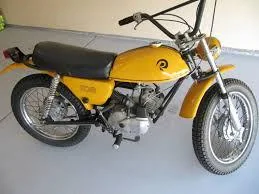
| Coloroptions | Frame/engine/seat - Black Exterior - Yellow |
|---|---|
| Comments | miles per gallon is 190 @ 20mph (optimum) The Rockford Motors Tora series was offered in two models. The Standard and the Deluxe which was the street legal version; the above bike is standard. This bike was manufactured only from 1971-1974. The yearn on this bike above is unspecified. This bike is absolutely rare and hard to find. |
| Modificationscomparedtopreviousmodel | None |
| Starter | Kick |
Physical Measures & Capacities
| Dryweight | 62.6 kg (138.0 pounds) |
|---|---|
| Fuelcapacity | 4.10 litres (1.08 gallons) |
| Groundclearance | 229 mm (9.0 inches) |
| Overallheight | 991 mm (39.0 inches) |
| Overalllength | 1,727 mm (68.0 inches) |
| Overallwidth | 787 mm (31.0 inches) |
| Powerweightratio | 0.0927 HP/kg |
| Seatheight | 749 mm (29.5 inches) If adjustable, lowest setting. |
About Rockford
Country of Origin:
United States
Founder:
Rockford Motors (Illinois); later U.S. distributor of Bridgestone
Best Known For:
Importing/assembling small Japanese motorcycles; minibikes and Bridgestone distribution
Company History
Rockford Motors played a behind-the-scenes role in America’s small-bike boom, importing and distributing compact Japanese machines—most notably from Bridgestone—and assembling minibikes that put countless teenagers on two wheels. The company’s strength was logistics: getting reliable, affordable bikes into showrooms and backing them with parts so parents and local shops could keep them running. The machines were approachable—lightweight, forgiving clutches, tidy electrics—and they seeded a generation’s mechanical literacy. As Japanese OEMs built direct U.S. footprints and emissions/safety rules tightened, Rockford’s role diminished, but its impact persists in vintage clubs and barns across the Midwest. Historically, Rockford represents distribution’s quiet power: without companies that manage shipping, compliance, and spares, many beloved models would never have found riders. It helped normalize the idea that a small displacement motorcycle could be both a toy and a trustworthy commuter.