
2007
Sachs Saxonette Luxus - Specifications & Review
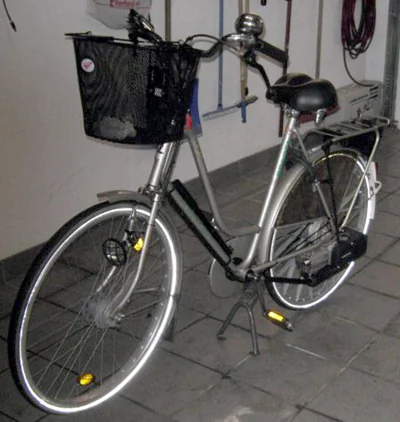
Article Complete Info
| Articleid | 762712 |
|---|---|
| Category | Allround |
| Make | Sachs |
| Model | Saxonette Luxus |
| Year | 2007 |
Chassis, Suspension, Brakes & Wheels
| Frontbrakes | Expanding brake (drum brake) |
|---|---|
| Rearbrakes | Expanding brake (drum brake) |
Engine & Transmission
| Coolingsystem | Air |
|---|---|
| Displacement | 30.00 ccm (1.83 cubic inches) |
| Enginedetails | Single cylinder, two-stroke |
| Fuelconsumption | 1.30 litres/100 km (76.9 km/l or 180.94 mpg) |
| Gearbox | Automatic |
| Greenhousegases | 30.2 CO2 g/km. (CO2 - Carbon dioxide emission) |
| Power | 0.67 HP (0.5 kW)) |
| Topspeed | 20.0 km/h (12.4 mph) |
| Torque | 1.49 Nm (0.2 kgf-m or 1.1 ft.lbs) @ 3000 RPM |
Physical Measures & Capacities
| Alternateseatheight | 1,040 mm (40.9 inches) If adjustable, highest setting. |
|---|---|
| Dryweight | 30.0 kg (66.1 pounds) |
| Fuelcapacity | 1.70 litres (0.45 gallons) |
| Overalllength | 1,780 mm (70.1 inches) |
| Powerweightratio | 0.0223 HP/kg |
| Seatheight | 915 mm (36.0 inches) If adjustable, lowest setting. |
About Sachs
Country of Origin:
Germany
Founder:
Fichtel & Sachs (Ernst Sachs and Karl Fichtel)
Best Known For:
Robust two-stroke engines, mopeds (Hercules/Sachs), and later enduro/road bikes
Company History
Sachs began as a precision bearing and engine firm and became Europe’s go-to supplier of small two-stroke powerplants. Its engines powered countless mopeds and lightweight motorcycles across brands, creating a parts and service ecosystem that spanned bike shops and backyard sheds. In Germany, Sachs (and Hercules, often intertwined) produced practical commuters and police machines, prized for reliability and sensible engineering. Through the 1970s–90s the company also touched off-road, with enduro models that leaned on tractable motors and durable frames. Corporate restructurings shifted the focus from complete bikes back to components, but Sachs’ imprint is everywhere: exploded diagrams in workshop drawers, shelves of piston rings, and the collective memory of mechanics who learned on its simple, honest engines. Historically, Sachs democratized mobility and maintenance; it taught Europe that small capacity doesn’t mean small usefulness, and that a well-supported parts bin is as valuable as a showroom trophy.