
2018
Adiva AR3 200 - Specifications & Review
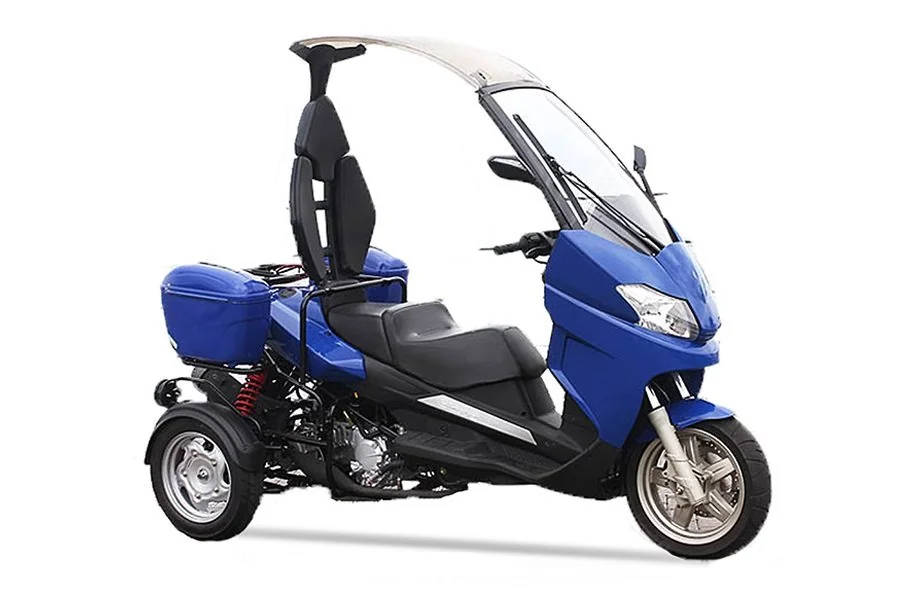
Article Complete Info
| Articleid | 529992 |
|---|---|
| Category | Scooter |
| Make | Adiva |
| Model | AR3 200 |
| Year | 2018 |
Chassis, Suspension, Brakes & Wheels
| Frontbrakes | Single disc |
|---|---|
| Frontbrakesdiameter | 220 mm (8.7 inches) |
| Frontsuspension | Telescopic hydraulic front forks 41mm |
| Fronttyre | 120/70-14 |
| Rearbrakes | Single disc |
| Rearbrakesdiameter | 240 mm (9.4 inches) |
| Rearsuspension | Double Swing |
| Reartyre | 120/70-12 |
| Wheels | Two front wheels |
Engine & Transmission
| Borexstroke | 64.0 x 58.8 mm (2.5 x 2.3 inches) |
|---|---|
| Compression | 12.0:1 |
| Coolingsystem | Liquid |
| Displacement | 190.00 ccm (11.59 cubic inches) |
| Enginedetails | Single cylinder, four-stroke |
| Enginetype | Peugeot engine |
| Fuelsystem | Injection |
| Gearbox | Automatic |
| Power | 18.77 HP (13.7 kW)) @ 8500 RPM |
| Torque | 17.00 Nm (1.7 kgf-m or 12.5 ft.lbs) @ 6900 RPM |
Other Specifications
| Carryingcapacity | Large rear cargo box |
|---|---|
| Coloroptions | White, Graphite, Wine Red |
| Starter | Electric |
Physical Measures & Capacities
| Dryweight | 231.0 kg (509.3 pounds) |
|---|---|
| Fuelcapacity | 14.00 litres (3.70 gallons) |
| Overallheight | 1,600 mm (63.0 inches) |
| Overalllength | 2,280 mm (89.8 inches) |
| Overallwidth | 1,055 mm (41.5 inches) |
| Powerweightratio | 0.0813 HP/kg |
| Seatheight | 700 mm (27.6 inches) If adjustable, lowest setting. |
About Adiva
Country of Origin:
Italy (design) / Taiwan (manufacturing partnerships)
Founder:
Adiva S.r.l. design team
Best Known For:
Roofed scooters with folding weather protection
Company History
Adiva took a uniquely European problem—riding a scooter through year-round weather—and answered with a roof. Its AD series popularized the idea of a scooter with integrated, folding weather protection: a canopy, screen, and side panels that transform a vulnerable commute into something closer to a tiny car cabin while preserving lane-friendly dimensions. The design work is Italian, leaning into style and clever packaging; manufacturing partnerships in Taiwan helped keep costs sensible and quality consistent. Urban fleets, delivery riders, and private owners discovered they could ride through rain and cold with less fatigue, a meaningful safety and comfort gain in dense cities. Critics questioned crosswind behavior and weight, but supporters countered that the stability of modern chassis and the convenience outweighed compromises. Over time, Adiva iterated on locking mechanisms, drainage, and visibility, taking feedback from riders who used the bikes in real weather rather than on sunny demo days. Historically, Adiva sits alongside BMW’s C1 as proof that scooter form factors could evolve to meet climate and comfort demands without abandoning two-wheel agility. In an era of growing micromobility options, Adiva’s roofed approach still reads as smart urban design: keep the footprint small, protect the rider, and make all-season commuting less of a chore.