
Suzuki GS 400 E 1978 - Specifications & Review
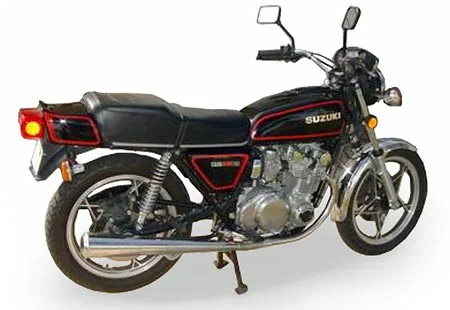
Article Complete Info
| Articleid | 491554 |
|---|---|
| Category | Naked bike |
| Make | Suzuki |
| Model | GS 400 E |
| Year | 1978 |
Chassis, Suspension, Brakes & Wheels
| Frontbrakes | Single disc |
|---|---|
| Fronttyre | 3.00-18 |
| Rearbrakes | Expanding brake |
| Reartyre | 3.50-18 |
Engine & Transmission
| Borexstroke | 65.0 x 60.0 mm (2.6 x 2.4 inches) |
|---|---|
| Compression | 8.5:1 |
| Coolingsystem | Air |
| Displacement | 398.00 ccm (24.29 cubic inches) |
| Enginedetails | Twin, four-stroke |
| Gearbox | 6-speed |
| Power | 27.00 HP (19.7 kW)) @ 7400 RPM |
| Topspeed | 150.0 km/h (93.2 mph) |
| Transmissiontypefinaldrive | Chain |
| Valvespercylinder | 2 |
Physical Measures & Capacities
| Fuelcapacity | 14.00 litres (3.70 gallons) |
|---|---|
| Weightincloilgasetc | 185.0 kg (407.9 pounds) |
About Suzuki GS 400 E 1978
Discover the 1978 Suzuki GS 400 E: A Naked Bike Classic
The 1978 Suzuki GS 400 E is a quintessential representation of the naked bike category, balancing style, performance, and practicality in a way that has attracted riders for decades. With its sleek, minimalist design and no-nonsense approach to motorcycling, the GS 400 E embodies the spirit of the late '70s, a time when motorcycles were about freedom and the thrill of the open road. This model stands out in Suzuki's lineup as an ideal entry-level bike, appealing to both new riders and seasoned enthusiasts who appreciate its classic charm.
At the heart of the GS 400 E lies a robust twin-cylinder, four-stroke engine with a displacement of 398 cc. Producing a respectable 27 horsepower at 7400 RPM, this motorcycle is designed for an exhilarating ride, effortlessly reaching a top speed of 150 km/h (93.2 mph). The engine's 8.5:1 compression ratio and the well-engineered bore and stroke measurements (65.0 x 60.0 mm) work together to ensure smooth acceleration and robust mid-range torque. The 6-speed gearbox allows for precise gear changes, providing riders with the flexibility to tackle both urban commuting and weekend escapades with ease. Coupled with air cooling, the GS 400 E offers a reliable performance that remains consistent in various riding conditions.
The GS 400 E is equipped with features that enhance both performance and comfort. Its lightweight chassis, weighing in at 185 kg (407.9 pounds) with fluids, contributes to its nimble handling while the single disc front brake provides ample stopping power, complemented by an expanding brake at the rear. With a fuel capacity of 14 liters (3.70 gallons), this motorcycle is not just about performance; it’s designed for those who enjoy longer rides without frequent fuel stops. The straightforward styling and comfortable ergonomics make the GS 400 E an approachable option for riders seeking a blend of classic aesthetics and modern functionality.
Pros and Cons of the 1978 Suzuki GS 400 E
Pros:
- Lightweight and Agile: The GS 400 E's low weight enhances maneuverability, making it easy to handle in both city traffic and winding roads.
- Classic Aesthetics: Its timeless design appeals to vintage motorcycle enthusiasts who appreciate the beauty of retro styling.
- Smooth Engine Performance: The twin-cylinder engine delivers reliable power and a responsive ride, perfect for a variety of riding situations.
Cons:
- Limited Power Output: While sufficient for beginners, the 27 HP may feel underwhelming for more experienced riders seeking higher performance.
- Basic Suspension Setup: The suspension may not provide the level of refinement found in more modern bikes, especially on rougher roads.
- Nostalgic Technology: The absence of advanced features and technology found in contemporary motorcycles may deter some riders looking for cutting-edge performance.
In summary, the 1978 Suzuki GS 400 E remains a beloved choice among motorcycle enthusiasts, offering a blend of classic charm and dependable performance that continues to resonate today. Whether you're a newcomer to the world of motorcycle riding or a seasoned veteran seeking a reliable classic, the GS 400 E certainly deserves a spot in your garage.