
2009
Suzuki GSR600 - Specifications & Review
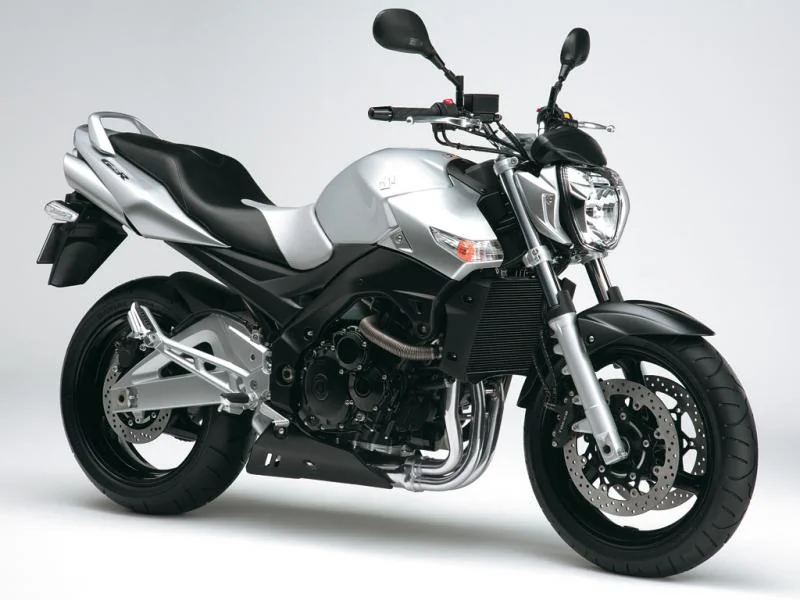
Article Complete Info
| Articleid | 919045 |
|---|---|
| Category | Naked bike |
| Make | Suzuki |
| Model | GSR600 |
| Year | 2009 |
Chassis, Suspension, Brakes & Wheels
| Frametype | Overall length: |
|---|---|
| Frontbrakes | Double disc |
| Frontsuspension | Telescopic, coil spring, oil damped |
| Fronttyre | 120/70-ZR17 |
| Rearbrakes | Single disc |
| Rearsuspension | Link type, coil spring, oil damped |
| Reartyre | 180/55-ZR17 |
Engine & Transmission
| Borexstroke | 67.0 x 42.5 mm (2.6 x 1.7 inches) |
|---|---|
| Compression | 12.5:1 |
| Coolingsystem | Liquid |
| Displacement | 599.00 ccm (36.55 cubic inches) |
| Enginedetails | Single cylinder, four-stroke |
| Fuelsystem | Injection |
| Gearbox | 6-speed |
| Ignition | Electronic ignition (transistorised) |
| Lubricationsystem | Wet sump |
| Transmissiontypefinaldrive | Chain |
Other Specifications
| Starter | Electric |
|---|
Physical Measures & Capacities
| Dryweight | 183.0 kg (403.4 pounds) |
|---|---|
| Fuelcapacity | 16.50 litres (4.36 gallons) |
| Overallheight | 1,075 mm (42.3 inches) |
| Overalllength | Overall length: |
| Overallwidth | 795 mm (31.3 inches) |
| Seatheight | 785 mm (30.9 inches) If adjustable, lowest setting. |
About Suzuki
Country of Origin:
Japan
Founder:
Michio Suzuki
Best Known For:
GSX-R sportbikes, Hayabusa, DR/DR-Z dual-sports, Burgman scooters
Company History
From loom maker to racing force, Suzuki built its reputation on durable, value-forward engineering that still wins on Sundays. The GSX-R defined modern sportbike DNA—light frames, revvy fours—while the Hayabusa rewrote the velocity conversation with stability and everyday civility. Off-road, DR and DR-Z dual-sports became global workhorses: simple, tractable, fixable anywhere. Suzuki’s strategy blends incremental evolution with racing feedback, keeping parts affordable and reliability high. In scooters, Burgman made maxi convenience mainstream. Historically, Suzuki is the rider’s brand: honest performance, dealer networks that reach small towns, and a knack for machines that feel friendly yet fast.