
2011
Triton Outback 300 - Specifications & Review
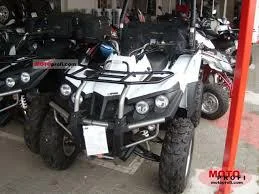
Article Complete Info
| Articleid | 819201 |
|---|---|
| Category | ATV |
| Make | Triton |
| Model | Outback 300 |
| Price | Euro 5190. Prices depend on country, taxes, accessories, etc. |
| Year | 2011 |
Chassis, Suspension, Brakes & Wheels
| Frontbrakes | Single disc |
|---|---|
| Frontsuspension | Double A-Arm |
| Fronttyre | 25/8-12 |
| Rearbrakes | Single disc |
| Rearsuspension | Double A-Arm |
| Reartyre | 25/10-12 |
| Wheels | Alu wheels |
Engine & Transmission
| Borexstroke | 74.0 x 65.2 mm (2.9 x 2.6 inches) |
|---|---|
| Coolingsystem | Liquid |
| Displacement | 280.00 ccm (17.09 cubic inches) |
| Driveline | CVT, with reverse |
| Enginedetails | In-line four, four-stroke |
| Gearbox | Automatic |
| Power | 18.77 HP (13.7 kW)) |
| Transmissiontypefinaldrive | Chain |
Other Specifications
| Carryingcapacity | Front and rear rack |
|---|---|
| Coloroptions | Black, white |
| Light | 4 headlights |
| Starter | Electric |
Physical Measures & Capacities
| Dryweight | 260.0 kg (573.2 pounds) |
|---|---|
| Fuelcapacity | 14.80 litres (3.91 gallons) |
| Overalllength | 2,060 mm (81.1 inches) |
| Overallwidth | 1,215 mm (47.8 inches) |
| Powerweightratio | 0.0722 HP/kg |
| Seatheight | 910 mm (35.8 inches) If adjustable, lowest setting. |
| Weightincloilgasetc | 273.0 kg (601.9 pounds) |
About Triton
Country of Origin:
United Kingdom
Founder:
Enthusiast builders; later small makers
Best Known For:
Norton Featherbed frames with Triumph twins—iconic café racers
Company History
The Triton is the café archetype: Triumph’s lively twin dropped into Norton’s sublime Featherbed frame. Born in sheds and small shops, Tritons chased handling, brakes, and power accessible to privateers. Clean cable runs, rearsets, clip-ons, and alloy tanks became the look of speed in 1960s Britain. Modern builders preserve the formula with better electrics and discs, but the essence remains: precision in corners and a motor that talks through the bars. Historically, Triton is folk engineering at its finest—combining best-in-class pieces into a bike that still defines road-race romance.