
Triumph Daytona 1200 1995 - Specifications & Review
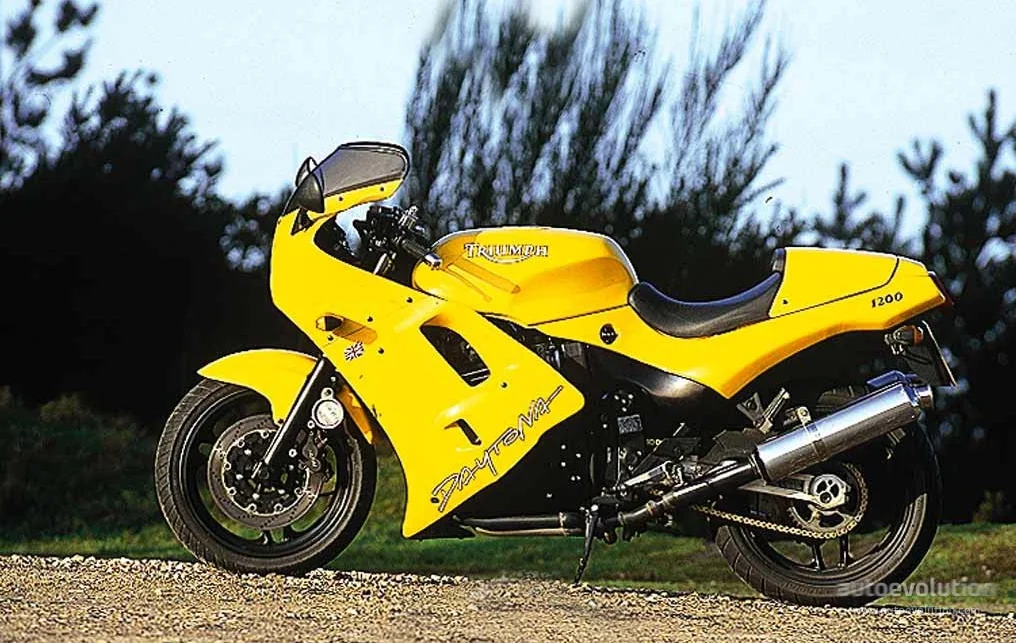
Article Complete Info
| Articleid | 421710 |
|---|---|
| Category | Sport |
| Make | Triumph |
| Model | Daytona 1200 |
| Year | 1995 |
Chassis, Suspension, Brakes & Wheels
| Frontbrakes | Dual disc |
|---|---|
| Rearbrakes | Single disc |
Engine & Transmission
| Displacement | 1180.00 ccm (72.00 cubic inches) |
|---|---|
| Enginedetails | In-line four, four-stroke |
| Gearbox | 6-speed |
| Power | 147.00 HP (107.3 kW)) @ 9500 RPM |
| Torque | 112.80 Nm (11.5 kgf-m or 83.2 ft.lbs) @ 8000 RPM |
| Valvespercylinder | 4 |
Other Specifications
| Starter | Electric |
|---|
Physical Measures & Capacities
| Dryweight | 247.0 kg (544.5 pounds) |
|---|---|
| Powerweightratio | 0.5951 HP/kg |
| Seatheight | 790 mm (31.1 inches) If adjustable, lowest setting. |
About Triumph Daytona 1200 1995
Introducing the 1995 Triumph Daytona 1200: A Bold Sportbike Icon
The 1995 Triumph Daytona 1200 stands as a testament to the British manufacturer's commitment to producing exhilarating sport motorcycles that capture the hearts of enthusiasts worldwide. Launched during a time when the sportbike market was rapidly evolving, the Daytona 1200 carved out its niche by delivering a potent mix of performance, style, and charisma. With its aggressive lines and distinctive character, this motorcycle is not just a bike; it’s a statement, appealing to riders who crave both speed and the thrill of the open road.
Engine Performance and Riding Characteristics
At the heart of the Daytona 1200 is a robust 1180cc in-line four-cylinder engine that roars to life with a thrilling 147 horsepower at 9500 RPM. This impressive power output translates into exhilarating acceleration, allowing riders to unleash their inner speed demons on winding roads or straightaways. Coupled with a well-designed 6-speed gearbox, the Daytona offers smooth and precise shifting that enhances the riding experience. Torque lovers will appreciate the 112.8 Nm available at 8000 RPM, ensuring that riders feel the robust pull in any gear. The bike's weight of 247 kg (544.5 lbs) provides a solid yet agile feel, making it adept at navigating both urban environments and racetracks alike.
Key Features and Technology
The Daytona 1200 is not just about raw power; it comes equipped with features that elevate the riding experience. Dual disc brakes at the front deliver exceptional stopping power, instilling confidence in riders as they tackle corners or sudden stops. The single disc brake at the rear complements this setup, providing balanced braking performance. Additionally, with a seat height of 790 mm (31.1 inches), the Daytona strikes a practical balance for riders of various heights, ensuring a comfortable riding posture. The electric starter adds a level of convenience, making ignition effortless and reliable, which is a boon for those early morning rides when every second counts.
Pros and Cons
Pros:
- Powerful Engine: The 1180cc engine offers thrilling performance and exhilarating acceleration.
- Exceptional Braking: Dual disc brakes provide outstanding stopping power for enhanced safety and control.
- Stylish Design: The Daytona's sleek lines and distinctive aesthetics make it a standout in any crowd.
Cons:
- Weight: At 247 kg, some riders may find it a bit heavy, especially during low-speed maneuvers.
- Fuel Consumption: The sporty performance may come at the cost of higher fuel consumption compared to more touring-oriented bikes.
- Limited Comfort: While designed for performance, the riding position may not be the most comfortable for long-distance touring.
In summary, the 1995 Triumph Daytona 1200 is a captivating blend of power, style, and technology, making it a must-ride for any sportbike enthusiast. Whether you’re carving through canyons or cruising the open highway, the Daytona promises an unforgettable experience that will leave a lasting impression.