
Triumph Daytona 1200 1997 - Specifications & Review
Article Complete Info
| Articleid | 460015 |
|---|---|
| Category | Sport touring |
| Make | Triumph |
| Model | Daytona 1200 |
| Year | 1997 |
Chassis, Suspension, Brakes & Wheels
| Frontbrakes | Dual disc |
|---|---|
| Rearbrakes | Single disc |
Engine & Transmission
| Coolingsystem | Liquid |
|---|---|
| Displacement | 1180.00 ccm (72.00 cubic inches) |
| Enginedetails | In-line four, four-stroke |
| Gearbox | 6-speed |
| Power | 147.00 HP (107.3 kW)) @ 9500 RPM |
| Topspeed | 270.0 km/h (167.8 mph) |
| Torque | 115.00 Nm (11.7 kgf-m or 84.8 ft.lbs) @ 8000 RPM |
| Transmissiontypefinaldrive | Chain |
| Valvespercylinder | 4 |
Other Specifications
| Starter | Electric |
|---|
Physical Measures & Capacities
| Dryweight | 225.0 kg (496.0 pounds) |
|---|---|
| Powerweightratio | 0.6533 HP/kg |
| Seatheight | 790 mm (31.1 inches) If adjustable, lowest setting. |
About Triumph Daytona 1200 1997
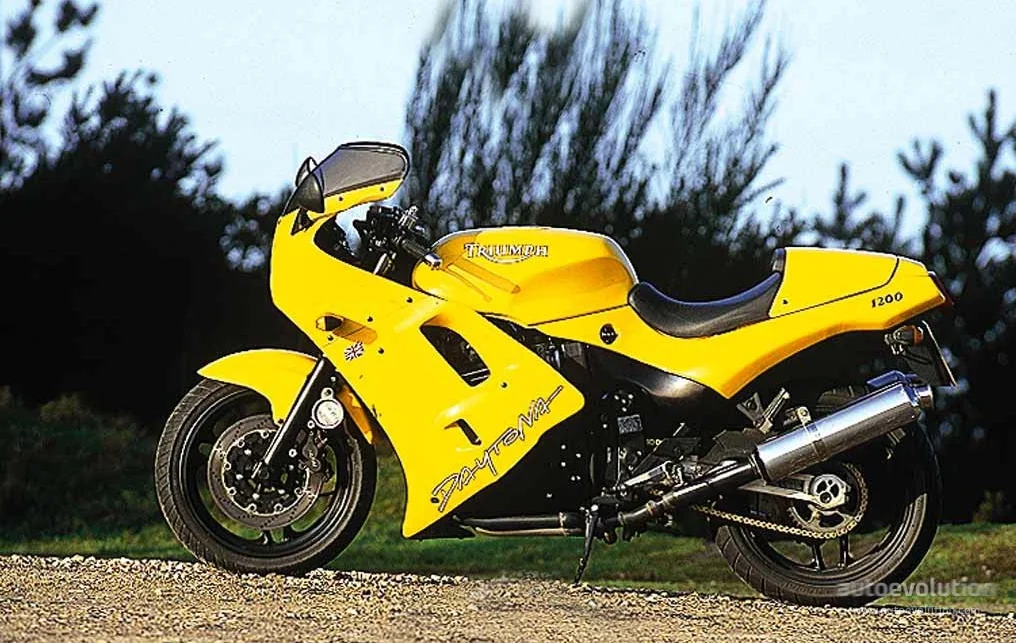
Introducing the 1997 Triumph Daytona 1200, a quintessential embodiment of British engineering that marries sport performance with touring comfort. Positioned within the sport touring category, the Daytona 1200 was designed for riders who crave both exhilaration and versatility. With its striking design and powerful performance, this motorcycle captured the hearts of enthusiasts during its era and continues to be a beloved classic among collectors and riders alike. Equipped with an impressive array of features, the Daytona 1200 stands as a testament to Triumph's relentless pursuit of innovation and style.
At the heart of the Daytona 1200 lies a potent in-line four, four-stroke engine with a displacement of 1180 cc. Producing a remarkable 147 horsepower at 9500 RPM and a torque of 115 Nm at 8000 RPM, this powerhouse delivers a thrilling ride that can propel you to a top speed of 167.8 mph. With a six-speed gearbox and a chain final drive, the Daytona 1200 offers seamless power delivery for both spirited highway cruising and city commuting. The bike’s liquid-cooling system and four valves per cylinder ensure efficient performance, making it a reliable companion for long-distance journeys as well as quick jaunts through twisty roads.
The Daytona 1200 is not just about raw power; it also boasts an impressive array of features that enhance the riding experience. The dual disc front brakes provide responsive stopping power, while the single disc rear brake ensures balanced deceleration. With a weight of 225 kg, this motorcycle strikes a commendable balance between stability and agility. The seat height of 790 mm offers a comfortable riding position, making it accessible for a wide range of riders. An electric starter simplifies the ignition process, allowing you to focus on the thrill of the ride rather than fumbling with kick-starts.
PROs:
- Powerful Engine: With 147 HP and 115 Nm of torque, the Daytona 1200 delivers exhilarating performance that satisfies even the most demanding riders.
- Sport Touring Versatility: Designed for both performance and comfort, it’s ideal for long rides while retaining the agility of a sportbike.
- Strong Braking System: The dual disc front brakes provide excellent stopping power, enhancing safety and confidence on the road.
CONs:
- Weight: At 225 kg, it may feel heavy for some riders, especially in slow maneuvers or during parking.
- Fuel Consumption: The powerful engine may result in higher fuel consumption compared to more economical touring bikes.
- Limited Technology: Compared to modern motorcycles, it lacks advanced electronics and rider aids that enhance control and safety.
In summary, the 1997 Triumph Daytona 1200 is a remarkable motorcycle that delivers a thrilling blend of power, comfort, and performance. It remains a favorite among those who appreciate a well-crafted machine that stands the test of time, both in terms of aesthetics and engineering excellence. Whether you’re carving through canyons or embarking on a cross-country adventure, the Daytona 1200 promises an unforgettable riding experience.