
Triumph Speed Twin 1950 - Specifications & Review
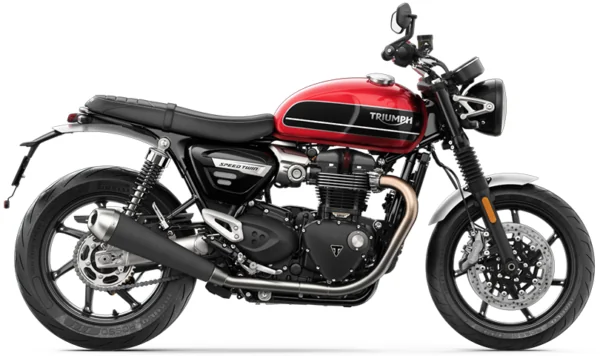
Article Complete Info
| Articleid | 120566 |
|---|---|
| Category | Allround |
| Make | Triumph |
| Model | Speed Twin |
| Year | 1950 |
Chassis, Suspension, Brakes & Wheels
| Frontbrakes | Expanding brake (drum brake) |
|---|---|
| Frontsuspension | Telescopic |
| Rearbrakes | Expanding brake (drum brake) |
| Rearsuspension | Rigid-optional sprung hub |
Engine & Transmission
| Displacement | 498.00 ccm (30.39 cubic inches) |
|---|---|
| Enginedetails | Twin, four-stroke |
| Enginetype | 360 degree paprallel |
| Fuelsystem | Carburettor. Amal |
| Ignition | Lucas altrnator |
| Power | 27.00 HP (19.7 kW)) @ 6300 RPM |
| Transmissiontypefinaldrive | Chain |
Physical Measures & Capacities
| Dryweight | 158.8 kg (350.0 pounds) |
|---|---|
| Powerweightratio | 0.1701 HP/kg |
About Triumph Speed Twin 1950
Introducing the 1950 Triumph Speed Twin, a distinguished member of the British motorcycle family that redefined the all-rounder category in its time. Triumph, already a reputable name in the motorcycle realm, created the Speed Twin to cater to riders seeking a blend of performance, reliability, and style. With its classic lines and a spirit of adventure, the Speed Twin quickly established itself as not just a motorcycle, but a lifestyle choice for enthusiasts who valued both form and function. As one of the early examples of the modern British twin, it captured the imagination of motorcyclists looking to enjoy the open road with confidence and flair.
At the heart of the Speed Twin lies a robust 498cc twin-cylinder, four-stroke engine that delivers a spirited 27 horsepower at 6300 RPM. This engine is paired with an Amal carburettor that ensures a smooth and responsive throttle, allowing riders to experience the joys of acceleration with ease. The power-to-weight ratio of approximately 0.1701 HP/kg means that while the Speed Twin isn't the most powerful motorcycle of its era, it strikes a harmonious balance between weight and power, making it agile and fun to ride. The bike's chain final drive contributes to a direct feel, allowing riders to truly connect with the machine as they navigate through both urban streets and winding country roads.
The Triumph Speed Twin boasts several features that were cutting-edge for its time. The telescopic front suspension provides enhanced stability and comfort, while the rear rigid suspension—optionally upgraded to a sprung hub—offers a choice for riders looking for a bit more cushioning over rough terrain. Both the front and rear drum brakes, while simple, effectively manage stopping power, giving riders confidence in their ability to slow down when needed. The Lucas alternator ignition system further enhances reliability, ensuring that the bike starts and runs smoothly, whether on a Sunday cruise or a daily commute.
Pros:
- Timeless Design: The classic aesthetics of the Speed Twin make it a head-turner, appealing to vintage motorcycle lovers and collectors alike.
- Balanced Performance: With its well-tuned power delivery and lightweight frame, the Speed Twin offers a nimble and engaging riding experience.
- Simplicity & Reliability: The uncomplicated mechanics and proven technology mean that maintenance is straightforward, making it an approachable option for both novice and seasoned riders.
Cons:
- Limited Power: While sufficient for its time, modern riders may find the 27 HP engine less than exhilarating compared to contemporary counterparts.
- Braking Performance: The drum brakes, while effective for the era, may feel underwhelming when compared to modern disc brake systems, necessitating a more cautious approach to stopping.
- Suspension Limitations: The optional sprung hub offers some relief, but the rigid rear suspension may not provide the comfort desired on longer rides over uneven surfaces.
The 1950 Triumph Speed Twin remains a beloved classic, capturing the essence of motorcycling in a bygone era while still appealing to those who appreciate the beauty of simplicity and elegance on two wheels.