
2025
Beta BETA RR Race Edition 200 - Specifications & Review
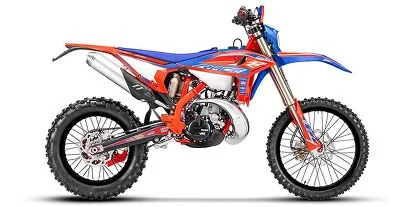
Article Complete Info
| Articleid | 878717 |
|---|---|
| Category | Off Road |
| Make | Beta |
| Model | BETA RR Race Edition 200 |
| Year | 2025 |
Chassis, Suspension, Brakes & Wheels
| Fronttire | Maxxis Maxx R21 |
|---|---|
| Reartire | Maxxis Maxx R18 |
Engine & Transmission
| Coolingsystem | Liquid |
|---|---|
| Displacement | 190.2 / 11.6 |
| Enginedetails | Single-Cylinder, 1 cylinder |
Other Specifications
| Country | Italy |
|---|---|
| Datasource | 2025_enhanced_scrape |
| Richdataavailable | 1 |
| Starter | Electric |
About Beta
Country of Origin:
Italy
Founder:
Giuseppe Bianchi & Arrigo Tosi (Betamotor S.p.A.)
Best Known For:
Trials and enduro dominance; RR/RS enduros and Evo trials line
Company History
Betamotor began in 1905 building bicycles in Florence and evolved into one of the world’s premier off-road motorcycle makers. The company’s DNA is balance and traction—first in observed trials, where featherweight control and throttle finesse matter, and later in enduro, where day-long reliability meets special-stage speed. Beta’s modern RR/RS enduros are renowned for chassis that communicate clearly, engines with tractable midrange, and suspension valving that works out of the crate for real riders, not just pros. The Evo trials line continues to win at the highest levels, feeding lessons about weight distribution and clutch feel back into the enduro range. Unlike some rivals, Beta embraces rider-scale adjustability—map switches, power valve tweaks, and ergonomic options that let owners tailor bikes without a race truck. Historically, Beta personifies Italian craftsmanship aimed at dirt: elegant castings, tidy looms, and field-friendly service. Club racers and trail riders praise how Betas turn fatigue into flow; the bikes reward precise inputs yet forgive mistakes. In a category where specs are loud, Beta’s quiet confidence—how the bike feels between trees—has built a fiercely loyal following.