
Yamaha DT 400 MX 1978 - Specifications & Review
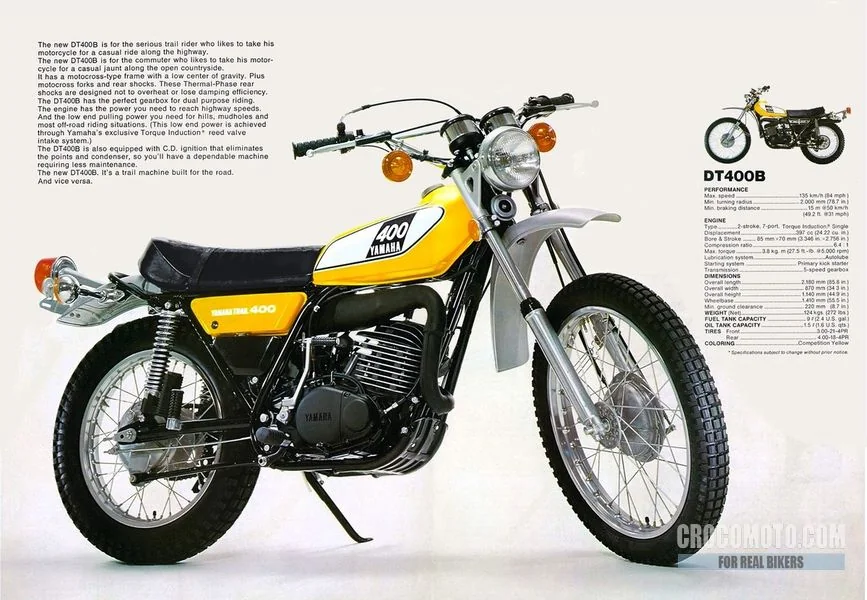
Article Complete Info
| Articleid | 580546 |
|---|---|
| Category | Enduro-offroad |
| Make | Yamaha |
| Model | DT 400 MX |
| Year | 1978 |
Chassis, Suspension, Brakes & Wheels
| Frontbrakes | Expanding brake |
|---|---|
| Fronttyre | 3.00-21 |
| Rearbrakes | Expanding brake |
| Reartyre | 4.00-18 |
Engine & Transmission
| Borexstroke | 85.0 x 70.0 mm (3.3 x 2.8 inches) |
|---|---|
| Compression | 6.4:1 |
| Coolingsystem | Air |
| Displacement | 397.00 ccm (24.22 cubic inches) |
| Enginedetails | Single cylinder, two-stroke |
| Gearbox | 5-speed |
| Power | 21.00 HP (15.3 kW)) @ 5600 RPM |
| Topspeed | 136.0 km/h (84.5 mph) |
| Transmissiontypefinaldrive | Chain |
Physical Measures & Capacities
| Fuelcapacity | 9.00 litres (2.38 gallons) |
|---|---|
| Weightincloilgasetc | 141.0 kg (310.9 pounds) |
About Yamaha DT 400 MX 1978
1978 Yamaha DT 400 MX: The Enduro Icon
Step back in time to the late 1970s, when the Yamaha DT 400 MX emerged as a groundbreaking contender in the enduro-offroad motorcycle category. With its distinct blend of rugged design and innovative engineering, this bike quickly carved out a niche for itself among off-road enthusiasts and casual riders alike. Positioned as a versatile machine capable of tackling both dirt trails and urban streets, the DT 400 MX was built for those who craved adventure on two wheels. Its robust frame and striking aesthetics encapsulated the spirit of the era, making it a sought-after model for riders looking to blend performance with style.
At the heart of the DT 400 MX lies a powerful single-cylinder, two-stroke engine boasting a displacement of 397 cc. This beast of an engine produces a commendable 21 horsepower at 5,600 RPM, allowing riders to reach exhilarating top speeds of 136 km/h (84.5 mph). The bike's air-cooled design ensures reliability, while the 5-speed gearbox provides smooth, responsive shifting through any terrain. With a compression ratio of 6.4:1, the DT 400 MX offers a thrilling ride that balances power and control, making it equally comfortable for both seasoned riders and newcomers to the off-road scene.
The DT 400 MX also showcases impressive technology for its time, featuring expanding brakes at both the front and rear for reliable stopping power. Its lightweight chassis, tipping the scales at just 141 kg (310.9 pounds) with fluids, allows for agile handling and maneuverability on tight trails. The 9-liter fuel tank ensures riders can enjoy extended journeys without the constant worry of refueling, making this bike a practical choice for long-distance adventures. With a bore and stroke of 85.0 x 70.0 mm, the bike's design not only maximizes power delivery but also enhances the overall riding experience, giving it that quintessential two-stroke thrill.
#### Pros and Cons of the 1978 Yamaha DT 400 MX
Pros:
- Powerful Engine: The single-cylinder, two-stroke engine delivers impressive performance, providing ample power for both off-road and on-road riding.
- Lightweight and Agile: Weighing in at just 141 kg (310.9 pounds), the DT 400 MX is easy to handle, making it a joy to ride on rugged terrains.
- Versatile Use: Designed for enduro riding, this motorcycle is equally capable of handling street environments, offering flexibility for varied riding experiences.
Cons:
- Limited Braking Technology: The expanding brake system, while functional, may not provide the same stopping power as modern hydraulic brakes, especially in challenging conditions.
- Fuel Consumption: As a two-stroke engine, the DT 400 MX may have a higher fuel consumption compared to modern four-stroke motorcycles, requiring more frequent refueling.
- Maintenance Needs: Two-stroke engines often require more frequent maintenance, including oil mixing and regular tuning, which can be a consideration for some riders.
In summary, the 1978 Yamaha DT 400 MX stands as a testament to Yamaha's commitment to creating exceptional motorcycles for adventure lovers. With its captivating blend of performance, reliability, and versatility, this bike remains a cherished piece of motorcycling history that continues to inspire new generations of riders.