
Yamaha FJ 1100 1986 - Specifications & Review
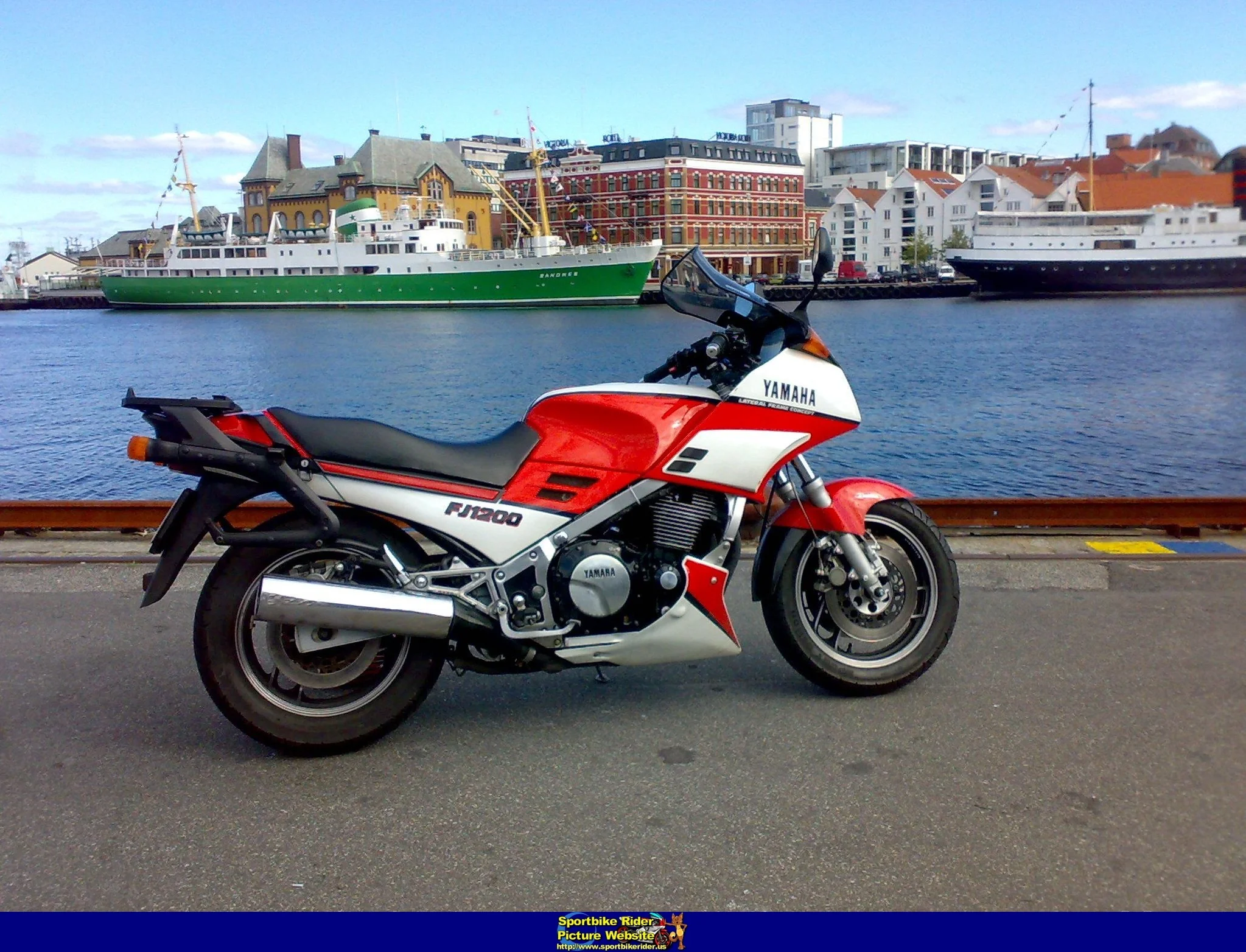
Article Complete Info
| Articleid | 207659 |
|---|---|
| Category | Sport touring |
| Make | Yamaha |
| Model | FJ 1100 |
| Year | 1986 |
Chassis, Suspension, Brakes & Wheels
| Frontbrakes | Dual disc |
|---|---|
| Fronttyre | 120/80-16 |
| Rearbrakes | Single disc |
| Reartyre | 150/80-16 |
Engine & Transmission
| Borexstroke | 74.0 x 63.8 mm (2.9 x 2.5 inches) |
|---|---|
| Compression | 9.5:1 |
| Coolingsystem | Air |
| Displacement | 1097.00 ccm (66.94 cubic inches) |
| Enginedetails | In-line four, four-stroke |
| Gearbox | 5-speed |
| Power | 125.00 HP (91.2 kW)) @ 9000 RPM |
| Transmissiontypefinaldrive | Chain |
| Valvespercylinder | 4 |
Physical Measures & Capacities
| Fuelcapacity | 24.00 litres (6.34 gallons) |
|---|---|
| Weightincloilgasetc | 261.0 kg (575.4 pounds) |
About Yamaha FJ 1100 1986
1986 Yamaha FJ 1100: A Sport Touring Icon
The 1986 Yamaha FJ 1100 stands as a remarkable testament to the sport touring genre, expertly blending power, comfort, and long-distance capability. Launched during a golden era for Japanese motorcycles, the FJ 1100 was designed to cater to riders who sought not just speed, but also the versatility to tackle extensive journeys with ease. With a sleek design that hints at its performance pedigree, this motorcycle quickly established itself as a favorite among enthusiasts looking for an exhilarating yet practical ride.
At the heart of the FJ 1100 lies a robust 1097cc air-cooled inline-four engine that delivers a thrilling 125 horsepower at 9000 RPM. This power translates into an exhilarating riding experience, where acceleration and responsiveness are at the forefront. The engine's 9.5:1 compression ratio and a well-engineered 5-speed gearbox work harmoniously to ensure that the motorcycle performs fluidly across various speeds, making it equally adept on city streets and open highways. Riders will appreciate the balance of power and stability, especially when taking on twisty roads or embarking on long-distance rides, where the FJ 1100 truly shines.
Yamaha didn’t skimp on features when designing the FJ 1100. The motorcycle is equipped with dual front disc brakes, providing strong stopping power that inspires confidence in any riding scenario. The single rear disc complements this setup well, ensuring a balanced braking system. With a generous fuel capacity of 24 liters (6.34 gallons), riders can enjoy extended journeys without the need for constant fuel stops. The bike's weight, at 261 kg (575.4 pounds) with fluids, strikes a fine balance between stability and agility, making it a joy to handle both in urban environments and on winding roads. The FJ 1100's blend of advanced engineering and rider-friendly ergonomics solidifies its reputation as a well-rounded sport tourer.
#### Pros and Cons of the 1986 Yamaha FJ 1100
Pros:
- Powerful Engine: The 1097cc inline-four engine delivers impressive performance, making it perfect for spirited riding and long-distance touring.
- Comfortable Riding Position: Ergonomically designed for long rides, the FJ 1100 offers a comfortable seating position, ideal for extended journeys.
- Strong Braking System: With dual front disc brakes and a single rear disc, the FJ 1100 provides excellent stopping power and enhanced safety.
Cons:
- Weight: At 261 kg (575.4 pounds), the FJ 1100 may feel heavy to some riders, especially at lower speeds or when maneuvering in tight spaces.
- Air Cooling: While effective, the air-cooled engine may not offer the same thermal efficiency as modern liquid-cooled counterparts, potentially affecting performance in extreme conditions.
- Limited Storage: Unlike some contemporary sport touring models equipped with integrated storage solutions, the FJ 1100 may require additional luggage options for long trips.
In summary, the 1986 Yamaha FJ 1100 remains a compelling choice for those who appreciate the balance of performance and comfort in their motorcycles. With its powerful engine and thoughtful design, it has rightfully earned its place in the hearts of sport touring enthusiasts.