
Yamaha FZR 250 1988 - Specifications & Review
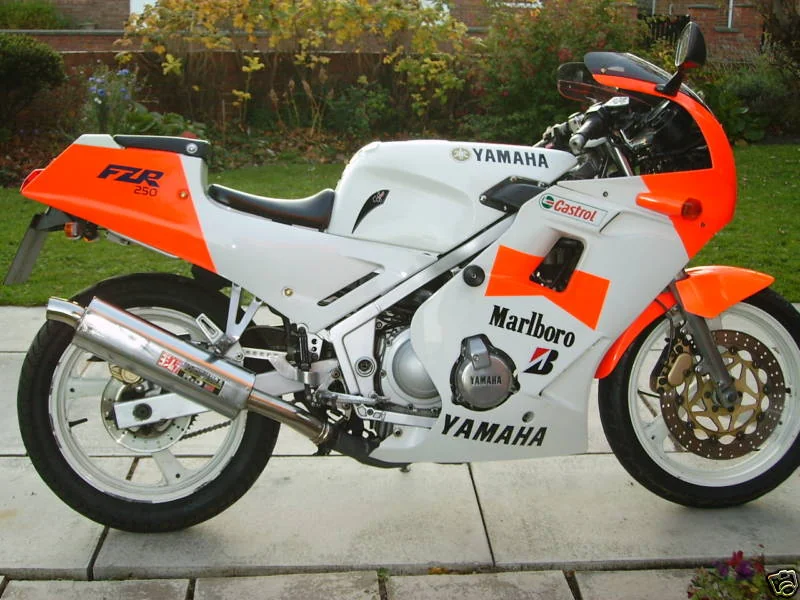
Article Complete Info
| Articleid | 970859 |
|---|---|
| Category | Sport |
| Make | Yamaha |
| Model | FZR 250 |
| Year | 1988 |
Chassis, Suspension, Brakes & Wheels
| Frametype | Steel |
|---|---|
| Frontbrakes | Single disc. 4-piston calipers |
| Frontbrakesdiameter | 320 mm (12.6 inches) |
| Fronttyre | 100/80-17 52H |
| Rake | 25.5° |
| Rearbrakes | Single disc. 2-piston calipers |
| Rearbrakesdiameter | 210 mm (8.3 inches) |
| Reartyre | 120/80-17 61H |
| Trail | 88 mm (3.5 inches) |
Engine & Transmission
| Borexstroke | 48.0 x 34.5 mm (1.9 x 1.4 inches) |
|---|---|
| Clutch | Wet plate |
| Compression | 12.0:1 |
| Coolingsystem | Liquid |
| Displacement | 250.00 ccm (15.26 cubic inches) |
| Enginedetails | In-line four, four-stroke |
| Exhaustsystem | 4 in to 1 with EXUP valve |
| Fuelsystem | Carburettor. MIKUNI BDS26 |
| Gearbox | 6-speed |
| Maxrpm | 17000 |
| Power | 45.00 HP (32.8 kW)) @ 14500 RPM |
| Topspeed | 180.0 km/h (111.8 mph) |
| Torque | 25.00 Nm (2.5 kgf-m or 18.4 ft.lbs) @ 11500 RPM |
| Transmissiontypefinaldrive | Chain |
| Valvespercylinder | 4 |
Other Specifications
| Comments | Only released in Japan but used bikes were exported to many countries as ´grey import´ |
|---|---|
| Starter | Electric |
Physical Measures & Capacities
| Dryweight | 141.0 kg (310.9 pounds) |
|---|---|
| Fuelcapacity | 12.00 litres (3.17 gallons) |
| Groundclearance | 135 mm (5.3 inches) |
| Overallheight | 1,120 mm (44.1 inches) |
| Overalllength | 2,010 mm (79.1 inches) |
| Overallwidth | 680 mm (26.8 inches) |
| Powerweightratio | 0.3191 HP/kg |
| Reservefuelcapacity | 2.00 litres (0.53 gallons) |
| Seatheight | 750 mm (29.5 inches) If adjustable, lowest setting. |
About Yamaha FZR 250 1988
Discover the 1988 Yamaha FZR 250: A Sportbike Icon
The 1988 Yamaha FZR 250 stands as a quintessential example of an exhilarating sport motorcycle, expertly crafted for those who crave speed and agility. Released exclusively in Japan, this motorcycle quickly became a favorite among enthusiasts, earning a reputation as a nimble and responsive ride. With its sleek aesthetic and advanced engineering for its time, the FZR 250 embodies the spirit of the late '80s sportbike revolution, appealing to both novice riders and seasoned motorcyclists alike. Its grey market appeal led to a global fanbase, making it a sought-after classic for collectors today.
At the heart of the FZR 250 lies a spirited 250cc in-line four engine, delivering an impressive 45 horsepower at a remarkable 14,500 RPM. This high-revving powerplant showcases Yamaha's engineering prowess, allowing the FZR to reach exhilarating top speeds of up to 180 km/h (111.8 mph). The engine's 12.0:1 compression ratio and the MIKUNI BDS26 carburettor fuel system ensure a smooth power delivery and responsive throttle. Riders will appreciate the 6-speed gearbox that offers seamless gear transitions, allowing for optimal performance whether navigating city streets or carving through winding roads. With a torque output of 25 Nm at 11,500 RPM, the FZR 250 boasts the kind of acceleration that makes every ride a thrill.
Not just about raw power, the FZR 250 is equipped with a robust chassis and advanced suspension that enhance its riding dynamics. The steel frame is designed with a rake of 25.5° and trail of 88 mm, providing precise handling and stability through corners. The front braking system features a 320 mm single disc with 4-piston calipers, while the rear sports a 210 mm disc with 2-piston calipers, ensuring effective stopping power. With a seat height of 750 mm, it caters well to a variety of riders, offering a comfortable riding position that encourages confidence. Additional features like liquid cooling and electric start further enhance the riding experience, making the FZR 250 a well-rounded sportbike.
#### Pros and Cons of the 1988 Yamaha FZR 250
Pros:
- High-Revving Engine: The in-line four engine provides exhilarating performance, especially at higher RPMs, making it perfect for sport riding.
- Lightweight and Agile: Weighing just 141 kg (310.9 lbs), the FZR 250 offers exceptional maneuverability, ideal for both city commutes and spirited rides.
- Advanced Braking System: The combination of powerful front and rear disc brakes offers superior stopping power, enhancing safety and control.
Cons:
- Limited Availability: Exclusively released in Japan, finding a well-maintained model can be a challenge outside the country.
- Small Displacement: While great for city and sport riding, the 250cc engine may not satisfy those seeking longer highway journeys or significant power.
- Maintenance Complexity: The high-revving nature of the engine and its carburettor system may require more frequent maintenance and tuning compared to modern fuel-injected bikes.
In summary, the 1988 Yamaha FZR 250 is not just a motorcycle; it is a piece of history, embodying the essence of a sportbike designed for thrill-seekers. Its blend of performance, handling, and iconic styling continues to resonate with enthusiasts, making it a timeless choice in the world of motorcycling.