
Yamaha RD 250 (5-speed) 1973 - Specifications & Review
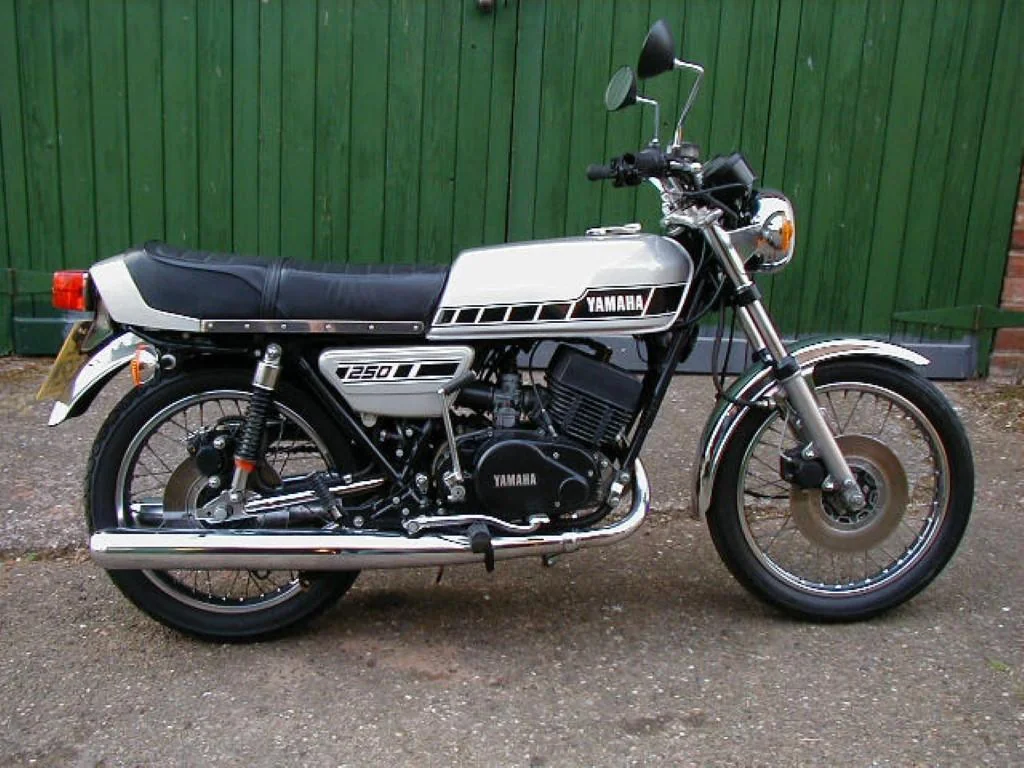
Article Complete Info
| Articleid | 106876 |
|---|---|
| Category | Allround |
| Make | Yamaha |
| Model | RD 250 (5-speed) |
| Year | 1973 |
Chassis, Suspension, Brakes & Wheels
| Frontbrakes | Single disc |
|---|---|
| Fronttyre | 3.00-18 |
| Rearbrakes | Expanding brake |
| Reartyre | 3.25-18 |
Engine & Transmission
| Borexstroke | 54.0 x 54.0 mm (2.1 x 2.1 inches) |
|---|---|
| Compression | 6.7:1 |
| Coolingsystem | Air |
| Displacement | 247.00 ccm (15.07 cubic inches) |
| Enginedetails | Twin, two-stroke |
| Gearbox | 5-speed |
| Power | 30.00 HP (21.9 kW)) @ 7500 RPM |
| Topspeed | 155.0 km/h (96.3 mph) |
| Transmissiontypefinaldrive | Chain |
Physical Measures & Capacities
| Fuelcapacity | 16.00 litres (4.23 gallons) |
|---|---|
| Weightincloilgasetc | 162.0 kg (357.1 pounds) |
About Yamaha RD 250 (5-speed) 1973
Introducing the 1973 Yamaha RD 250: A Classic Allrounder
The 1973 Yamaha RD 250 (5-speed) is a revered icon among motorcycle enthusiasts, epitomizing the spirit of the early '70s when performance and style were paramount. Nestled in the allround category, this bike strikes a perfect balance between everyday usability and spirited riding, making it a popular choice for both novice and experienced riders alike. With its sleek lines and classic Yamaha aesthetics, the RD 250 not only turns heads but also delivers a ride that is as thrilling as it is practical, ensuring it remains a sought-after model in the vintage motorcycle market.
Engine Performance and Riding Characteristics
At the heart of the RD 250 lies a robust twin-cylinder, two-stroke engine with a displacement of 247.00 ccm, generating an impressive 30.00 HP at 7500 RPM. This spirited powerplant ensures that riders can reach exhilarating top speeds of 155.0 km/h (96.3 mph), bringing a rush of adrenaline with every twist of the throttle. The 5-speed gearbox enhances the riding experience, allowing for smooth and responsive gear changes that cater to both relaxed cruising and aggressive acceleration. With a compression ratio of 6.7:1 and a bore and stroke of 54.0 x 54.0 mm, the RD 250 provides a nimble, lightweight feel, making it an agile companion on winding roads and urban landscapes alike.
Key Features and Technology
The Yamaha RD 250 showcases a thoughtful blend of technology and design, reinforced by its air-cooled engine and chain final drive, which contribute to its lightweight stature of just 162.0 kg (357.1 pounds) with fluids. The bike is equipped with a single disc front brake, ensuring reliable stopping power, while the rear features an expanding brake for balanced braking control. With a fuel capacity of 16.00 litres (4.23 gallons), riders can enjoy extended journeys without the frequent need for refueling, further enhancing its practicality as an allround motorcycle. The RD 250 is not merely a machine; it is a piece of history that delivers excitement and reliability in equal measure.
Pros and Cons of the 1973 Yamaha RD 250
Pros:
- Lightweight and Agile: Weighing in at just 162.0 kg, the RD 250 offers exceptional maneuverability, making it ideal for both city commuting and spirited rides on twisty roads.
- Impressive Power-to-Weight Ratio: With 30 HP available, the engine provides a thrilling ride, ensuring that both new and experienced riders can enjoy the rush of speed.
- Classic Aesthetic Appeal: The timeless design and Yamaha branding resonate with enthusiasts and collectors alike, making it a standout in the vintage market.
Cons:
- Limited Storage Options: The minimalist design may not cater well to riders seeking substantial storage for longer journeys or everyday commuting.
- Two-Stroke Maintenance: The two-stroke engine requires regular maintenance and care, which may not appeal to riders looking for a low-maintenance experience.
- Single Disc Brakes: While adequate for its time, the braking system may not provide the same performance confidence expected by modern riders.
In summary, the 1973 Yamaha RD 250 is a remarkable piece of engineering that captures the essence of motorcycling during a pivotal era. Its blend of performance, style, and historical significance make it a treasured model for both riding and collecting.