
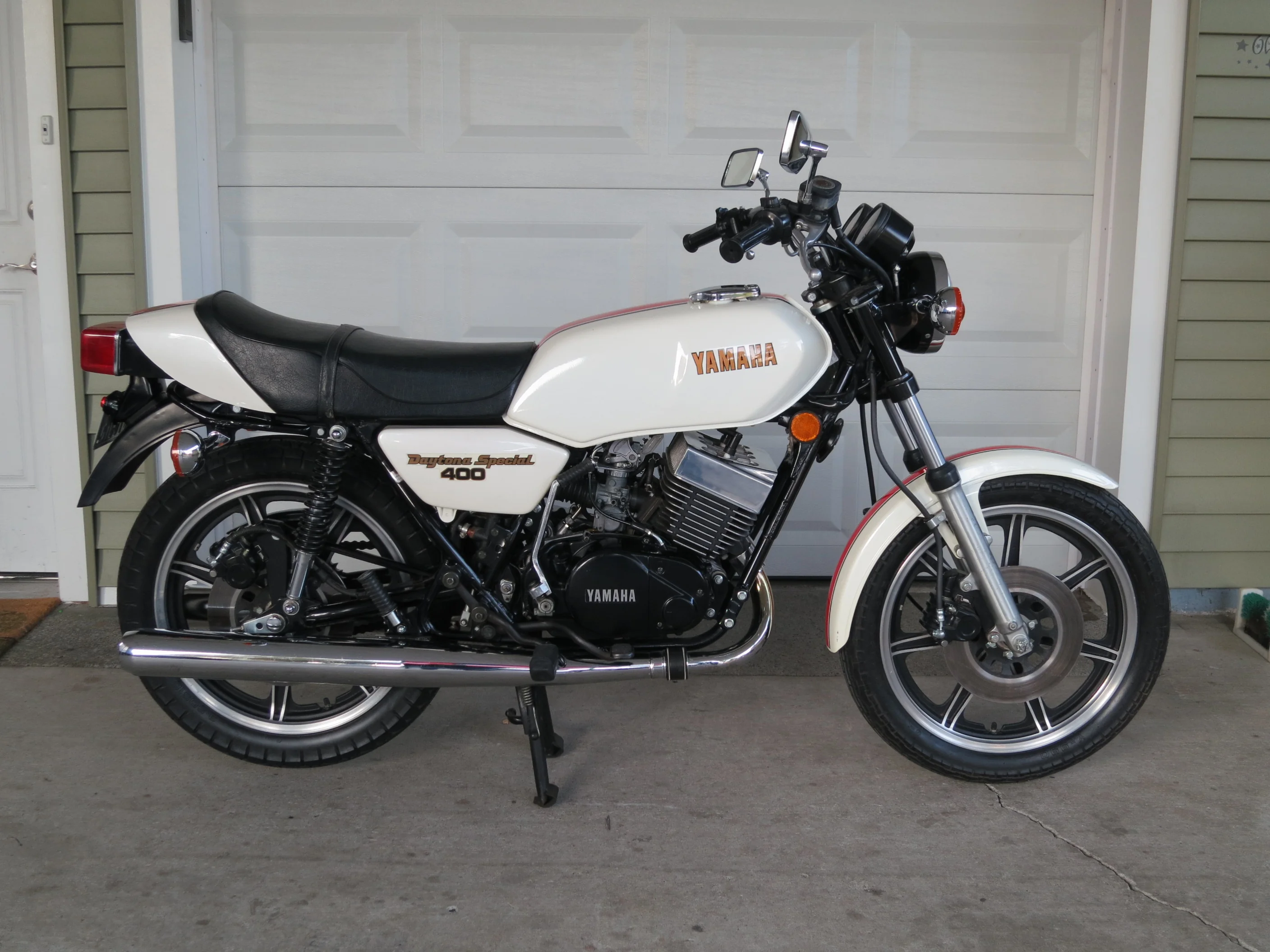
Yamaha RD 400 1979 - Specifications & Review
Article Complete Info
| Articleid | 351831 |
|---|---|
| Category | Classic |
| Make | Yamaha |
| Model | RD 400 |
| Year | 1979 |
Chassis, Suspension, Brakes & Wheels
| Frontbrakes | Single disc |
|---|---|
| Fronttyre | 3.00-18 |
| Rearbrakes | Single disc |
| Reartyre | 3.50-18 |
Engine & Transmission
| Borexstroke | 64.0 x 62.0 mm (2.5 x 2.4 inches) |
|---|---|
| Compression | 6.0:1 |
| Coolingsystem | Air |
| Displacement | 399.00 ccm (24.35 cubic inches) |
| Enginedetails | Twin, two-stroke |
| Gearbox | 6-speed |
| Power | 43.00 HP (31.4 kW)) @ 7500 RPM |
| Topspeed | 175.0 km/h (108.7 mph) |
| Transmissiontypefinaldrive | Chain |
Physical Measures & Capacities
| Fuelcapacity | 16.50 litres (4.36 gallons) |
|---|---|
| Weightincloilgasetc | 175.0 kg (385.8 pounds) |
About Yamaha RD 400 1979
The 1979 Yamaha RD 400 stands as a quintessential representation of the classic two-stroke motorcycle era, capturing the hearts of enthusiasts and collectors alike. With its sporty styling and robust performance, this bike is not just a machine; it’s a time capsule that transports riders back to the golden age of motorcycling. Positioned as a lightweight performer in the 400cc category, the RD 400 was designed to cater to both seasoned riders seeking thrills and newcomers eager for an exhilarating introduction to the world of motorcycling. Its blend of classic aesthetics and cutting-edge technology for its time makes it a standout model in Yamaha's storied lineup.
At the heart of the RD 400 lies a lively twin-cylinder, two-stroke engine that displaces 399cc. Producing a spirited 43 horsepower at 7,500 RPM, this powerplant delivers an exhilarating riding experience, pushing the motorcycle to a top speed of 175 km/h (108.7 mph). The engine’s light weight and the bike's agile handling create a nimble ride that makes weaving through city traffic or carving up twisty backroads a sheer delight. The 6-speed gearbox allows for smooth transitions between gears, giving riders the ability to tap into the engine's power band effectively, while the air-cooled design keeps the weight down and reliability high. A compression ratio of 6.0:1 ensures that this classic bike still packs a punch, even decades after its debut.
The RD 400 is equipped with features that were advanced for its time, such as a single disc brake setup on both the front and rear, providing adequate stopping power to match its spirited performance. Weighing in at just 175 kg (385.8 pounds) with fluids, the bike’s lightweight chassis enhances its maneuverability, making it a joy to ride whether you're cruising on the highway or navigating tight corners. A fuel capacity of 16.5 liters (4.36 gallons) means you can enjoy longer rides without constantly worrying about running low on fuel, a bonus for those weekend getaways and spirited jaunts through the countryside.
Pros:
- Lightweight and Agile: At just 175 kg, the RD 400 is easy to handle and maneuver, making it ideal for both novice and experienced riders.
- Peppy Two-Stroke Engine: The two-stroke engine delivers an exhilarating power band, providing a thrilling ride that brings back the nostalgia of classic motorcycling.
- Classic Aesthetics: The retro design and styling of the RD 400 appeal to classic bike enthusiasts, making it a sought-after model for collectors.
Cons:
- Limited Torque: While it offers exciting peak power, the two-stroke engine may lack low-end torque compared to modern four-stroke bikes, which can affect everyday usability.
- Maintenance Requirements: The two-stroke engine requires more frequent maintenance, including oil mixing and periodic tuning, which can be a drawback for some riders.
- Braking Performance: Although adequate for its time, the single disc brakes may feel less responsive compared to modern braking systems, potentially affecting rider confidence in high-speed situations.
In summary, the 1979 Yamaha RD 400 is a classic motorcycle that embodies the spirit of its era, combining performance, style, and a sense of adventure. Whether you’re a seasoned collector or a new rider drawn to its timeless appeal, the RD 400 is sure to leave a lasting impression.